
Eur Heart J Digit Health. 2024;5(4):444-453.
Artificial intelligence-enhanced electrocardiography analysis as a promising tool for predicting obstructive coronary artery disease in patients with stable angina.
제1저자 박지석 · 교신저자 조영진, 윤연이
소속 (7)
- Department of Cardiology, Seoul National University Bundang Hospital, Gumi-ro 173beon-gil, Bundang-gu, Seongnam-si, Gyeonggi-do 13620, Republic of Korea.
- Department of Internal Medicine, Seoul National University College of Medicine, Daehak-ro, Jongno-gu, Seoul 03080, Republic of Korea.
- Department of Emergency Medicine, Seoul National University Bundang Hospital, Seongnam, Gyeonggi-do, 13620 Republic of Korea.
- ARPI Inc., Dolma-ro, Bundang-gu, Seongnam-si, Gyeonggi-do 13605, Republic of Korea.
- Division of Cardiology, Severance Cardiovascular Hospital, Yonsei University College of Medicine, Yonsei University Health System, Seoul, Republic of Korea.
- CONNECT-AI Research Center, Yonsei University College of Medicine, Seoul, Republic of Korea.
- Ontact Health Inc., Ewhayeodae-gil, Seodaemun-gu, Seoul 03764, Republic of Korea.
Abstract
AIMS The clinical feasibility of artificial intelligence (AI)-based electrocardiography (ECG) analysis for predicting obstructive coronary artery disease (CAD) has not been sufficiently validated in patients with stable angina, especially in large sample sizes.
METHODS AND RESULTS A deep learning framework for the quantitative ECG (QCG) analysis was trained and internally tested to derive the risk scores (0-100) for obstructive CAD (QCGObstCAD) and extensive CAD (QCGExtCAD) using 50 756 ECG images from 21 866 patients who underwent coronary artery evaluation for chest pain (invasive coronary or computed tomography angiography). External validation was performed in 4517 patients with stable angina who underwent coronary imaging to identify obstructive CAD. The QCGObstCAD and QCGExtCAD scores were significantly increased in the presence of obstructive and extensive CAD (all P < 0.001) and with increasing degrees of stenosis and disease burden, respectively (all P trend < 0.001). In the internal and external tests, QCGObstCAD exhibited a good predictive ability for obstructive CAD [area under the curve (AUC), 0.781 and 0.731, respectively] and severe obstructive CAD (AUC, 0.780 and 0.786, respectively), and QCGExtCAD exhibited a good predictive ability for extensive CAD (AUC, 0.689 and 0.784). In the external test, the QCGObstCAD and QCGExtCAD scores demonstrated independent and incremental predictive values for obstructive and extensive CAD, respectively, over that with conventional clinical risk factors. The QCG scores demonstrated significant associations with lesion characteristics, such as the fractional flow reserve, coronary calcification score, and total plaque volume.
CONCLUSION The AI-based QCG analysis for predicting obstructive CAD in patients with stable angina, including those with severe stenosis and multivessel disease, is feasible.
© The Author(s) 2024. Published by Oxford University Press on behalf of the European Society of Cardiology.
Keywords
Artificial intelligenceCoronary artery diseaseElectrocardiographyStable angina
Figures
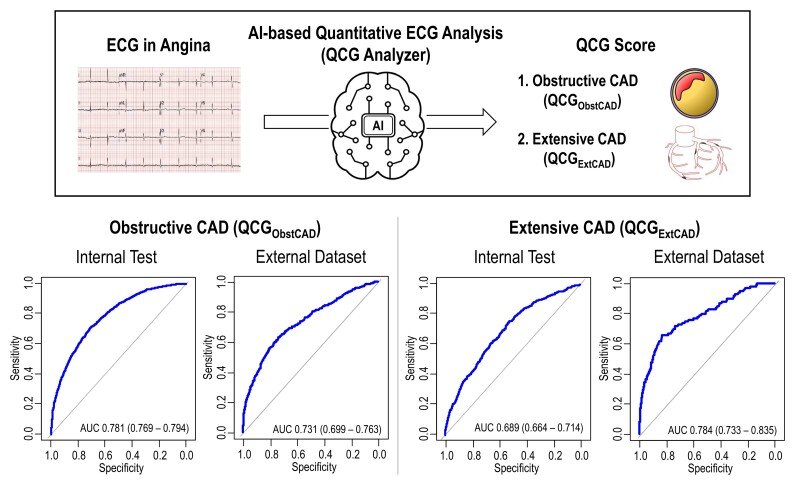
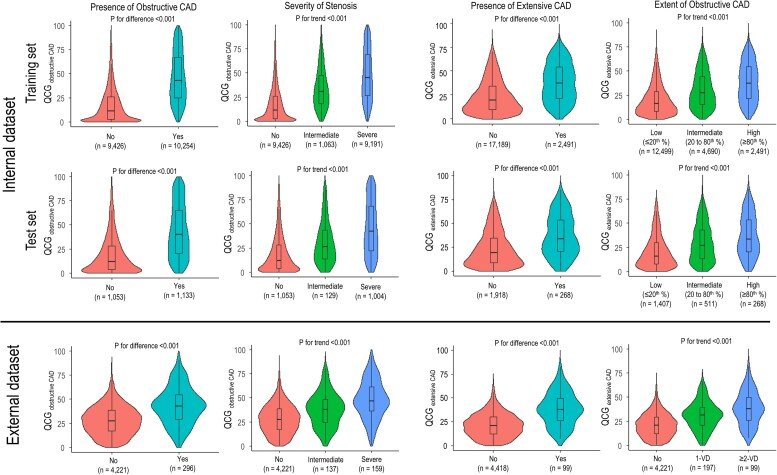
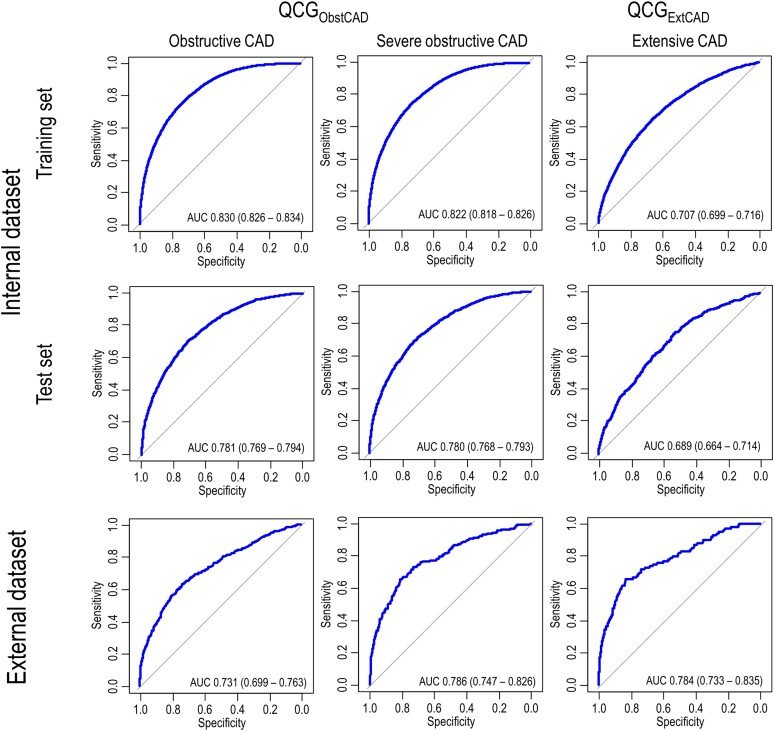
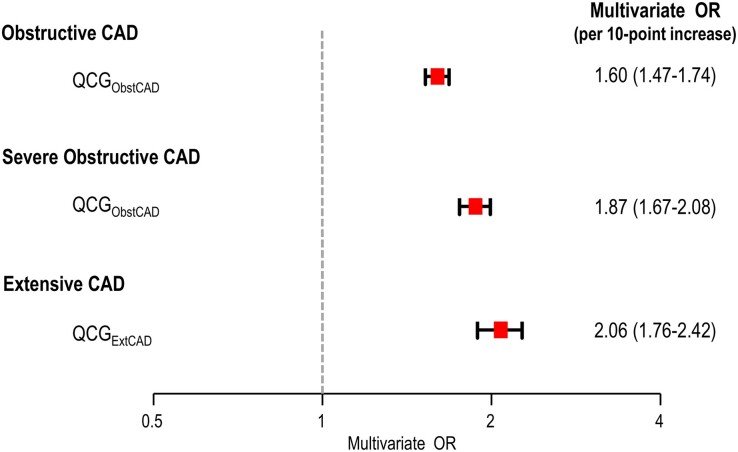
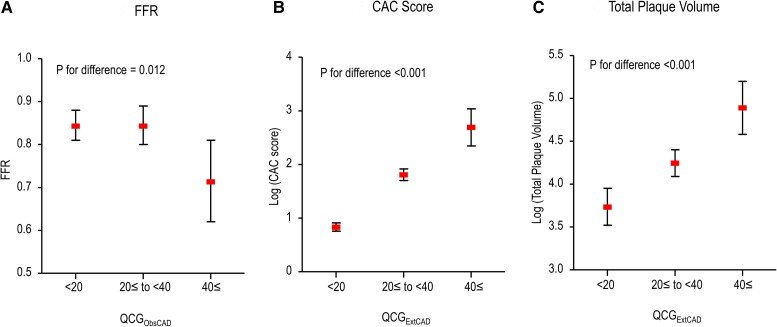
그림 출처: PubMed Central 공개 논문 (PMC11284006)
Conflict of interest statement
Conflict of interest: J.K. is the developer of the QCG system and the founder and CEO of ARPI Inc. Y.C. is the research director at ARPI Inc. Y.H., H.-J.C., and Y.E.Y. are currently affiliated with Ontact Health, Inc. The remaining authors declare no conflicts of interest.
그 밖의 정보
- 출판 형태
- Journal Article
- 저널
- European heart journal. Digital health · eISSN 2634-3916
- 전자 출판
- 2024-05-14
- 참고문헌
- 25편