
JACC Adv. 2026;5(4):102660.
Artificial Intelligence-Driven Electrocardiogram Screening for Asymptomatic Left Ventricular Systolic Dysfunction in the General Population.
제1저자 이태민, 강소라 · 교신저자 이희선, 이학승
소속 (5)
- Department of Internal Medicine, Seoul National University College of Medicine, Seoul, Republic of Korea; Division of Cardiology, Seoul National University Hospital Healthcare System Gangnam Centre, Seoul, Republic of Korea.
- Digital Healthcare Institute, Sejong Medical Research Institute, Bucheon, Republic of Korea; Medical AI Co, Ltd, Seoul, Republic of Korea.
- Medical AI Co, Ltd, Seoul, Republic of Korea.
- Digital Healthcare Institute, Sejong Medical Research Institute, Bucheon, Republic of Korea; Medical AI Co, Ltd, Seoul, Republic of Korea. Electronic address: cardiolee@gmail.com.
- Department of Internal Medicine, Seoul National University College of Medicine, Seoul, Republic of Korea; Division of Cardiology, Seoul National University Hospital Healthcare System Gangnam Centre, Seoul, Republic of Korea. Electronic address: 65847@snuh.org.
Abstract
BACKGROUND Asymptomatic left ventricular systolic dysfunction (LVSD) is a well-established precursor of overt heart failure (HF), yet it often remains undiagnosed in the general population. Artificial intelligence-enabled electrocardiogram (ECG) analysis offers a scalable approach for early detection.
OBJECTIVES The purpose of this study was to evaluate the diagnostic performance of an artificial intelligence-enabled ECG model (AiTiALVSD) for identifying asymptomatic LVSD in a large health screening population.
METHODS In this retrospective, single-center study, we evaluated the AiTiALVSD model among 40,713 self-referred adults who underwent a total of 60,711 ECG-transthoracic echocardiography (TTE) pairs between 2011 and 2023. LVSD was defined as a left ventricular ejection fraction ≤40%. Model discrimination was assessed using the area under the receiver-operating characteristic curve (AUROC) and the area under the precision-recall curve (AUPRC), and diagnostic performance metrics were compared with established HF risk scores.
RESULTS Among 60,711 ECG-TTE pairs, 32 cases (0.054%) met the criteria for LVSD. The AiTiALVSD model demonstrated excellent discrimination (AUROC 0.973; AUPRC 0.328), with a sensitivity of 90.6%, specificity of 99.4%, positive predictive value of 7.7%, and a negative predictive value of 100%. Established HF risk scores, including the MESA (Multi-Ethnic Study of Atherosclerosis) 5-year HF score and Pooled Cohort Equations to Prevent HF score, showed inferior discrimination (AUROC: 0.696 and 0.672, respectively). The MESA score was not designed to detect prevalent LVSD and was calculated without natriuretic peptide data, which may have disadvantaged its performance in this comparison. Simulation analyses suggested that approximately 1,841 ECGs and 13 confirmatory TTEs would be required to detect one case of LVSD.
CONCLUSIONS In a real-world screening population with an extremely low prevalence of LVSD, the AiTiALVSD model demonstrated high diagnostic accuracy, supporting its potential role as a rule-out screening tool for HF prevention. Prospective validation is warranted.
Copyright © 2026 The Authors. Published by Elsevier Inc. All rights reserved.
Keywords
artificial intelligenceelectrocardiogramheart failureleft ventricular systolic dysfunctionprediction model
Figures
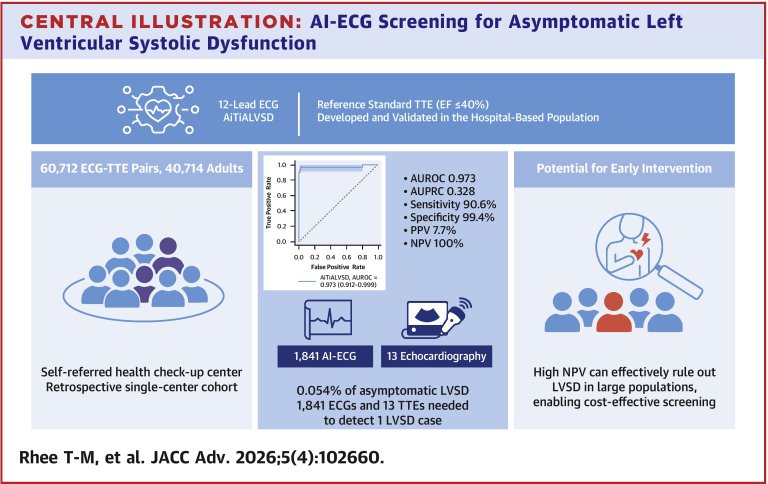
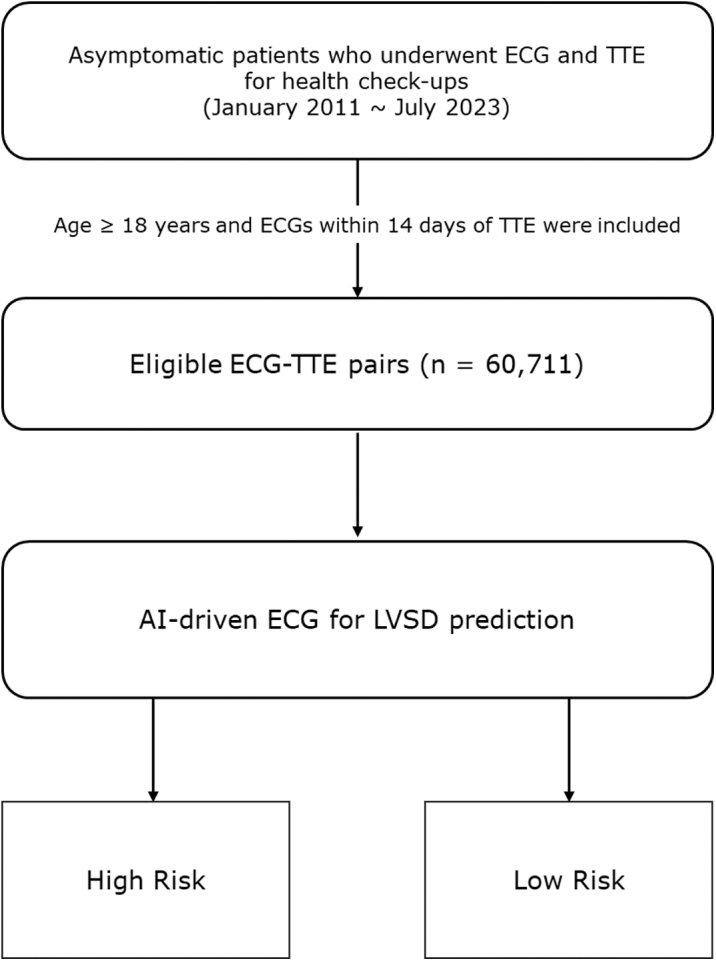
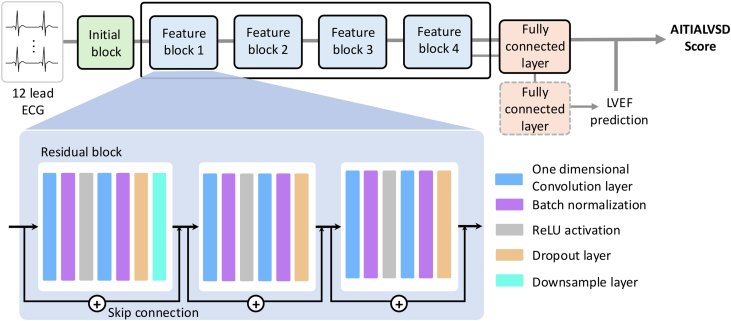
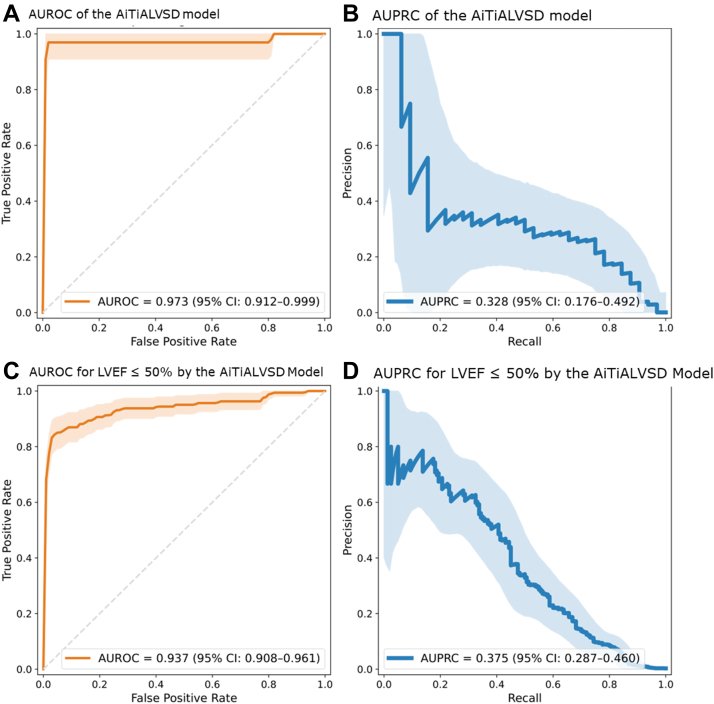
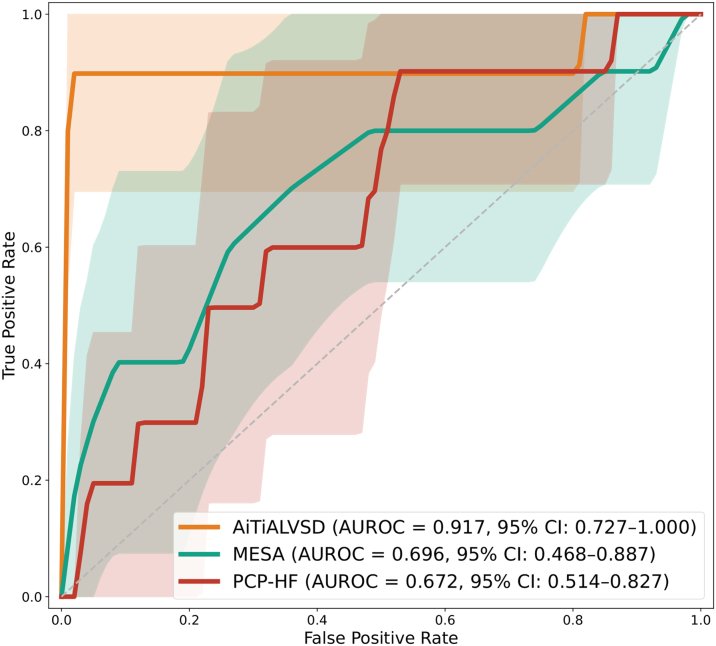
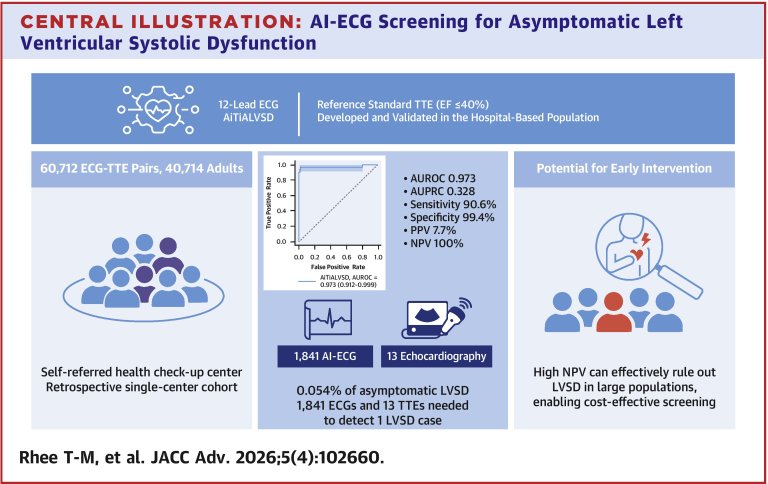
그림 출처: PubMed Central 공개 논문 (PMC13015574)
Conflict of interest statement
Funding support and author disclosures This study was funded by Medical AI Co, Ltd. Authors affiliated with Medical AI contributed to the study design, data collection, analysis, and interpretation in their capacity as individual researchers. The funder did not impose restrictions on data access, data interpretation, or the decision to submit the manuscript for publication. Drs Kang, Min Sung Lee, Han, Yoo, Jang, Jo, Son, Kwon, and Hak Seung Lee are employees of Medical AI Co, Ltd and hold stocks in the company. All other authors have reported that they have no relationships relevant to the contents of this paper to disclose.
그 밖의 정보
- 출판 형태
- Journal Article
- 저널
- JACC. Advances · eISSN 2772-963X
- 전자 출판
- 2026-03-18
- 참고문헌
- 27편