
Allergy Asthma Immunol Res. 2013;5(6):357-64.
Lost to follow-up in asthmatics does not mean treatment failure: causes and clinical outcomes of non-adherence to outpatient treatment in adult asthma.
제1저자 강민규 · 교신저자 강혜련
소속 (1)
- Department of Internal Medicine, Seoul National University College of Medicine, Seoul, Korea. ; Institute of Allergy and Clinical Immunology, Seoul National University Medical Research Center, Seoul, Korea.
Abstract
PURPOSE Long-term asthma management is recommended to asthmatics; however, many patients do not adhere to follow-up treatment. It is unclear why many asthmatics do not adhere to follow-up treatment and long-term clinical course after discontinuation of asthma management. This study investigates the factors associated with loss to follow-up and observes the clinical course in asthmatics who discontinued asthma treatment.
METHODS A retrospective investigation was conducted after reviewing medical records of adult patients who were newly diagnosed with asthma at a university hospital in Seoul, South Korea from January 2005 to March 2007. We compared baseline demographics and the clinical and laboratory profiles of patients to see if they successfully adhered to the treatment at an outpatient clinic for at least 3 years. The clinical course and asthma control status were surveyed by telephone for patients who were lost to follow-up within 3 years.
RESULTS A total of 351 (73.9%) out of 475 patients were lost to follow-up within 3 years of asthma diagnosis. Patients lost to follow-up were younger and had clinical features of less severe asthma at time of diagnosis (higher FEV1 and PC20, and lower grade treatments) compared to patients who adhered to the follow-up for longer than 3 years (all P<0.05). Among the 198 responders to the telephone survey, 124 responders (62.6%) answered that they eventually discontinued asthma medication. A significantly higher proportion of the 124 responders who discontinued asthma treatment maintained symptom improvement compared to the 74 responders who continued asthma medication (77.4% vs. 55.4%, P=0.003).
CONCLUSIONS Almost three quarters of newly diagnosed asthmatics discontinued asthma medication within 3 years despite a medical recommendation. There are considerable numbers of asthmatics who can maintain long-term asthma control status without medication.
Keywords
Asthmalost to follow-upmedication adherencequestionnairessurveystelephone
Figures

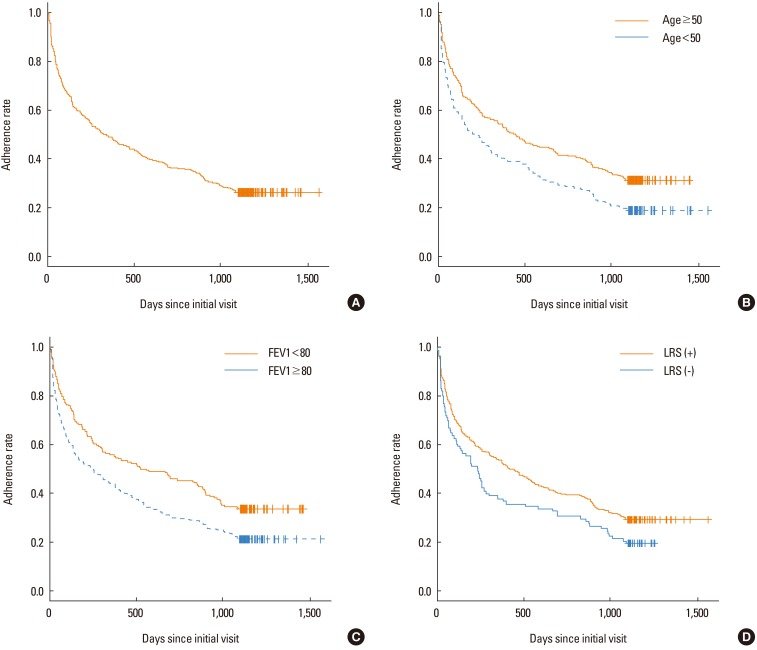
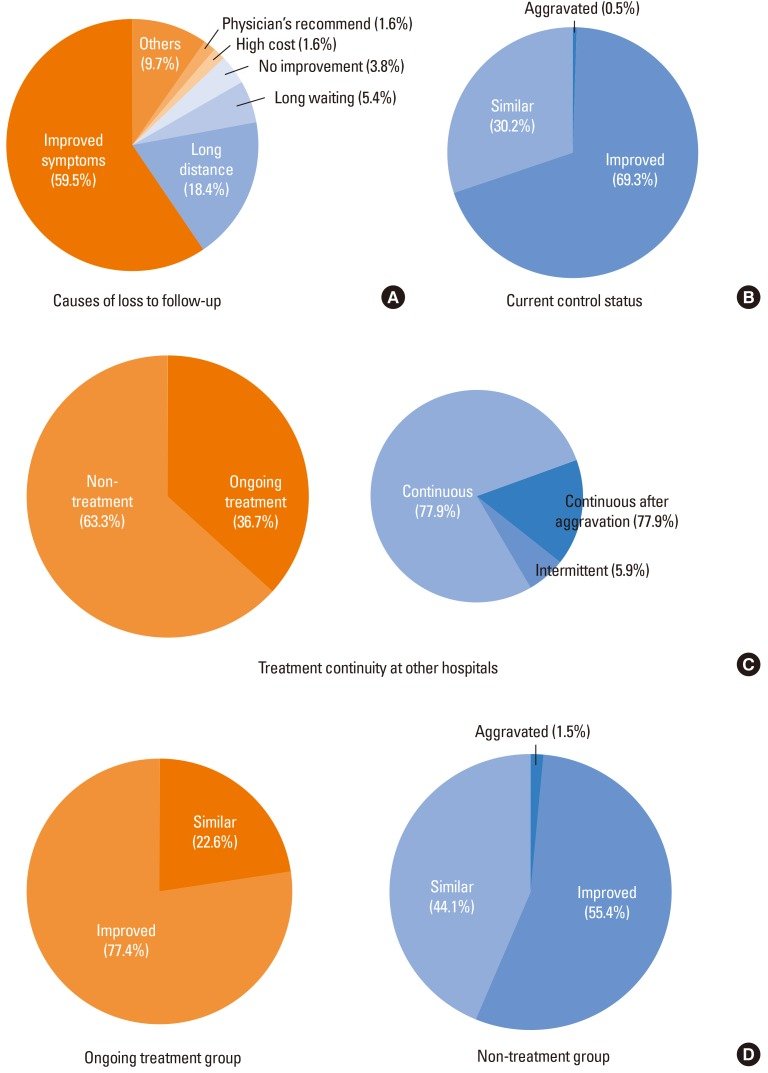
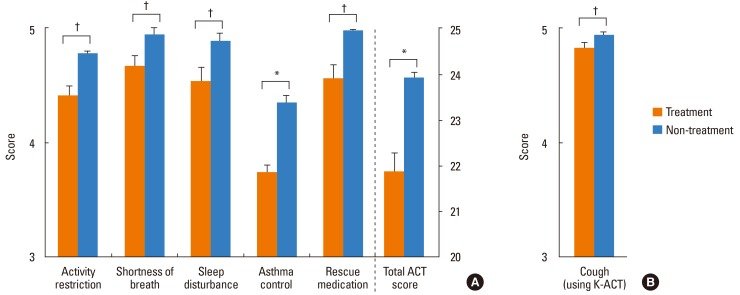
그림 출처: PubMed Central 공개 논문 (PMC3810541)
Conflict of interest statement
There are no financial or other issues that might lead to conflict of interest.
그 밖의 정보
- 출판 형태
- Journal Article
- 저널
- Allergy, asthma & immunology research · ISSN 2092-7355
- 전자 출판
- 2013-09-27
- 참고문헌
- 24편