
Cancer Res Treat. 2016;48(3):907-16.
The Effect of Induction Chemotherapy Using Docetaxel, Cisplatin, and Fluorouracil on Survival in Locally Advanced Head and Neck Squamous Cell Carcinoma: A Meta-Analysis.
제1저자 김률, 한서경 · 교신저자 김범석
소속 (4)
- Department of Internal Medicine, Seoul National University Hospital, Seoul, Korea.
- Medical Research Collaborating Center, Seoul National University Hospital, Seoul, Korea.
- Department of Medicine, Seoul National University College of Medicine, Seoul, Korea.
- Cancer Research Institute, Seoul National University College of Medicine, Seoul, Korea.
Abstract
PURPOSE The purpose of this study was to compare the survival of patients with locally advanced head and neck squamous cell carcinoma (LA-HNSCC) undergoing concurrent chemoradiotherapy (CRT) alone with that of patients undergoing induction chemotherapy (IC) using docetaxel, cisplatin, and 5-fluorouracil (TPF) followed by CRT.
MATERIALS AND METHODS A search of the PubMed, EMBASE, and Cochrane Library databases was performed in April 2015 and abstracts from the American Society of Clinical Oncology meetings (2008-2014) were reviewed. Summaries of the results were pooled using a fixed-effect model, and the risk of bias was evaluated using the Cochrane tool.
RESULTS A total of six relevant trials comprising 1,280 patients were identified. There was no statistically significant overall survival (OS) advantage for TPF prior to CRT (TPF/CRT) over CRT alone (hazard ratio [HR] 0.92; 95% confidence interval [CI], 0.79 to 1.09; p=0.339). Progression-free survival (PFS) was significantly longer in the TPF/CRT arms (HR, 0.82; 95% CI, 0.70 to 0.95; p=0.009). Patients with non-oropharyngeal LA-HNSCC obtained the greatest OS and PFS benefits from TPF (HR, 0.68; 95% CI, 0.47 to 0.99; p=0.043 and HR, 0.67; 95% CI, 0.48 to 0.94; p=0.022, respectively). The complete response rate was significantly increased (risk ratio [RR], 1.34; 95% CI, 1.14 to 1.56; p < 0.001), and the distant metastasis rate tended to decrease (RR, 0.65; 95% CI, 0.40 to 1.04; p=0.071) in the TPF/CRT arms.
CONCLUSION IC with TPF followed by CRT is not superior to CRT alone for OS. However, PFS and the complete response rate were significantly improved in the TPF/CRT arms. TPF/CRT for patients with nonoropharyngeal LA-HNSCC provided clear survival advantages.
Keywords
ChemoradiotherapyHead and neck neoplasmsInduction chemotherapyMeta-analysisReview
Figures
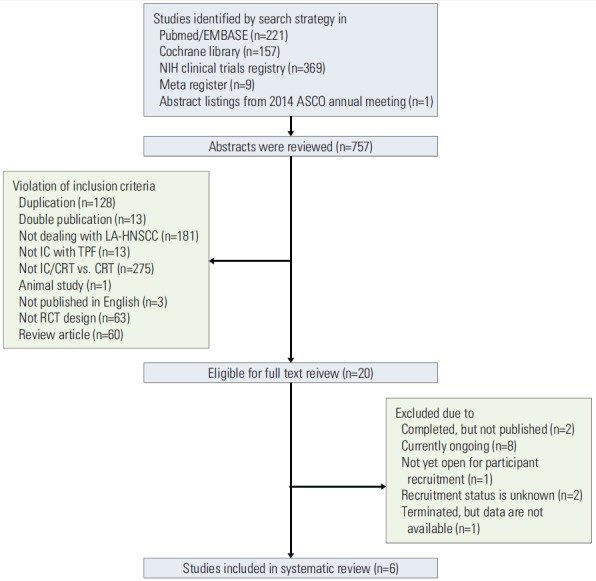
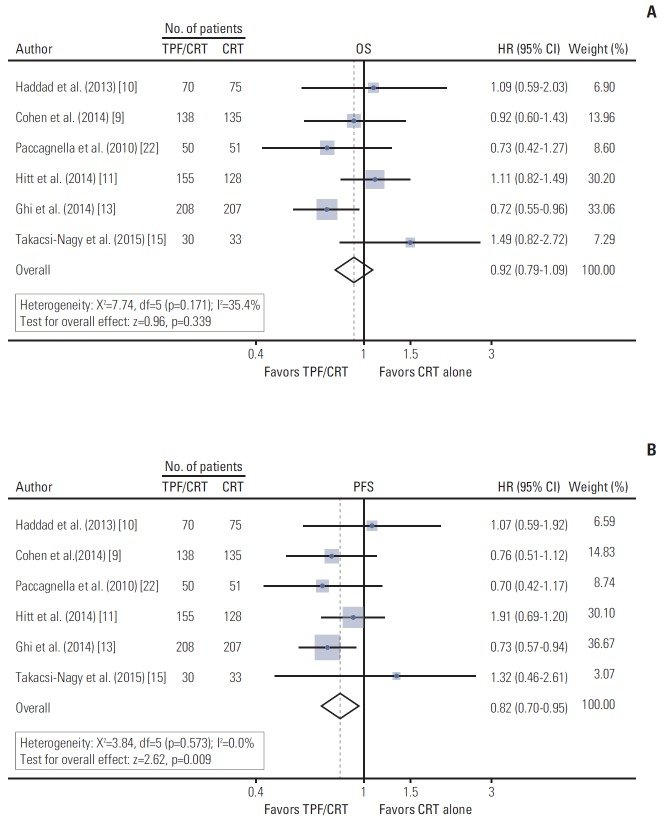
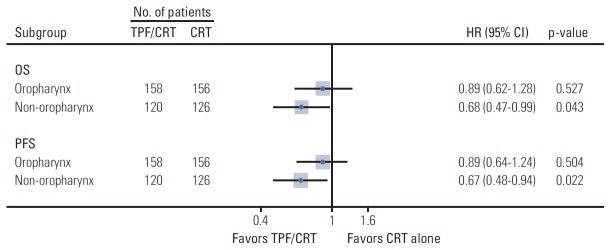
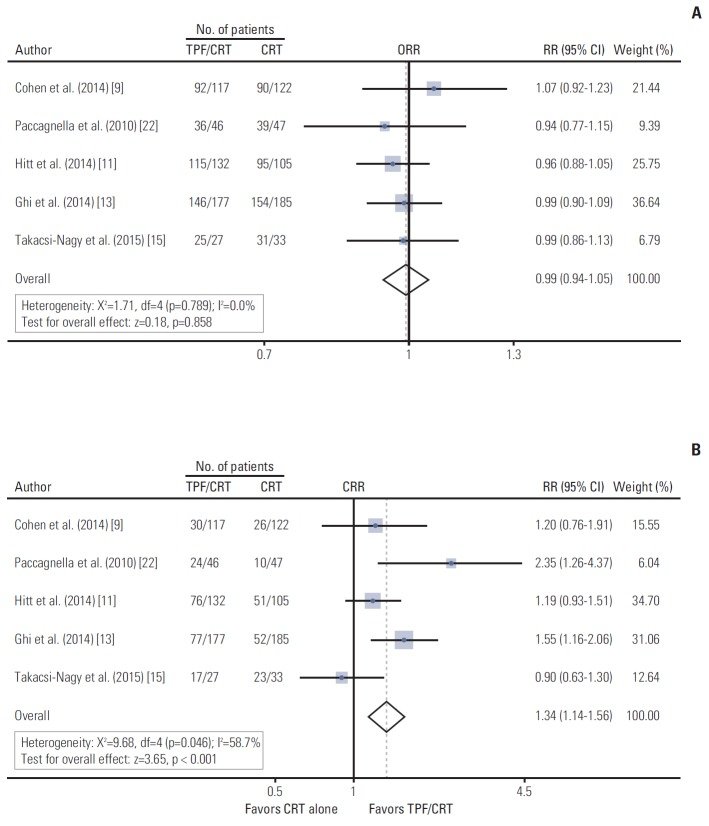
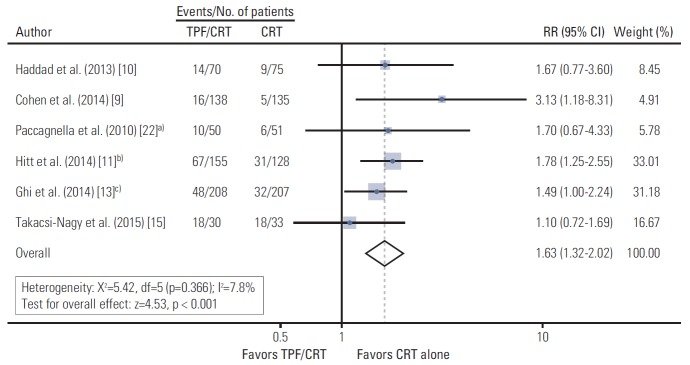
그림 출처: PubMed Central 공개 논문 (PMC4946346)
Conflict of interest statement
Conflict of interest relevant to this article was not reported.
그 밖의 정보
- 출판 형태
- Comparative Study, Journal Article, Meta-Analysis, Review
- 저널
- Cancer research and treatment · eISSN 2005-9256
- 전자 출판
- 2015-11-17
- MeSH
- Antineoplastic Combined Chemotherapy Protocols / adverse effects / therapeutic use · Carcinoma, Squamous Cell / mortality / pathology / therapy · Chemoradiotherapy / adverse effects / methods · Cisplatin / adverse effects / therapeutic use · Clinical Trials as Topic · Disease-Free Survival · Fluorouracil / adverse effects / therapeutic use · Head and Neck Neoplasms / mortality / pathology / therapy · Humans · Induction Chemotherapy / adverse effects / methods · Retrospective Studies · Survival Analysis · Taxoids / adverse effects / therapeutic use · Treatment Outcome
- Substances
- Taxoids · Cisplatin · Fluorouracil
- 참고문헌
- 24편