
Intensive Care Med. 2022;48(3):281-289.
Change in perception of the quality of death in the intensive care unit by healthcare workers associated with the implementation of the "well-dying law".
제1저자 이예진 · 교신저자 이연주
소속 (7)
- Division of Pulmonary and Critical Care Medicine, Department of Internal Medicine, Seoul National University Hospital, Seoul, Republic of Korea.
- Division of Statistics, Medical Research Collaborating Center, Seoul National University Bundang Hospital, Seongnam, Republic of Korea.
- Division of Pulmonary and Critical Care Medicine, Department of Internal Medicine, Chungbuk National University Hospital, Chungbuk National University College of Medicine, Cheongju-si, Republic of Korea.
- Division of Pulmonary and Critical Care Medicine, Department of Internal Medicine, Seoul Metropolitan Government-Seoul National University Boramae Medical Center, Seoul, Republic of Korea.
- Division of Pulmonary and Critical Care Medicine, Department of Internal Medicine, National Medical Center, Seoul, Republic of Korea.
- Division of Pulmonary and Critical Care Medicine, Department of Internal Medicine, Seoul National University Bundang Hospital, 82 Gumi-ro 173 beon-gil Bundang-gu, Seongnam-si, Gyeonggi-do, Republic of Korea.
- Division of Pulmonary and Critical Care Medicine, Department of Internal Medicine, Seoul National University Bundang Hospital, 82 Gumi-ro 173 beon-gil Bundang-gu, Seongnam-si, Gyeonggi-do, Republic of Korea. yjlee1117@snubh.org.
Abstract
PURPOSE The importance of dying with dignity in the intensive care unit (ICU) has been emphasized. The South Korean government implemented the "well-dying law" in 2018, which enables patients to refuse futile life-sustaining treatment (LST) after being determined as terminally ill. We aimed to study whether the well-dying law is associated with a significant change in the quality of death in the ICU.
METHODS The Quality of Dying and Death (QODD) questionnaires were prospectively collected from the doctors and nurses of deceased patients of four South Korean medical ICUs after the law was passed (January 2019 to May 2020). Results were compared with those of our previous study, which used the same metric before the law was passed (June 2016 to May 2017). We compared baseline characteristics of the deceased patients, enrolled staff, QODD scores, and staff opinions about withdrawing LST from before to after the law was passed.
RESULTS After the well-dying law was passed, deceased patients (N = 252) were slightly older (68.6 vs. 66.6, p = 0.03) and fewer patients were admitted to the ICU for post-resuscitation care (10.3% vs. 20%, p = 0.003). The mean total QODD score significantly increased after the law was passed (36.9 vs. 31.3, p = 0.001). The law had a positive independent association with the increased QODD score in a multiple regression analysis.
CONCLUSION Our study is the first to show that implementing the well-dying law is associated with quality of death in the ICU, although the quality of death in South Korea remains relatively low and should be further improved.
© 2021. The Author(s).
Keywords
Intensive care unitQuality of death and dyingWell-dying law
Figures
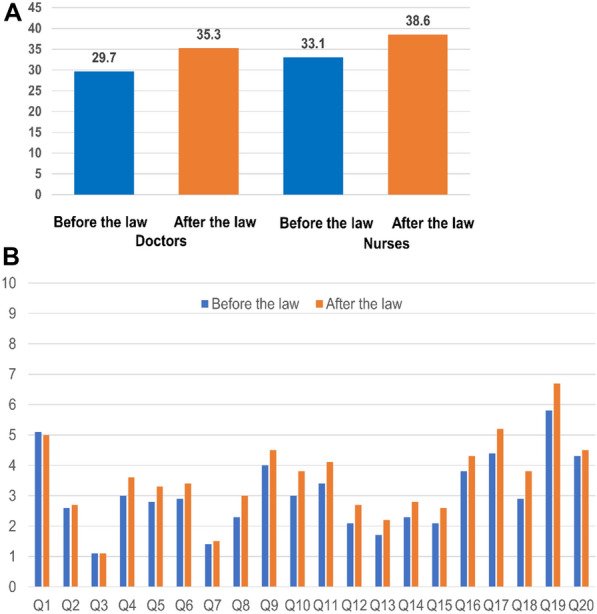
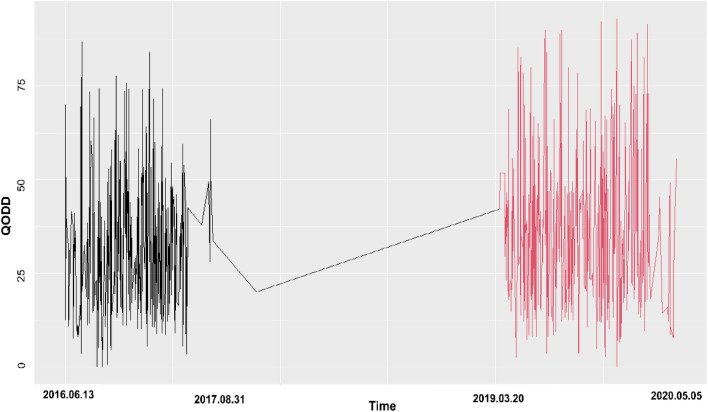
그림 출처: PubMed Central 공개 논문 (PMC8866363)
Comment · 정정
Conflict of interest statement
None of the authors have any conflicts of interest to declare.
그 밖의 정보
- 출판 형태
- Journal Article
- 저널
- Intensive care medicine · eISSN 1432-1238
- 전자 출판
- 2022-01-01
- MeSH
- Attitude to Death · Family · Humans · Intensive Care Units · Perception · Physicians* · Terminal Care*
- 연구비
- Seoul National University of Education 06-2019-098
- 참고문헌
- 25편