
Diabetes Metab J. 2021;45(2):219-230.
Clinical Significance of Body Fat Distribution in Coronary Artery Calcification Progression in Korean Population.
제1저자 이희선 · 교신저자 최수연
소속 (3)
- Division of Cardiology, Seoul National University Hospital Healthcare System Gangnam Center, Seoul, Korea.
- Department of Internal Medicine, Seoul National University College of Medicine, Seoul, Korea.
- Division of Endocrinology, Seoul National University Hospital Healthcare System Gangnam Center, Seoul, Korea.
Abstract
BACKGROUND Although obesity differs according to ethnicity, it is globally established as a solid risk factor for cardiovascular disease. However, it is not fully understood how obesity parameters affect the progression of coronary artery calcification (CAC) in Korean population. We sought to evaluate the association of obesity-related parameters including visceral adipose tissue (VAT) measurement and CAC progression.
METHODS This retrospective observational cohort study investigated 1,015 asymptomatic Korean subjects who underwent serial CAC scoring by computed tomography (CT) with at least 1-year interval and adipose tissue measurement using non-contrast CT at baseline for a routine checkup between 2003 and 2015. CAC progression, the main outcome, was defined as a difference of ≥2.5 between the square roots of the baseline and follow-up CAC scores using Agatston units.
RESULTS During follow-up (median 39 months), 37.5% of subjects showed CAC progression of a total population (56.4 years, 80.6% male). Body mass index (BMI) ≥25 kg/m2, increasing waist circumferences (WC), and higher VAT/subcutaneous adipose tissue (SAT) area ratio were independently associated with CAC progression. Particularly, predominance of VAT over SAT at ≥30% showed the strongest prediction for CAC progression (adjusted hazard ratio, 2.20; P<0.001) and remained of prognostic value regardless of BMI or WC status. Further, it provided improved risk stratification of CAC progression beyond known prognosticators.
CONCLUSION Predominant VAT area on CT is the strongest predictor of CAC progression regardless of BMI or WC in apparently healthy Korean population. Assessment of body fat distribution may be helpful to identify subjects at higher risk.
Keywords
Body fat distributionCoronary artery diseaseMultidetector computed tomographyObesity, abdominal
Figures
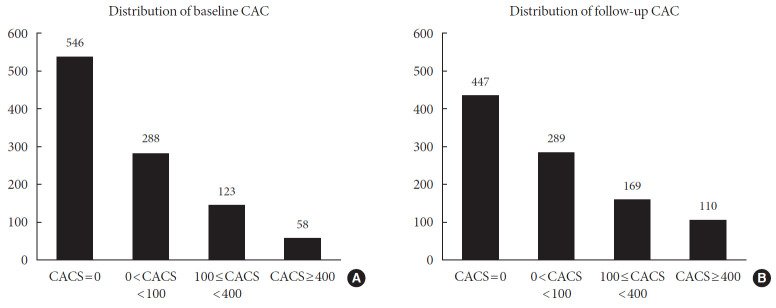
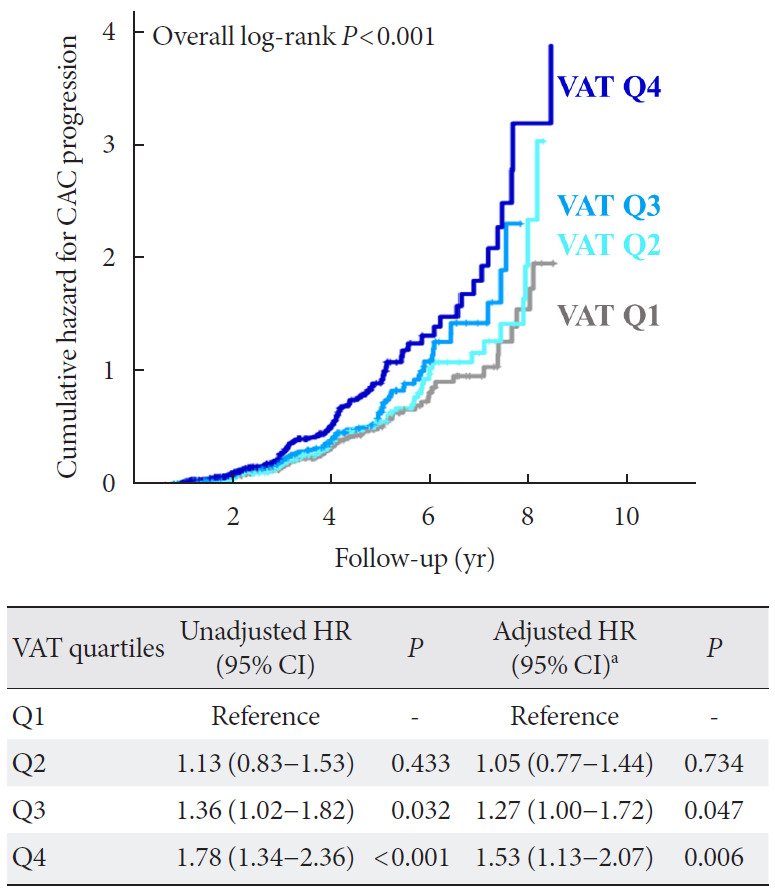
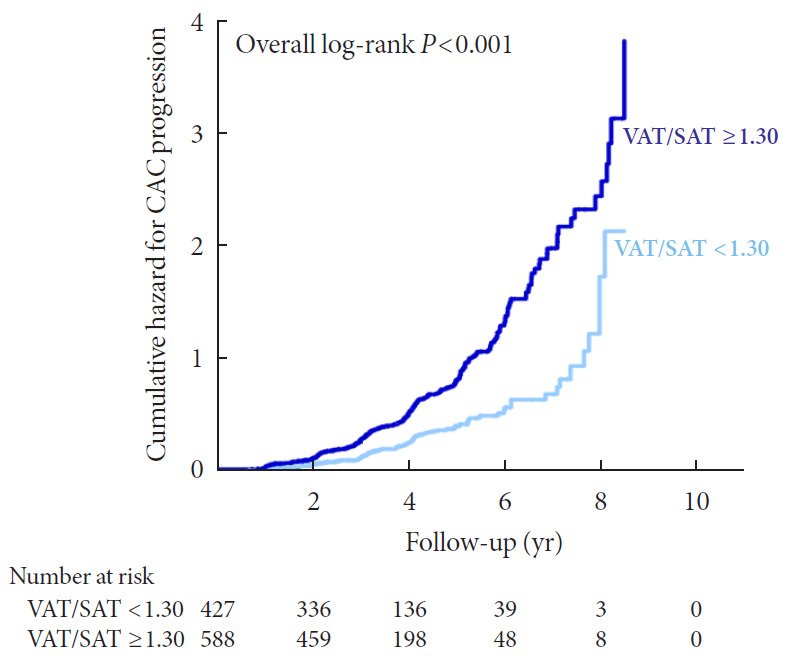
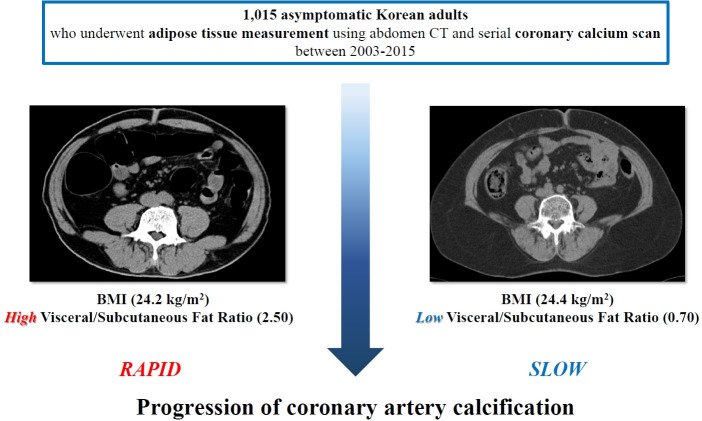
그림 출처: PubMed Central 공개 논문 (PMC8024146)
Comment · 정정
Conflict of interest statement
CONFLICTS OF INTEREST . No potential conflict of interest relevant to this article was reported.
그 밖의 정보
- 출판 형태
- Journal Article, Observational Study
- 저널
- Diabetes & metabolism journal · eISSN 2233-6087
- 전자 출판
- 2020-10-28
- MeSH
- Body Fat Distribution · Coronary Artery Disease* / diagnostic imaging / epidemiology · Female · Humans · Male · Republic of Korea / epidemiology · Retrospective Studies
- 참고문헌
- 40편