
Diabetes Care. 2022;45(10):2224-2230.
Effects of Patient-Driven Lifestyle Modification Using Intermittently Scanned Continuous Glucose Monitoring in Patients With Type 2 Diabetes: Results From the Randomized Open-label PDF Study.
제1저자 최훈지, 이은정, 원종철 · 교신저자 조영민
소속 (4)
- Department of Internal Medicine, Seoul National University College of Medicine, Seoul, Republic of Korea.
- Division of Endocrinology and Metabolism, Department of Internal Medicine, Seoul National University Hospital, Seoul, Republic of Korea.
- Division of Endocrinology and Metabolism, Department of Internal Medicine, Kangbuk Samsung Hospital, Sungkyunkwan University School of Medicine, Seoul, Republic of Korea.
- Division of Endocrinology and Metabolism, Department of Internal Medicine, Sanggye Paik Hospital, Inje University, Seoul, Republic of Korea.
Abstract
OBJECTIVE To investigate the effects of patient-driven lifestyle modification using intermittently scanned continuous glucose monitoring (isCGM) in patients with type 2 diabetes (T2D).
RESEARCH DESIGN AND METHODS We conducted a 12-week, open-label, randomized controlled trial. A total of 126 participants were 1:1 randomized to either the intervention group (structured education + isCGM) or the control group (standard care with blood glucose monitoring). The Self-Evaluation Of Unhealthy foods by Looking at postprandial glucose (SEOUL) algorithm was developed and applied to aid structured education in guiding patients to follow healthy eating behavior depending on the postprandial glycemic response. The primary end point was the change in HbA1c level from baseline.
RESULTS Implementation of the SEOUL algorithm with isCGM was associated with greater improvement in HbA1c than with standard care (risk-adjusted difference -0.50%, 95% CI -0.74 to -0.26, P < 0.001). Participants in the intervention group had a greater reduction in fasting blood glucose and body weight (-16.5 mg/dL, 95% CI -30.0 to -3.0, P = 0.017; -1.5 kg, 95% CI -2.7 to -0.3, P = 0.013, respectively). The score sum for the Korean version of the revised Summary of Diabetes Self-Care Activities Questionnaire increased in both groups but to a greater extent in the intervention group (mean difference 4.8, 95% CI 1.7-8.0, P = 0.003). No severe hyperglycemia or hypoglycemia was reported in either group of patients.
CONCLUSIONS Patient-driven lifestyle modification primarily focused on eating behavior using isCGM effectively lowered HbA1c levels in patients with T2D.
© 2022 by the American Diabetes Association.
Figures
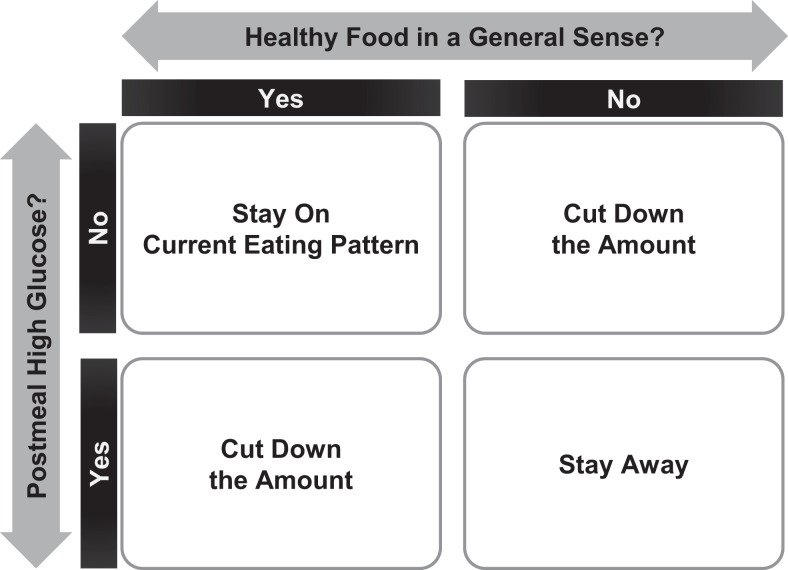
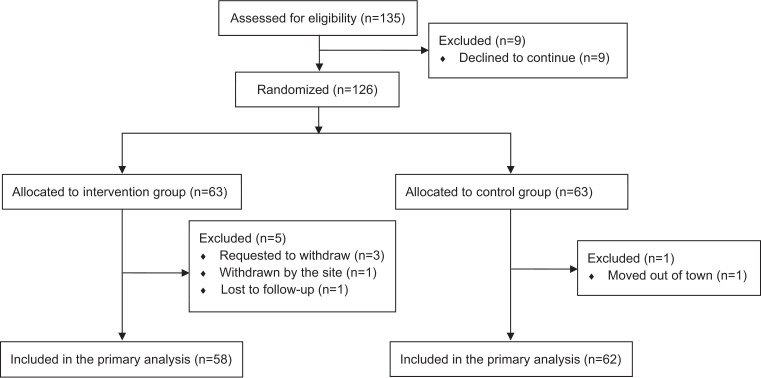
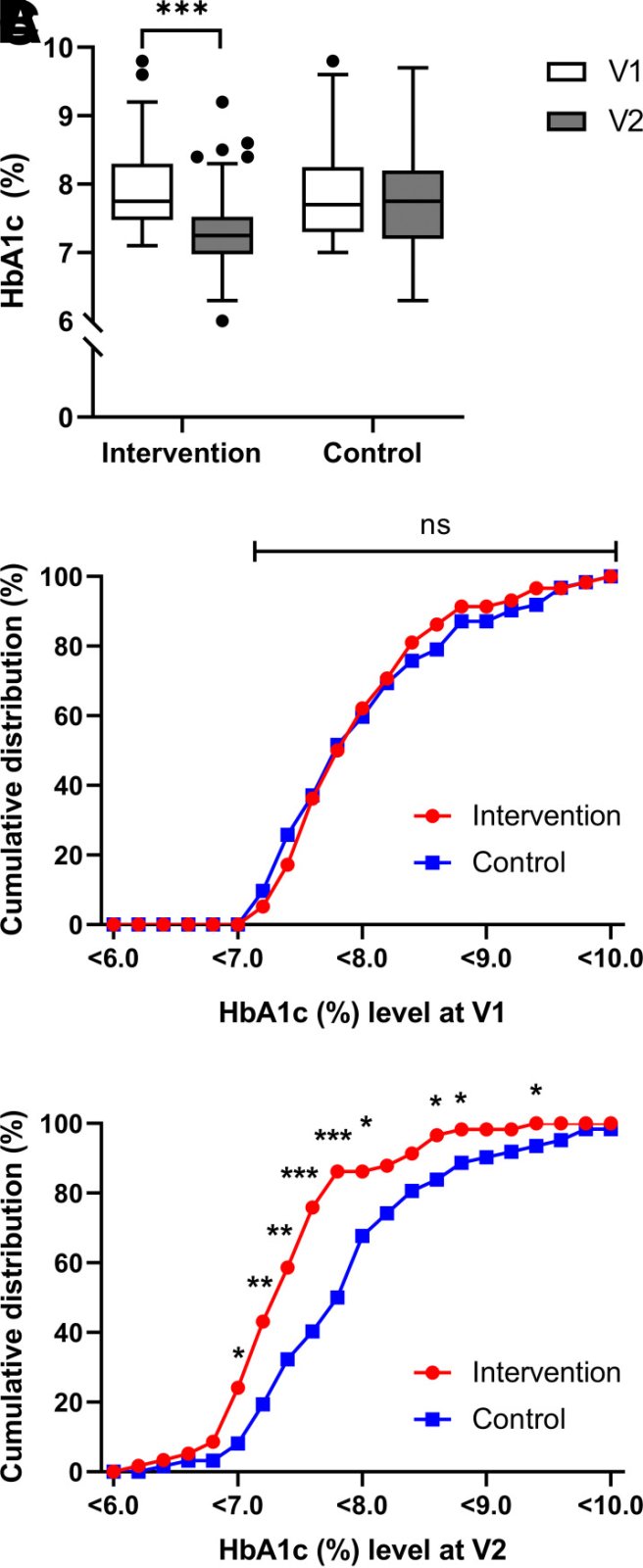
그림 출처: PubMed Central 공개 논문 (PMC9862445)
그 밖의 정보
- 출판 형태
- Journal Article, Randomized Controlled Trial, Research Support, Non-U.S. Gov't
- 저널
- Diabetes care · eISSN 1935-5548
- MeSH
- Blood Glucose · Blood Glucose Self-Monitoring / methods · Diabetes Mellitus, Type 1* · Diabetes Mellitus, Type 2* / therapy · Glycated Hemoglobin / analysis · Humans · Hypoglycemic Agents · Life Style
- Substances
- Blood Glucose · Glycated Hemoglobin · Hypoglycemic Agents
- 데이터
- ClinicalTrials.gov: NCT04932928 · figshare: 10.2337/figshare.20382915
- 참고문헌
- 22편