
Eur Heart J. 2021;42(46):4759-4768.
Lower risk of stroke after alcohol abstinence in patients with incident atrial fibrillation: a nationwide population-based cohort study.
제1저자 이소령 · 교신저자 최의근
소속 (6)
- Department of Internal Medicine, Seoul National University Hospital, 101 Daehak-ro, Jongno-gu, Seoul 03080, Republic of Korea.
- Department of Internal Medicine, Seoul National University College of Medicine, 101 Daehak-ro, Jongno-gu, Seoul 03080, Republic of Korea.
- Department of Medical Statistics, College of Medicine, Catholic University of Korea, 222 Banpo-daero, Seoucho-gu, Seoul 06591, Republic of Korea.
- Statistics and Actuarial Science, Soongsil University, 369 Sangdo-ro, Dongjak-gu, Seoul 06978, Republic of Korea.
- Liverpool Centre for Cardiovascular Science, University of Liverpool and Liverpool Chest and Heart Hospital, Thomas Dr, Liverpool L14 3PE, UK.
- Department of Clinical Medicine, Aalborg University, Aalborg 9000, Denmark.
Abstract
AIMS The aim of this study was to evaluate the association between alcohol consumption status (and its changes) after newly diagnosed atrial fibrillation (AF) and the risk of ischaemic stroke.
METHODS AND RESULTS Using the Korean nationwide claims and health examination database, we included subjects who were newly diagnosed with AF between 2010 and 2016. Patients were categorized into three groups according to the status of alcohol consumption before and after AF diagnosis: non-drinkers; abstainers from alcohol after AF diagnosis; and current drinkers. The primary outcome was incident ischaemic stroke during follow-up. Non-drinkers, abstainers, and current drinkers were compared using incidence rate differences after the inverse probability of treatment weighting (IPTW). Among a total of 97 869 newly diagnosed AF patients, 51% were non-drinkers, 13% were abstainers, and 36% were current drinkers. During 310 926 person-years of follow-up, 3120 patients were diagnosed with incident ischaemic stroke (10.0 per 1000 person-years). At 5-year follow-up, abstainers and non-drinkers were associated with a lower risk for stroke than current drinkers (incidence rate differences after IPTW, -2.03 [-3.25, -0.82] for abstainers and -2.98 [-3.81, -2.15] for non-drinkers, per 1000 person-years, respectively; and incidence rate ratios after IPTW, 0.75 [0.70, 0.81] for non-drinkers and 0.83 [0.74, 0.93] for abstainers, respectively).
CONCLUSION Current alcohol consumption was associated with an increased risk of ischaemic stroke in patients with newly diagnosed AF, and alcohol abstinence after AF diagnosis could reduce the risk of ischaemic stroke. Lifestyle intervention, including attention to alcohol consumption, should be encouraged as part of a comprehensive approach to AF management to improve clinical outcomes.
© The Author(s) 2021. Published by Oxford University Press on behalf of the European Society of Cardiology.
Keywords
AlcoholAlcohol abstinenceAtrial fibrillationStroke
Figures
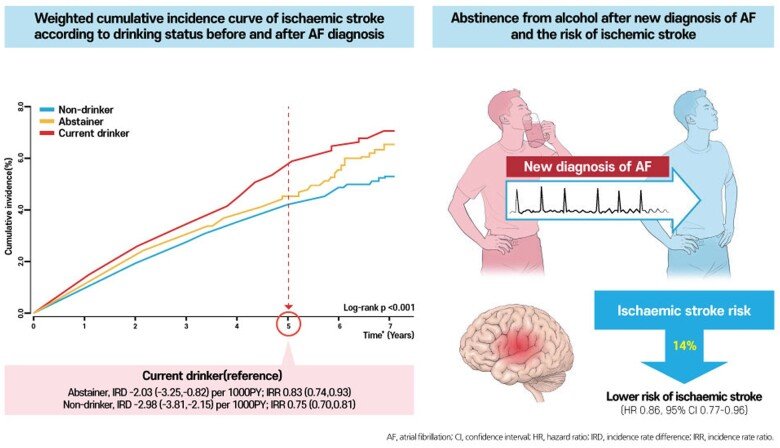
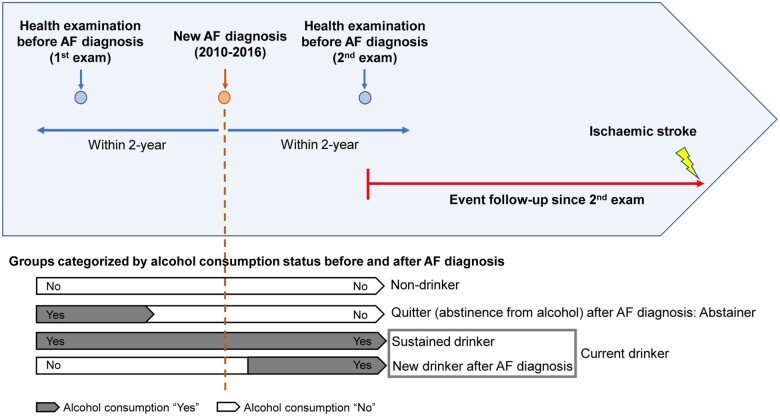
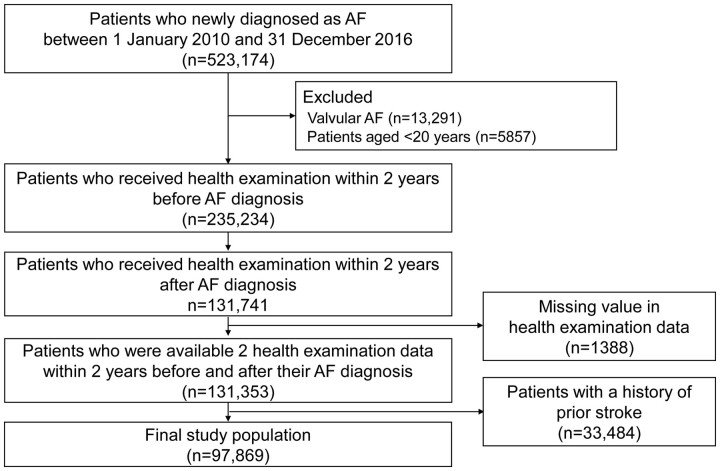
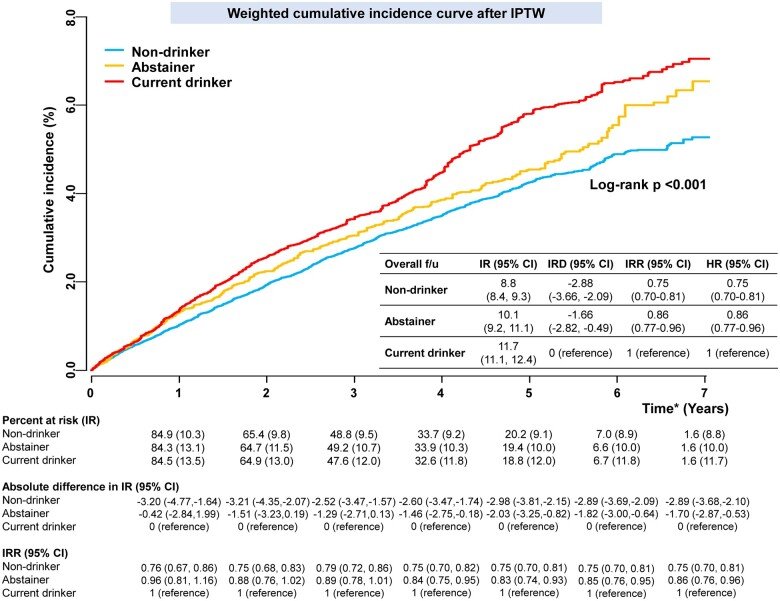
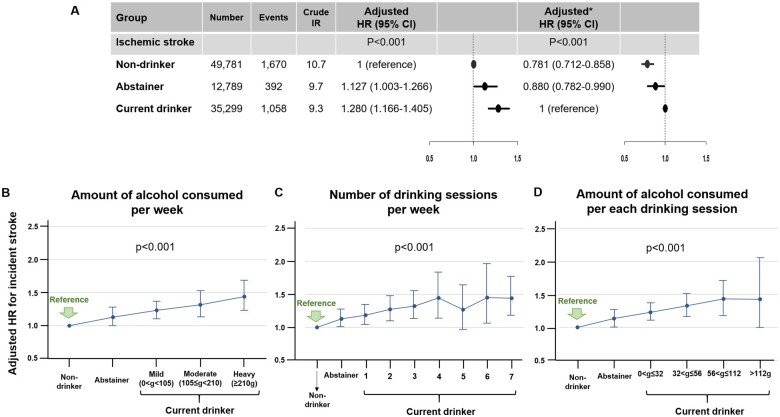
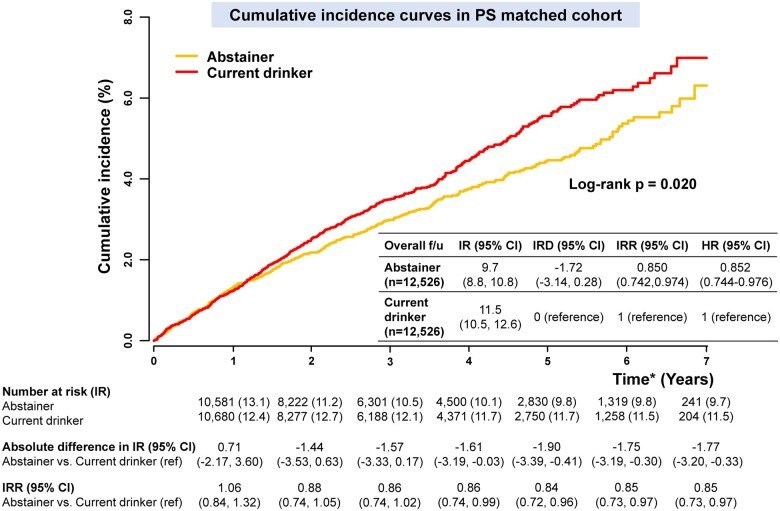
그림 출처: PubMed Central 공개 논문 (PMC8651176)
Comment · 정정
그 밖의 정보
- 출판 형태
- Journal Article, Research Support, Non-U.S. Gov't
- 저널
- European heart journal · eISSN 1522-9645
- MeSH
- Alcohol Abstinence · Atrial Fibrillation* / epidemiology / etiology · Brain Ischemia* / epidemiology / etiology · Cohort Studies · Humans · Stroke* / epidemiology / etiology
- 참고문헌
- 41편