
J Arrhythm. 2026;42(3):e70345.
Feasibility and Safety on Left Bundle Branch Area Pacing With Standard Stylet-Driven Lead: ACHIEVE-SYNC Multicenter Prospective Observational Cohort Study.
제1저자 유가인, 이소령 · 교신저자 조민수, 김태훈
소속 (5)
- Division of Cardiology, Gyeongsang National University Changwon Hospital Gyeongsang National University College of Medicine Changwon Republic of Korea.
- Division of Cardiology, Seoul National University Hospital Seoul National University College of Medicine Seoul Republic of Korea.
- Division of Cardiology, Severance Hospital Yonsei University College of Medicine Seoul Republic of Korea.
- Division of Cardiology, Asan Medical Center Ulsan University College of Medicine Seoul Republic of Korea.
- Division of Cardiology, Sahmyook Medical Center, Seoul Hospital Sahmyook University College of Medicine Seoul Republic of Korea.
Abstract
BACKGROUND Right ventricular pacing increases the risk of dyssynchrony, which raises the need for more physiological pacing strategies. Left bundle branch area pacing (LBBAP) has emerged, with most early studies utilizing lumen-less pacing leads. The feasibility and safety of LBBAP using conventional stylet-driven pacing lead (SDL) have been reported. We present prospective multicenter data, particularly in Asian clinical settings.
METHODS The ACHIEVE-SYNC pilot study was a multicenter prospective observational cohort study conducted across several tertiary hospitals in South Korea. Patients with standard indications for pacemaker implantation underwent LBBAP using a 5.6Fr SDL with an extendable screw. Procedural success rate and LBBAP-related complications were evaluated. Pacing parameters, electrocardiographic features, and echocardiographic outcomes were assessed up to 12 months after implantation.
RESULTS LBBAP using SDL was successful in 100 of 101 (99.0%) patients. LBBAP lead-related adverse event occurred in 1 case (0.99%), which was lead dislodgement. The median pacing threshold at 12-month follow-up was 0.8 [0.7-1.0] V at 0.5 ms. At 12-month follow-up, the mean QRS duration changed from 119.2 ± 28.6 ms to 131.2 ± 23.8 ms. The mean left ventricular ejection fraction was 61.3% ± 8.5% before the procedure and 61.3% ± 7.5% at 12-month follow-up.
CONCLUSIONS In this prospective multicenter registry, LBBAP using SDL demonstrated a near-complete procedural success rate and a high incidence of confirmed Left bundle branch capture. Lead performance remained stable during long-term follow-up, and adverse events were rare, supporting the safety and technical feasibility of this approach in routine clinical practice.
© 2026 The Author(s). Journal of Arrhythmia published by John Wiley & Sons Australia, Ltd on behalf of the Japanese Heart Rhythm Society.
Keywords
conduction system pacingleft bundle branch area pacingstylet‐driven pacing lead
Figures
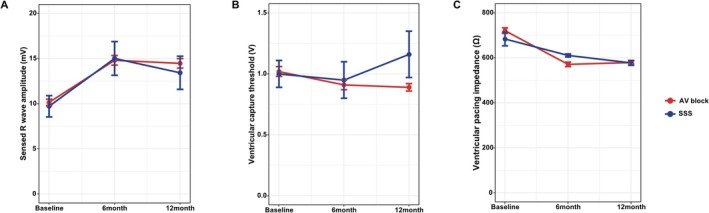

그림 출처: PubMed Central 공개 논문 (PMC13135173)
Conflict of interest statement
The authors declare no conflicts of interest other than the funding provided by Biotronik, which is fully disclosed in the Funding Statement.
그 밖의 정보
- 출판 형태
- Journal Article
- 저널
- Journal of arrhythmia · ISSN 1880-4276
- 전자 출판
- 2026-05-02
- 참고문헌
- 30편