
J Clin Med. 2020;9(8):jcm9082464.
Impact of Intensive Glucose Control in Patients with Diabetes Mellitus Undergoing Percutaneous Coronary Intervention: 3-Year Clinical Outcomes.
제1저자 박지숙, 한정규 · 교신저자 김효수
소속 (1)
- Cardiovascular Center, Seoul National University Hospital, Seoul 03080, Korea.
Abstract
We investigated whether intensive glucose control after percutaneous coronary intervention (PCI) improves clinical outcomes in diabetic patients. From the Grand-DES registry, we analyzed 2576 diabetic patients (median age 66 years, male 65.6%) who underwent PCI and had at least 2 records of HbA1c during the follow-up. Patients were categorized according to the mean HbA1c (≥7% or <7%). Primary outcome was major adverse cardiovascular event (MACE), a composite of cardiac death, non-fatal myocardial infarction, and any revascularization. During a median follow-up of 33.6 months, MACE occurred in 335 (13.0%) patients. Intensive glucose control with follow-up mean HbA1c < 7.0% (42.2%; n = 1087) was not associated with lower risk of MACE, compared to control with mean HbA1c ≥ 7.0% (adjusted hazard ratio [aHR] [95% confidence interval] 1.06 [0.82-1.37], p = 0.672). In subgroup analysis, patients with sustained HbA1c of <7.0% throughout the follow-up were not associated with a lower risk of MACE compared to those with sustained HbA1c of ≥7.0% (aHR 1.15 [0.71-1.89], p = 0.566). More intensive glucose control with mean HbA1c ≤ 6.5% was not associated with lower risk of MACE, compared to loose control with a mean HbA1c ≥ 8.0% (aHR 1.15 [0.71-1.86], p = 0.583). Intensive glucose control after PCI was not associated with better clinical outcomes in diabetic patients undergoing PCI than lenient control.
Keywords
HbA1cdiabetes mellitushyperglycemiapercutaneous coronary intervention
Figures

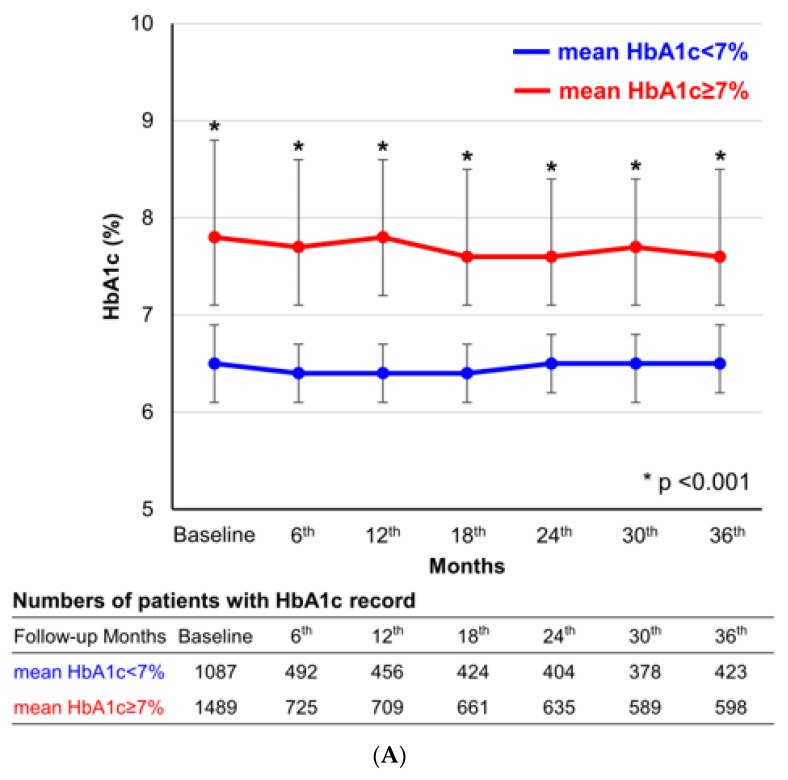


그림 출처: PubMed Central 공개 논문 (PMC7465631)
Conflict of interest statement
The authors declare no conflict of interest.
그 밖의 정보
- 출판 형태
- Journal Article
- 저널
- Journal of clinical medicine · ISSN 2077-0383
- 전자 출판
- 2020-08-01
- 연구비
- Chong Kun Dang Inc. (Seoul) N/A · Ministry of Health and Welfare in Republic of Korea HI17C2085, HI14C1277
- 참고문헌
- 33편