
J Korean Med Sci. 2023;38(10):e75.
Antibiogram of Multidrug-Resistant Bacteria Based on Sepsis Onset Location in Korea: A Multicenter Cohort Study.
제1저자 김형준 · 교신저자 이연주
소속 (5)
- Division of Pulmonary and Critical Care Medicine, Department of Internal Medicine, Seoul National University College of Medicine, Seoul National University Bundang Hospital, Seongnam, Korea.
- Department of Pulmonary and Critical Care Medicine, Asan Medical Center, University of Ulsan College of Medicine, Seoul, Korea.
- Department of Pulmonary, Allergy and Critical Care Medicine, Hallym University Sacred Heart Hospital, Anyang, Korea.
- Division of Pulmonary and Critical Care Medicine, Department of Medicine, Samsung Medical Center, Sungkyunkwan University School of Medicine, Seoul, Korea.
- Division of Pulmonary and Critical Care Medicine, Department of Internal Medicine, Seoul National University College of Medicine, Seoul National University Bundang Hospital, Seongnam, Korea. yjlee1117@snubh.org.
Abstract
BACKGROUND Administration of adequate antibiotics is crucial for better outcomes in sepsis. Because no uniform tool can accurately assess the risk of multidrug-resistant (MDR) pathogens, a local antibiogram is necessary. We aimed to describe the antibiogram of MDR bacteria based on locations of sepsis onset in South Korea.
METHODS We performed a prospective observational study of adult patients diagnosed with sepsis according to Sepsis-3 from 19 institutions (13 tertiary referral and 6 university-affiliated general hospitals) in South Korea. Patients were divided into four groups based on the respective location of sepsis onset: community, nursing home, long-term-care hospital, and hospital. Along with the antibiogram, risk factors of MDR bacteria and drug-bug match of empirical antibiotics were analyzed.
RESULTS MDR bacteria were detected in 1,596 (22.7%) of 7,024 patients with gram-negative predominance. MDR gram-negative bacteria were more commonly detected in long-term-care hospital- (30.4%) and nursing home-acquired (26.3%) sepsis, whereas MDR gram-positive bacteria were more prevalent in hospital-acquired (10.9%) sepsis. Such findings were consistent regardless of the location and tier of hospitals throughout South Korea. Patients with long-term-care hospital-acquired sepsis had the highest risk of MDR pathogen, which was even higher than those with hospital-acquired sepsis (adjusted odds ratio, 1.42; 95% confidence interval, 1.15-1.75) after adjustment of risk factors. The drug-bug match was lowest in patients with long-term-care hospital-acquired sepsis (66.8%).
CONCLUSION Gram-negative MDR bacteria were more common in nursing home- and long-term-care hospital-acquired sepsis, whereas gram-positive MDR bacteria were more common in hospital-acquired settings in South Korea. Patients with long-term-care hospital-acquired sepsis had the highest the risk of MDR bacteria but lowest drug-bug match of initial antibiotics. We suggest that initial antibiotics be carefully selected according to the onset location in each patient.
© 2023 The Korean Academy of Medical Sciences.
Keywords
Drug Resistance, Multiple, BacterialEpidemiologic StudiesNursing homesSepsis
Figures
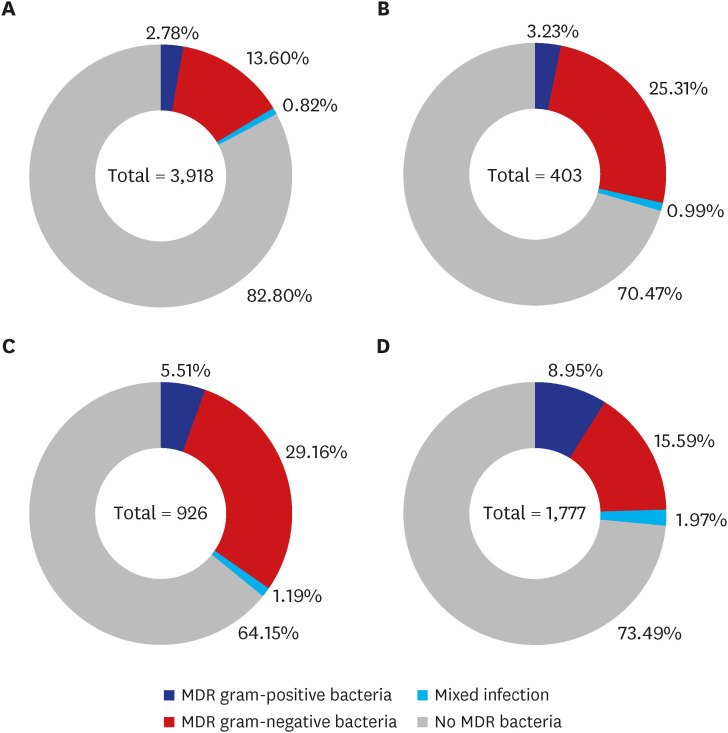
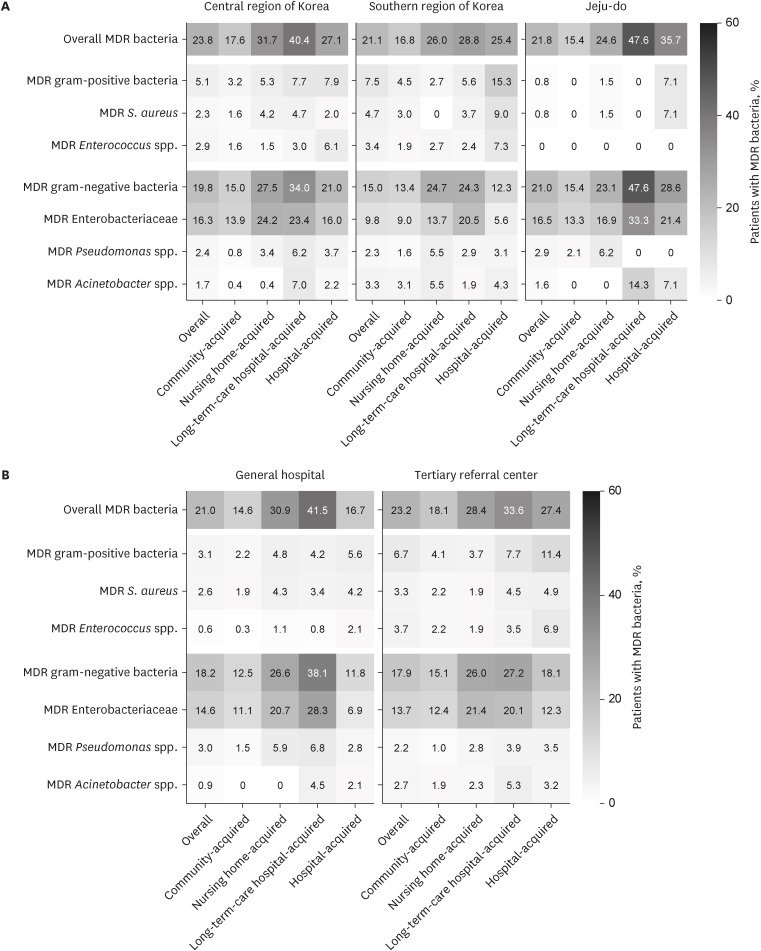
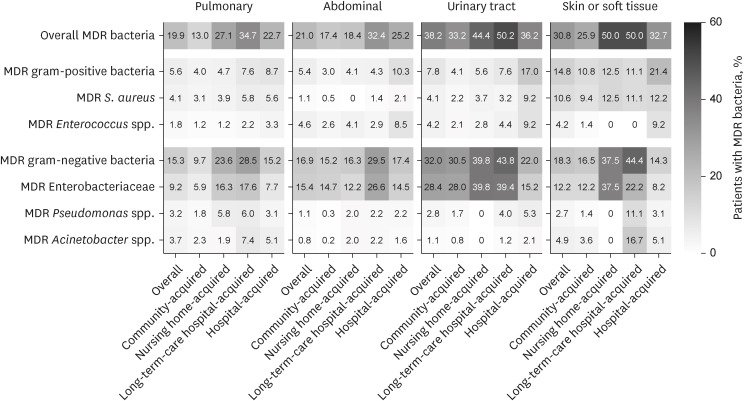
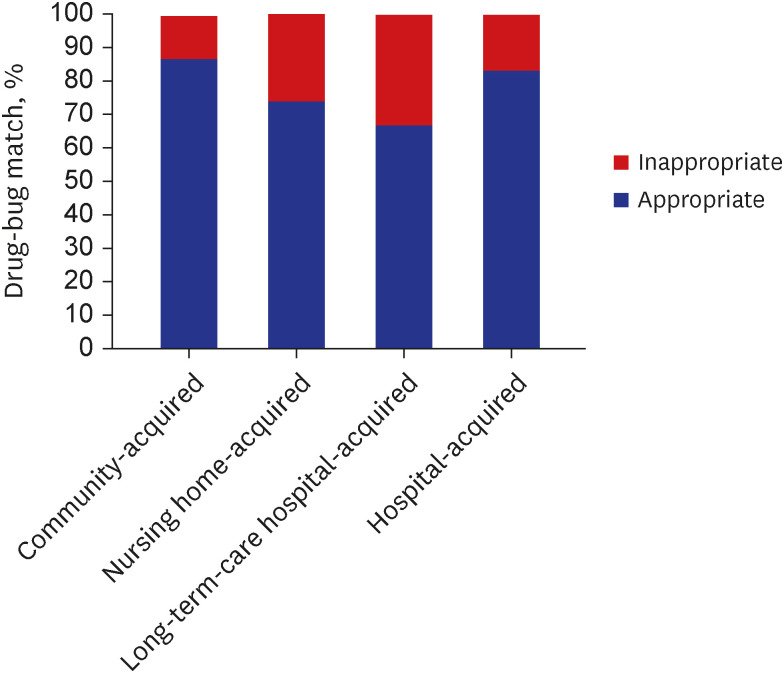
그림 출처: PubMed Central 공개 논문 (PMC10010909)
Conflict of interest statement
The authors have no potential conflicts of interest to disclose.
그 밖의 정보
- 출판 형태
- Observational Study, Multicenter Study, Journal Article
- 저널
- Journal of Korean medical science · eISSN 1598-6357
- 전자 출판
- 2023-03-13
- MeSH
- Adult · Humans · Sepsis* / diagnosis / drug therapy / microbiology · Drug Resistance, Multiple, Bacterial · Hospitals, University · Prospective Studies · Republic of Korea · Microbial Sensitivity Tests · Bacteria · Anti-Bacterial Agents / pharmacology / therapeutic use · Risk Factors
- Substances
- Anti-Bacterial Agents
- 연구비
- Korea Disease Control and Prevention Agency 2019E280500 · Korea Disease Control and Prevention Agency 2021-10-026 · Seoul National University Bundang Hospital 02-2015-0040
- 참고문헌
- 48편