
J Korean Med Sci. 2022;37(49):e353.
How We Have Treated Severe to Critically Ill Patients With Coronavirus Disease 2019 in Korea.
제1저자 박도현 · 교신저자 박완범
소속 (2)
- Department of Internal Medicine, Seoul National University College of Medicine, Seoul, Korea.
- Department of Internal Medicine, Seoul National University College of Medicine, Seoul, Korea. wbpark1@snu.ac.kr.
Abstract
Since 2019, the severe acute respiratory syndrome coronavirus 2 (SARS-CoV-2) has spread worldwide, and the coronavirus disease 2019 (COVID-19) pandemic currently continues. In response to this unprecedented pandemic, several researchers and medical staff have struggled to find appropriate treatments for COVID-19. Patients with mild symptoms can recuperate with symptomatic care, however establishing treatment for severe to critically ill patients who can have a high mortality has been essential. Accordingly, the guidelines for COVID-19 treatment have evolved through numerous trials and errors and have been relatively well established to date. In the Republic of Korea, several evidence-based guidelines for COVID-19 treatment were released and revised, reflecting various research and regional medical conditions. To date, approximately 3 years after the beginning of the COVID-19 pandemic, we are reflecting on the changes in the guidelines thus far and have summarized the treatment experience of severe to critically ill patients with COVID-19. The Korean guidelines for COVID-19 treatment have been updated continuously as the National Institutes of Health (NIH) guidelines have changed. Dexamethasone is currently used as the backbone for the treatment of severe to critically ill patients with COVID-19, and remdesivir, baricitinib, and tocilizumab can be added depending on a patient's situation. In addition, venous thromboembolism prophylaxis is one of the important adjunctive therapies for patients with severe COVID-19. In the clinical field, treatment of severely ill patients with COVID-19 based on guidelines is widely practiced by medical staff and established currently.
© 2022 The Korean Academy of Medical Sciences.
Keywords
AnticoagulationAntiviralCoronavirus disease 2019Dexamethasone
Figures
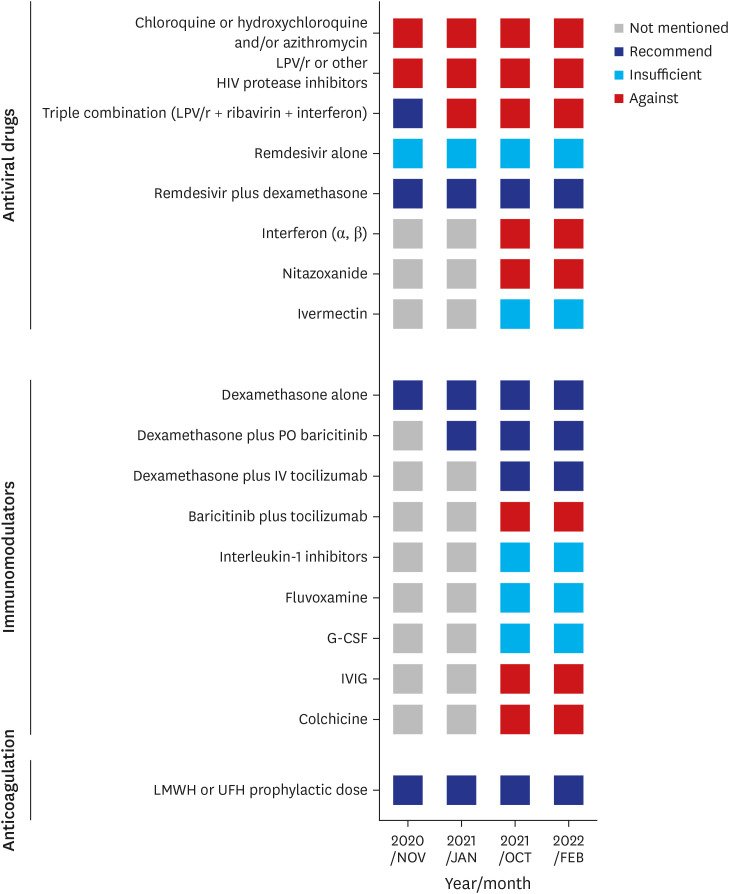
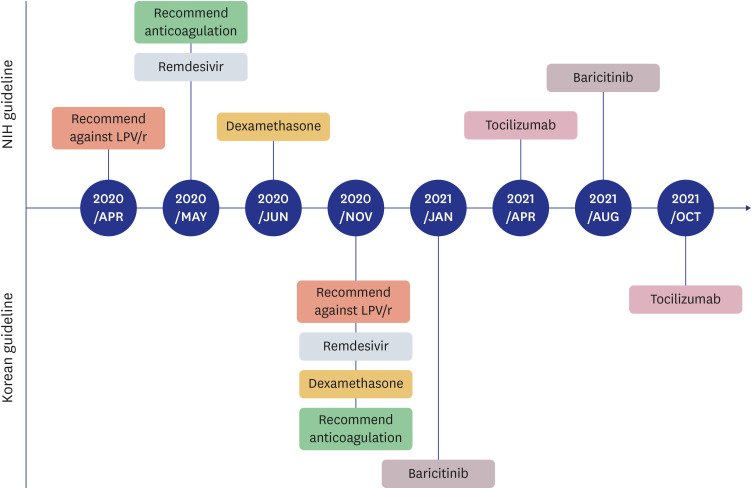
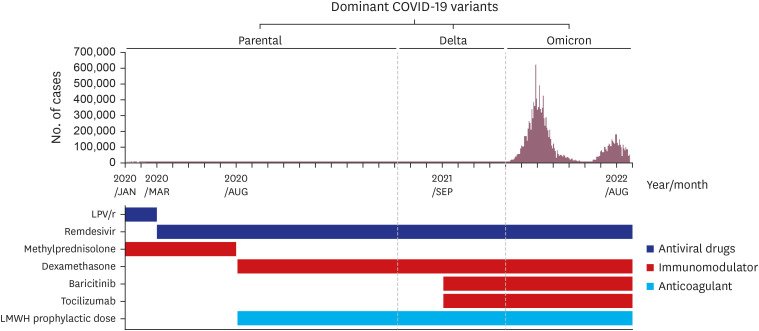
그림 출처: PubMed Central 공개 논문 (PMC9763707)
Conflict of interest statement
The authors declare no conflicts of interest relevant to this article.
그 밖의 정보
- 출판 형태
- Journal Article, Review
- 저널
- Journal of Korean medical science · eISSN 1598-6357
- 전자 출판
- 2022-12-19
- MeSH
- Humans · COVID-19* · SARS-CoV-2 · Critical Illness · Pandemics · COVID-19 Drug Treatment
- 참고문헌
- 36편