
Endocrinol Metab (Seoul). 2021;36(5):928-937.
Applications of Machine Learning in Bone and Mineral Research.
제1저자 공성혜 · 교신저자 신찬수
소속 (3)
- Department of Internal Medicine, Seoul National University College of Medicine, Seoul, Korea.
- Department of Internal Medicine, Seoul National University Bundang Hospital, Seongnam, Korea.
- Department of Internal Medicine, Seoul National University Hospital, Seoul, Korea.
Abstract
In this unprecedented era of the overwhelming volume of medical data, machine learning can be a promising tool that may shed light on an individualized approach and a better understanding of the disease in the field of osteoporosis research, similar to that in other research fields. This review aimed to provide an overview of the latest studies using machine learning to address issues, mainly focusing on osteoporosis and fractures. Machine learning models for diagnosing and classifying osteoporosis and detecting fractures from images have shown promising performance. Fracture risk prediction is another promising field of research, and studies are being conducted using various data sources. However, these approaches may be biased due to the nature of the techniques or the quality of the data. Therefore, more studies based on the proposed guidelines are needed to improve the technical feasibility and generalizability of artificial intelligence algorithms.
Keywords
Data scienceMedical informaticsOsteoporosis
Figures

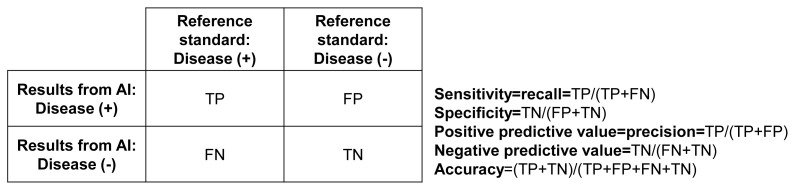
그림 출처: PubMed Central 공개 논문 (PMC8566132)
Conflict of interest statement
CONFLICTS OF INTEREST . No potential conflict of interest relevant to this article was reported.
그 밖의 정보
- 출판 형태
- Journal Article, Research Support, Non-U.S. Gov't, Review
- 저널
- Endocrinology and metabolism (Seoul, Korea) · eISSN 2093-5978
- 전자 출판
- 2021-10-21
- MeSH
- Algorithms · Artificial Intelligence* · Humans · Machine Learning · Minerals · Osteoporosis* / diagnosis
- Substances
- Minerals
- 참고문헌
- 75편