
Sleep Breath. 2026;30(2):10.1007/s11325-026-03684-1.
The influence of habitual consumption of alcohol on the incidence of obstructive sleep apnea: a national population-based cohort study.
제1저자 박진아, 배은혜 · 교신저자 조재영
소속 (5)
- Division of Pulmonary and Critical Care Medicine, Department of Internal Medicine, Seoul National University Hospital, 101 Daehak-ro, Jongno-gu, Seoul, 03080, Republic of Korea.
- Division of Pulmonary and Critical Care Medicine, Department of Internal Medicine, Chung-ang University Gwangmyeong Hospital, Gyeonggi-do, Republic of Korea.
- Department of Biostatistics and Computing, Yonsei University, Seoul, Republic of Korea.
- Division of Pulmonary and Critical Care Medicine, Department of Internal Medicine, Seoul National University Hospital, 101 Daehak-ro, Jongno-gu, Seoul, 03080, Republic of Korea. apricot6@snu.ac.kr.
- Department of Internal Medicine, Seoul National University College of Medicine, Seoul, Republic of Korea. apricot6@snu.ac.kr.
Abstract
PURPOSE: The objective of this nationwide population-based cohort study was to determine the association between habitual alcohol consumption and the incidence of newly diagnosed obstructive sleep apnea (OSA). METHODS: This study used data from the Korean National Health Insurance Service database and included individuals aged ≥ 40 years who underwent a health check-up in 2011 or 2012. Individuals with a prior history of sleep apnea were excluded. Habitual alcohol consumption was defined as a weekly alcohol intake greater than 0 g. The study outcome was the newly identified cases of OSA, which we evaluated using the Cox proportional hazards regression model. RESULTS: A total of 3,988,993 individuals (mean age, 54.5 years; male, 50.1%; mean body mass index [BMI], 24.0 kg/m²) were included, of whom 1,688,094 (42.3%) had habitual alcohol consumption. During a mean follow-up period of 9.7 years, 33,563 new cases of OSA were documented. Individuals with habitual alcohol consumption had an incidence rate of 108.9 per 100,000 person-years, whereas those without habitual alcohol consumption had a rate of 69.6 per 100,000 person-years. Following adjustment for covariates including age, sex, BMI, income, smoking status, physical activity, and the Charlson comorbidity index, the hazard ratio for incident OSA was 1.026 (95% confidence interval, 1.001–1.051). The association between habitual alcohol consumption and incident OSA was more prominent among males and those with underlying chronic kidney disease or a history of cancer. CONCLUSION: This large-scale Korean population-based cohort study revealed that habitual alcohol consumption is associated with an increased incidence of OSA.
Keywords
Alcohol consumptionIncidenceObstructive sleep apneaRisk factors
Figures
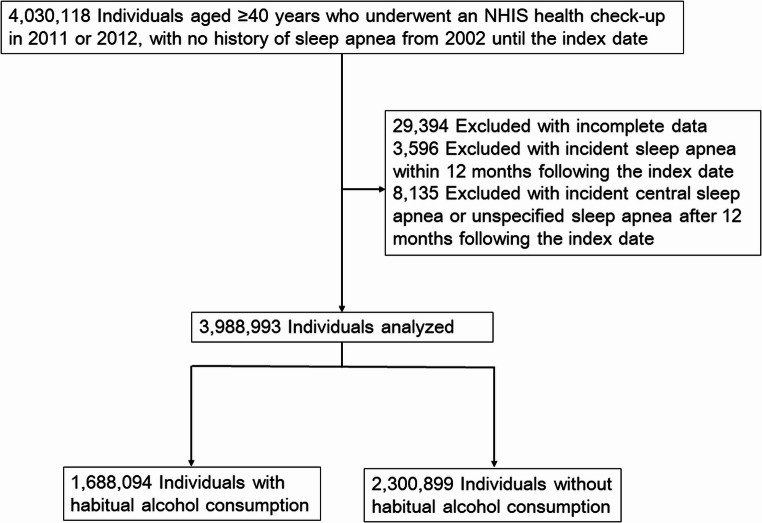
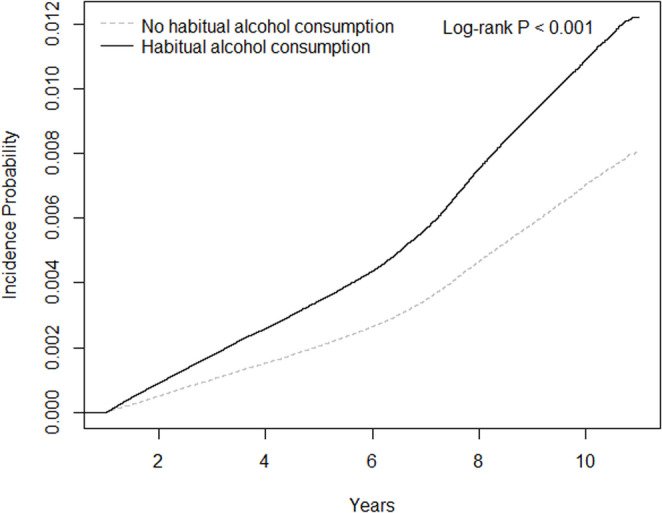
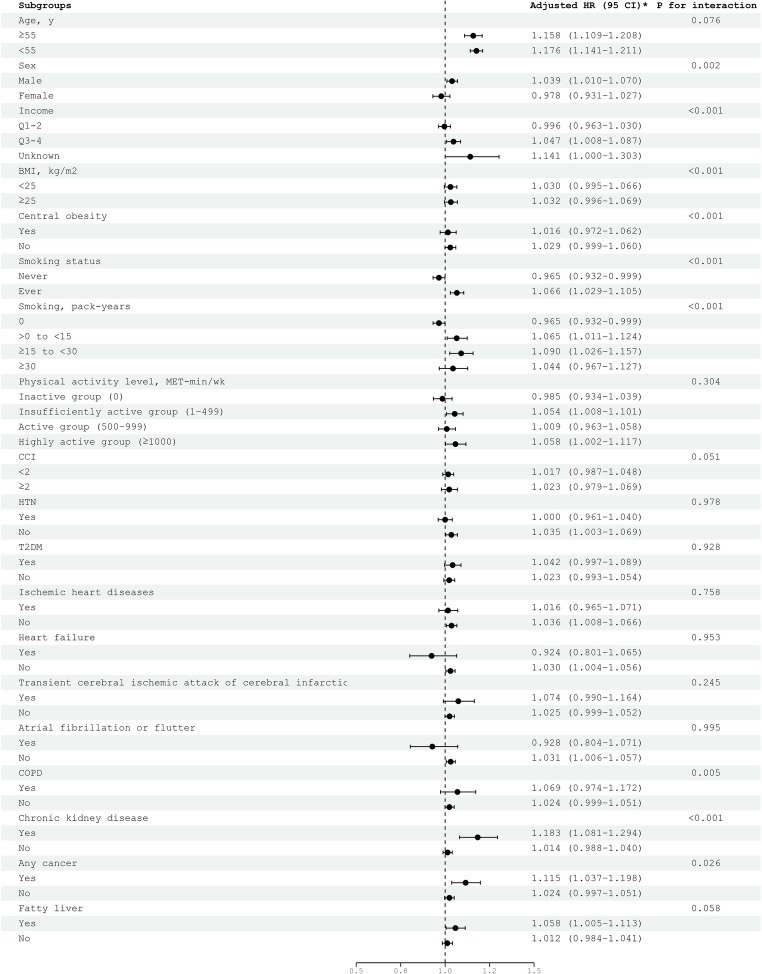
그림 출처: PubMed Central 공개 논문 (PMC13091808)
Conflict of interest statement
Declarations. Ethical approval: This study was exempted from ethical review by the Institutional Review Board of Seoul National University Hospital (E-2402-016-1506), as all data were anonymized, and it was conducted in accordance with the tenets of the Declaration of Helsinki. Informed consent: Informed consent was waived because the study was retrospective and all data were analyzed anonymously. Conflict of interest: The authors report no conflicts of interest. Declaration of generative AI and AI-assisted technologies in the writing process: No generative AI or AI-assisted technologies were used in the writing of this manuscript beyond basic tools for grammar and spelling checking.
그 밖의 정보
- 출판 형태
- Journal Article
- 저널
- Sleep & breathing = Schlaf & Atmung · eISSN 1522-1709
- 전자 출판
- 2026-04-18
- MeSH
- Humans · Sleep Apnea, Obstructive* / epidemiology / diagnosis · Male · Middle Aged · Alcohol Drinking* / epidemiology / adverse effects · Republic of Korea · Female · Cohort Studies · Adult · Incidence · Aged · Risk Factors · Follow-Up Studies · Statistics as Topic
- 참고문헌
- 37편