
Lancet Reg Health West Pac. 2023;30:100581.
How to cope with emerging viral diseases: lessons from South Korea's strategy for COVID-19, and collateral damage to cardiometabolic health.
제1저자 임수 · 교신저자 임수
소속 (1)
- Department of Internal Medicine, Seoul National University College of Medicine, Seoul National University Bundang Hospital, Seongnam, South Korea.
Abstract
South Korea is a unique country in many aspects in terms of its strategy against the COVID-19 pandemic. From February 2020, the South Korean government adopted active epidemiological investigations, strict isolation of affected patients, and extensive public lockdowns, which were helpful in controlling spread until the end of 2021. This stable situation in South Korea has changed dramatically since the Omicron variant-reportedly less severe but more infective than the original strain-became dominant from January 2022. From mid-February to mid-April 2022, daily cases of COVID-19 in South Korea increased steeply, reaching > 600,000 cases/day: the highest incidence rate in the world at that time. Despite this rapid increase, the South Korean government has eased its preventive strategies progressively, based on the belief in the efficacy of >80% of vaccine coverage in the population. Now, in June 2022, the COVID-19 situation in South Korea is improving. The mortality rate is 0·13%: the lowest among the 30 countries with the highest case counts. High vaccine coverage rate (87·7%), the efficient healthcare system, and active co-operation between private sectors and the central government seem to have contributed to this. However, it should also be noted that the COVID-19 pandemic and its preventive measures have had a negative influence on cardiometabolic profiles in the country. Considering the likelihood of another novel variant of SARS-CoV-2 or new infectious disease emerging in the future, understanding the situation in South Korea and the strategies flexibly adopted by its government could be beneficial for many countries.
© 2022 The Author(s).
Keywords
COVID-19Cardiometabolic healthMortalityPreventive measuresPublic healthQuarantineSouth Korea
Figures
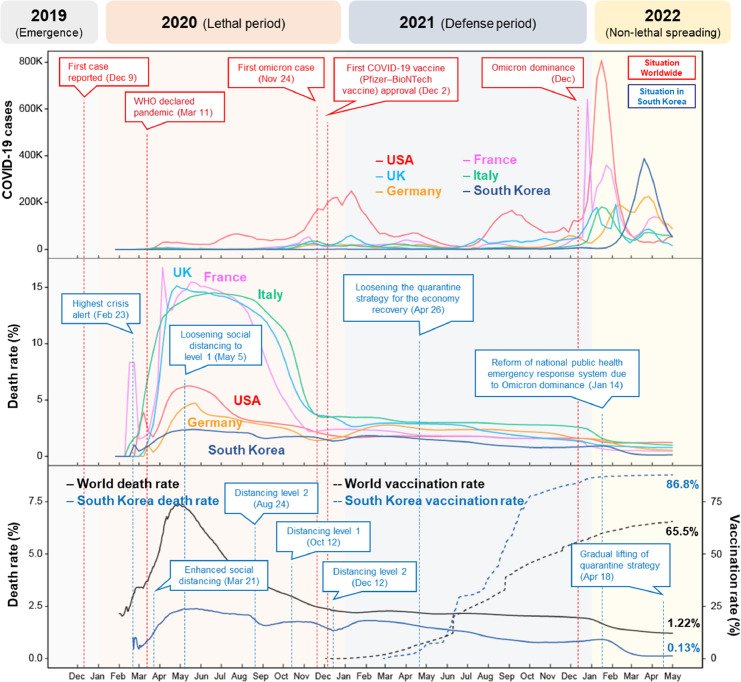
그림 출처: PubMed Central 공개 논문 (PMC9442269)
Conflict of interest statement
We declare no competing interests.
그 밖의 정보
- 출판 형태
- Journal Article, Review
- 저널
- The Lancet regional health. Western Pacific · eISSN 2666-6065
- 전자 출판
- 2022-09-05
- 참고문헌
- 38편