
Sci Rep. 2019;9(1):16952.
Genetic Characteristics of Korean Patients with Autosomal Dominant Polycystic Kidney Disease by Targeted Exome Sequencing.
제1저자 김현숙, 박혜인 · 교신저자 오윤규, 안규리
소속 (13)
- Department of Internal Medicine, Chuncheon Sacred Heart Hospital, Chuncheon, Korea.
- Department of Internal Medicine, Kangnam Sacred Heart Hospital, Seoul, Korea.
- Department of Internal Medicine, Seoul National University Hospital, Seoul, Korea.
- Center for Medical Innovation, Seoul National University Hospital, Seoul, Korea.
- Genomic Core Facility, Transdisciplinary Research and Collaboration Division, Translational Research Institute, and Biomedical Research Institute, Seoul National University Hospital, Seoul, Korea.
- National Assembly Futures Institute, Seoul, Korea.
- Samsung Genome Institute, Samsung Medical Center, Seoul, Korea.
- Department of Health Science and Technology, Samsung Advanced Institute for Health Sciences and Technology, Sungkyunkwan University, Seoul, Korea.
- Department of Molecular Cell Biology, Sungkyunkwan University School of Medicine, Seoul, Korea.
- Truewords Dialysis Clinic, Incheon, Korea.
- Department of Internal Medicine, Kangbuk Samsung Hospital, Sungkyunkwan University School of Medicine, Seoul, Korea.
- Department of Internal Medicine, Seoul National University Boramae Medical Center, Seoul, Korea. yoonkyu@snu.ac.kr.
- Department of Internal Medicine, Seoul National University Hospital, Seoul, Korea. curie@snu.ac.kr.
Abstract
Autosomal dominant polycystic kidney disease (ADPKD) is one of the main causes of end-stage renal disease (ESRD). Genetic information is of the utmost importance in understanding pathogenesis of ADPKD. Therefore, this study aimed to demonstrate the genetic characteristics of ADPKD and their effects on renal function in 749 Korean ADPKD subjects from 524 unrelated families. Genetic studies of PKD1/2 were performed using targeted exome sequencing combined with Sanger sequencing in exon 1 of the PKD1 gene and a multiple ligation probe assay. The mutation detection rate was 80.7% (423/524 families, 331 mutations) and 70.7% was novel. PKD1 protein-truncating (PKD1-PT) genotype was associated with younger age at diagnosis, larger kidney volume, lower renal function compared to PKD1 non-truncating and PKD2 genotypes. The PKD1 genotype showed earlier onset of ESRD compared to PKD2 genotype (64.9 vs. 72.9 years old, P < 0.001). In frailty model controlled for age, gender, and familial clustering effect, PKD2 genotype had 0.2 times lower risk for reaching ESRD than PKD1-PT genotype (p = 0.037). In conclusion, our results suggest that genotyping can contribute to selecting rapid progressors for new emerging therapeutic interventions among Koreans.
Figures
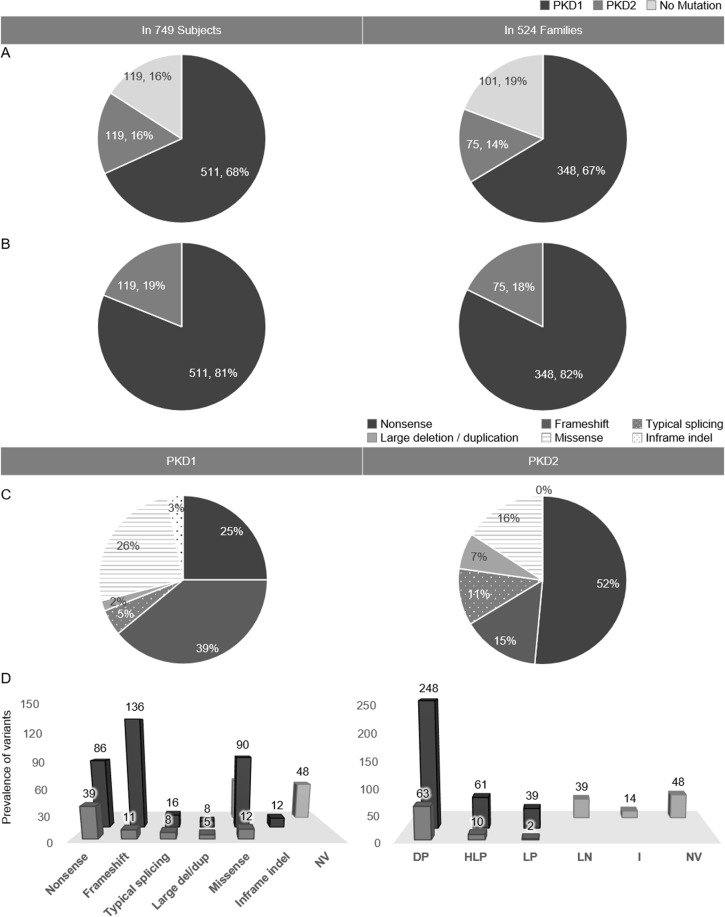
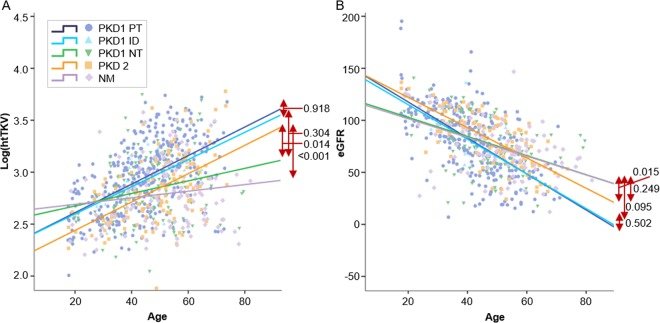
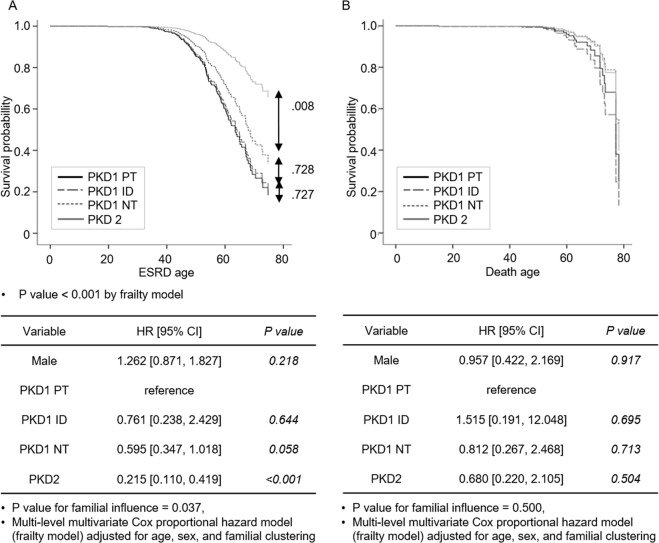
그림 출처: PubMed Central 공개 논문 (PMC6861305)
Comment · 정정
Conflict of interest statement
The authors declare no competing interests.
그 밖의 정보
- 출판 형태
- Journal Article, Multicenter Study, Research Support, Non-U.S. Gov't
- 저널
- Scientific reports · eISSN 2045-2322
- 전자 출판
- 2019-11-18
- MeSH
- Adult · Asian People / genetics · Exome · Female · Genotype · Glomerular Filtration Rate · Humans · Incidence · Kidney Failure, Chronic / epidemiology / genetics · Male · Middle Aged · Mutation · Mutation Rate · Polycystic Kidney, Autosomal Dominant / etiology / genetics · Prospective Studies · Republic of Korea / epidemiology · TRPP Cation Channels / genetics
- Substances
- TRPP Cation Channels
- 참고문헌
- 21편