
Crit Care. 2025;29(1):177.
Cytomegalovirus reactivation in the lower respiratory tract as an independent risk factor for mortality in critically Ill patients.
제1저자 김중엽, 이찬미 · 교신저자 강창경, 이진우
소속 (7)
- Division of Pulmonary and Critical Care Medicine, Department of Internal Medicine, Seoul National University Hospital, Seoul, Republic of Korea.
- Department of Internal Medicine, Seoul National University Hospital, Seoul National University College of Medicine, Seoul, Republic of Korea.
- Department of Microbiology, Harvard Medical School, Boston, MA, USA.
- Department of Critical Care Medicine, Seoul National University Hospital, Seoul, Republic of Korea.
- Department of Internal Medicine, Seoul National University Hospital, Seoul National University College of Medicine, Seoul, Republic of Korea. voyager0@snu.ac.kr.
- Division of Pulmonary and Critical Care Medicine, Department of Internal Medicine, Seoul National University Hospital, Seoul, Republic of Korea. realrain7@snu.ac.kr.
- Department of Internal Medicine, Seoul National University Hospital, Seoul National University College of Medicine, Seoul, Republic of Korea. realrain7@snu.ac.kr.
Abstract
BACKGROUND The clinical significance of cytomegalovirus reactivation in the lower respiratory tract (LRT) of critically ill patients remains unclear. We aimed to investigate the association between cytomegalovirus reactivation detected in LRT and intensive care unit (ICU) prognosis.
METHODS This study included critically ill patients admitted to a medical ICU at a tertiary referral center in South Korea between January 2021 and June 2023. Cytomegalovirus load in LRT samples collected via bronchoscopy was measured within 7 days of admission. Detection of cytomegalovirus DNA in LRT was defined as reactivation. Associations between cytomegalovirus reactivation and ICU, in-hospital, 30-day, and 90-day mortality were assessed using multivariable Fine-Gray model adjusted for major clinical factors.
RESULTS Of the 322 patients (median age 68 years, 66.8% male), 145 (45%) had cytomegalovirus reactivation in the LRT. Cytomegalovirus reactivation was independently associated with increased ICU (adjusted subdistribution hazard ratio [aSHR], 2.28; 95% confidence interval [CI], 1.46-3.56), in-hospital (aSHR, 2.00; 95% CI, 1.44-2.78), 30-day (aSHR, 2.11; 95% CI, 1.42-3.13), and 90-day mortality (aSHR, 2.05; 95% CI, 1.45-2.88). Anti-cytomegalovirus therapy was significantly associated with reduced ICU mortality in patients with radiologic findings suggestive of cytomegalovirus pneumonia (P for interaction = 0.001), but was linked to increased mortality in patients with positive bacterial cultures (P for interaction = 0.002).
CONCLUSION Cytomegalovirus reactivation in the LRT is associated with poor outcomes in critically ill patients. Anti-cytomegalovirus therapy was not associated with overall survival outcomes; however, the subgroup with radiologic findings of cytomegalovirus pneumonia suggested benefits, while the subgroup with bacterial co-infections suggested harmful effects. Randomized controlled trials are needed.
© 2025. The Author(s).
Keywords
CMVICULower respiratory tractPrognosisReactivation
Figures
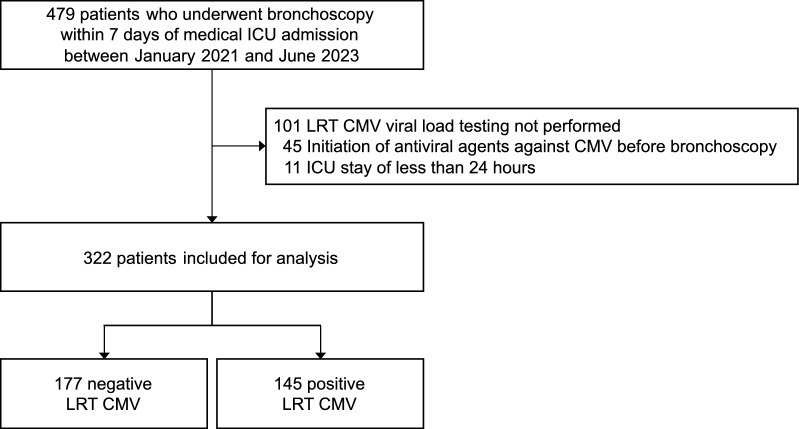
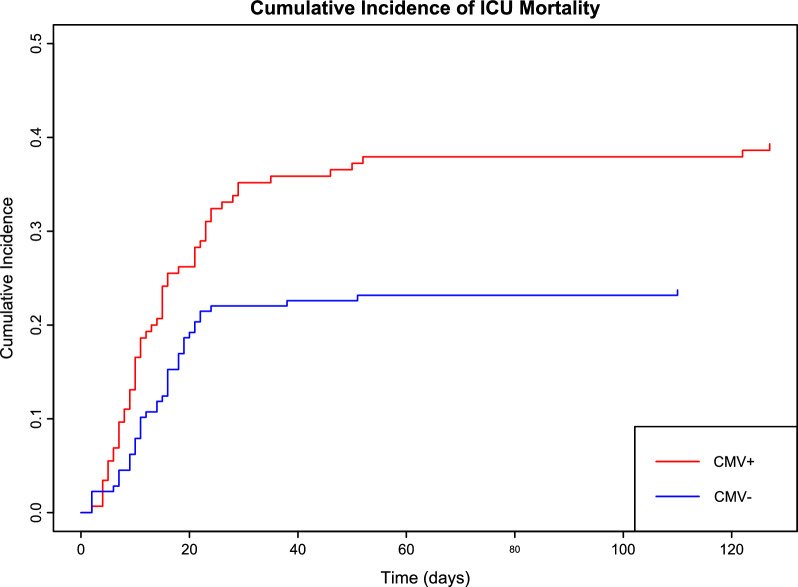
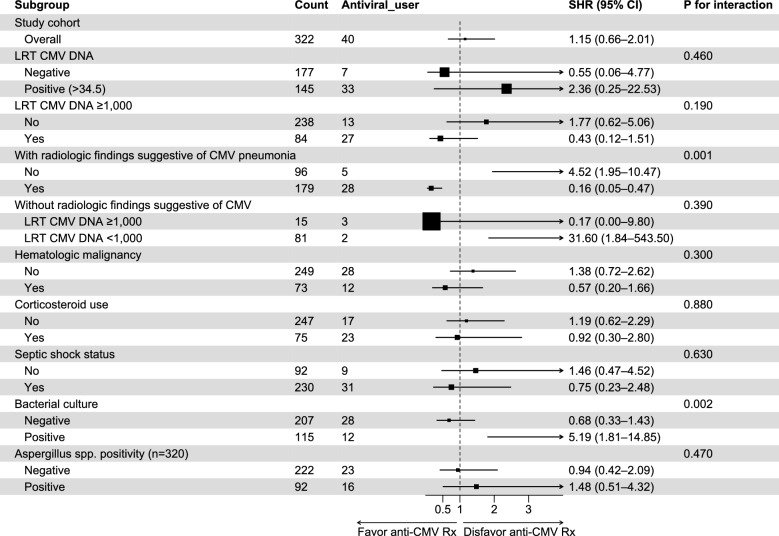
그림 출처: PubMed Central 공개 논문 (PMC12048981)
Comment · 정정
Conflict of interest statement
Declarations. Competing interests: The authors declare no competing interests.
그 밖의 정보
- 출판 형태
- Journal Article
- 저널
- Critical care (London, England) · eISSN 1466-609X
- 전자 출판
- 2025-05-02
- MeSH
- Humans · Male · Female · Aged · Critical Illness / mortality · Republic of Korea / epidemiology · Cytomegalovirus* / pathogenicity · Middle Aged · Risk Factors · Intensive Care Units / organization & administration / statistics & numerical data · Cytomegalovirus Infections* / mortality · Virus Activation* / physiology · Mortality / trends
- 연구비
- National Research Foundation of Korea 2021M3A9I2080498
- 참고문헌
- 32편