
BMC Health Serv Res. 2014;14:595.
International comparison of the factors influencing reimbursement of targeted anti-cancer drugs.
제1저자 임성혜 · 교신저자 허대석
Abstract
BACKGROUND Reimbursement policies for anti-cancer drugs vary among countries even though they rely on the same clinical evidence. We compared the pattern of publicly funded drug programs and analyzed major factors influencing the differences.
METHODS We investigated reimbursement policies for 19 indications with targeted anti-cancer drugs that are used variably across ten countries. The available incremental cost-effectiveness ratio (ICER) data were retrieved for each indication. Based on the comparison between actual reimbursement decisions and the ICERs, we formulated a reimbursement adequacy index (RAI): calculating the proportion of cost-effective decisions, either reimbursement of cost-effective indications or non-reimbursement of cost-ineffective indications, out of the total number of indications for each country. The relationship between RAI and other indices were analyzed, including governmental dependency on health technology assessment, as well as other parameters for health expenditure. All the data used in this study were gathered from sources publicly available online.
RESULTS Japan and France were the most likely to reimburse indications (16/19), whereas Sweden and the United Kingdom were the least likely to reimburse them (5/19 and 6/19, respectively). Indications with high cost-effectiveness values were more likely to be reimbursed (ρ = -0.68, P = 0.001). The three countries with high RAI scores each had a healthcare system that was financed by general taxation.
CONCLUSIONS Although reimbursement policies for anti-cancer drugs vary among countries, we found a strong correlation of reimbursements for those indications with lower ICERs. Countries with healthcare systems financed by general taxation demonstrated greater cost-effectiveness as evidenced by reimbursement decisions of anti-cancer drugs.
Figures
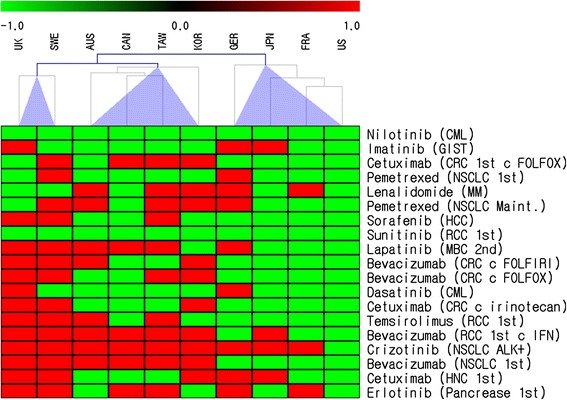
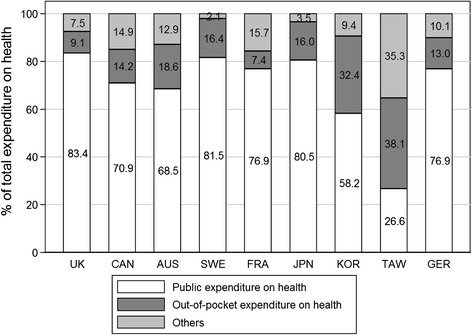
그림 출처: PubMed Central 공개 논문 (PMC4258032)
그 밖의 정보
- 출판 형태
- Comparative Study, Journal Article, Research Support, Non-U.S. Gov't
- 저널
- BMC health services research · eISSN 1472-6963
- 전자 출판
- 2014-11-29
- MeSH
- Antineoplastic Agents / economics / therapeutic use · Cost-Benefit Analysis · France · Health Expenditures · Humans · Insurance, Health, Reimbursement* · Internationality* · Japan · Sweden · Technology Assessment, Biomedical / economics · United Kingdom
- Substances
- Antineoplastic Agents
- 참고문헌
- 39편