
Environ Sci Pollut Res Int. 2021;28(42):59868-59880.
The impact of organic extracts of seasonal PM2.5 on primary human lung epithelial cells and their chemical characterization.
제1저자 박지은, 이경희 · 교신저자 허정배, 유철규
소속 (7)
- Graduate School of Public Health, Seoul National University, Seoul, Korea.
- Division of Pulmonary and Critical Care Medicine, Department of Internal Medicine, Seoul National University Hospital, 101 Daehakno, Jongno-gu, Seoul, 03080, Korea.
- Busan Development Institute, 955 Jungangdae-ro, Busanjin-gu, Busan, 47210, Korea. jongbaeheo@gmail.com.
- Department of Internal Medicine, Seoul National University College of Medicine, Seoul, Korea.
- Institute of Health and Environment, Seoul National University, Seoul, Korea.
- Division of Pulmonary and Critical Care Medicine, Department of Internal Medicine, Seoul National University Hospital, 101 Daehakno, Jongno-gu, Seoul, 03080, Korea. cgyoo@snu.ac.kr.
- Department of Internal Medicine, Seoul National University College of Medicine, Seoul, Korea. cgyoo@snu.ac.kr.
Abstract
Lung epithelial cells serve as the first line of defense against various inhaled pollutant particles. To investigate the adverse health effects of organic components of fine particulate matter (PM2.5) collected in Seoul, South Korea, we selected 12 PM2.5 samples from May 2016 to January 2017 and evaluated the effects of organic compounds of PM2.5 on inflammation, cellular aging, and macroautophagy in human lung epithelial cells isolated directly from healthy donors. Organic extracts of PM2.5 specifically induced neutrophilic chemokine and interleukin-8 expression via extracellular signal-regulated kinase activation. Moreover, PM2.5 significantly increased the expression of aging markers (p16, p21, and p27) and activated macroautophagy. Average mass concentrations of organic and elemental carbon had no significant correlations with PM2.5 effects. However, polycyclic aromatic hydrocarbons and n-alkanes were the most relevant components of PM2.5 that correlated with neutrophilic inflammation. Vegetative detritus and residential bituminous coal combustion sources strongly correlated with neutrophilic inflammation, aging, and macroautophagy activation. These data suggest that the chemical composition of PM2.5 is important for determining the adverse health effects of PM2.5. Our study provides encouraging evidence to regulate the harmful components of PM2.5 in Seoul.
© 2021. The Author(s).
Keywords
CytokineLung epithelial cellsMacroautophagyOrganic compoundsPM2.5Senescence
Figures
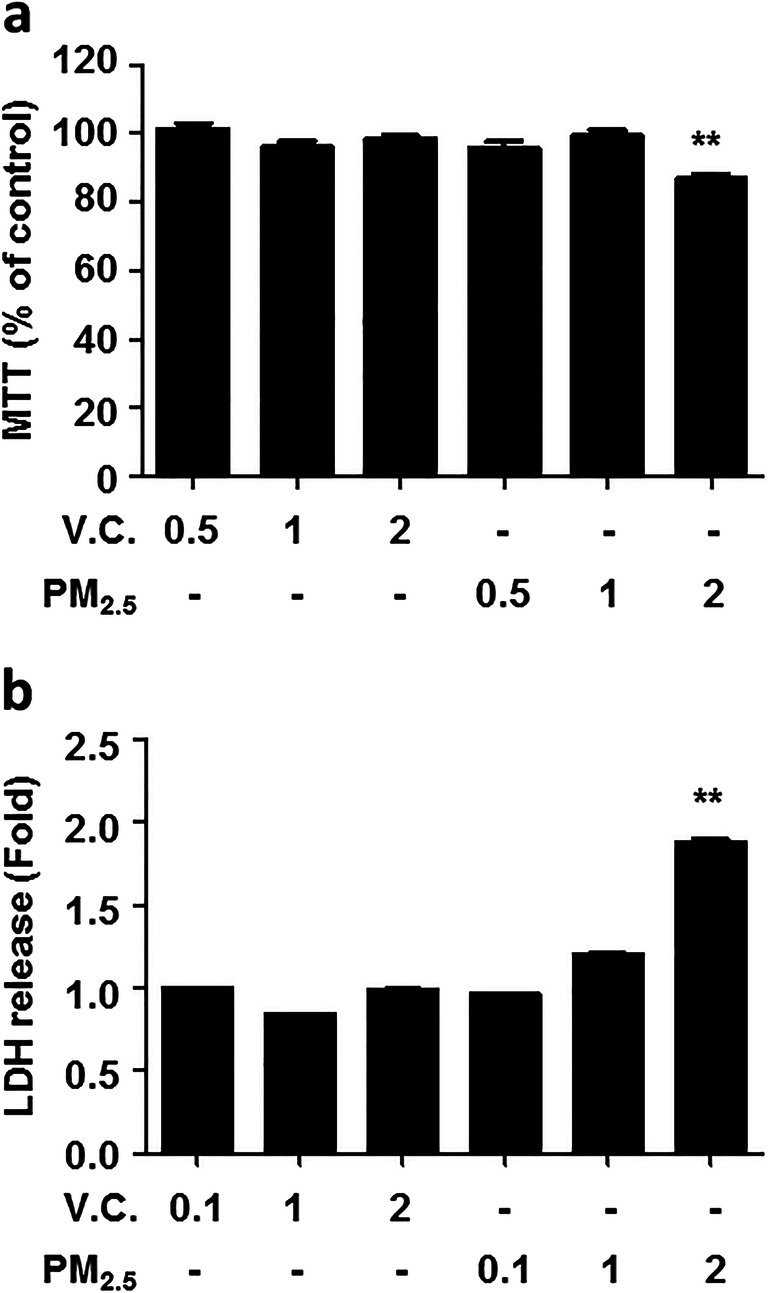
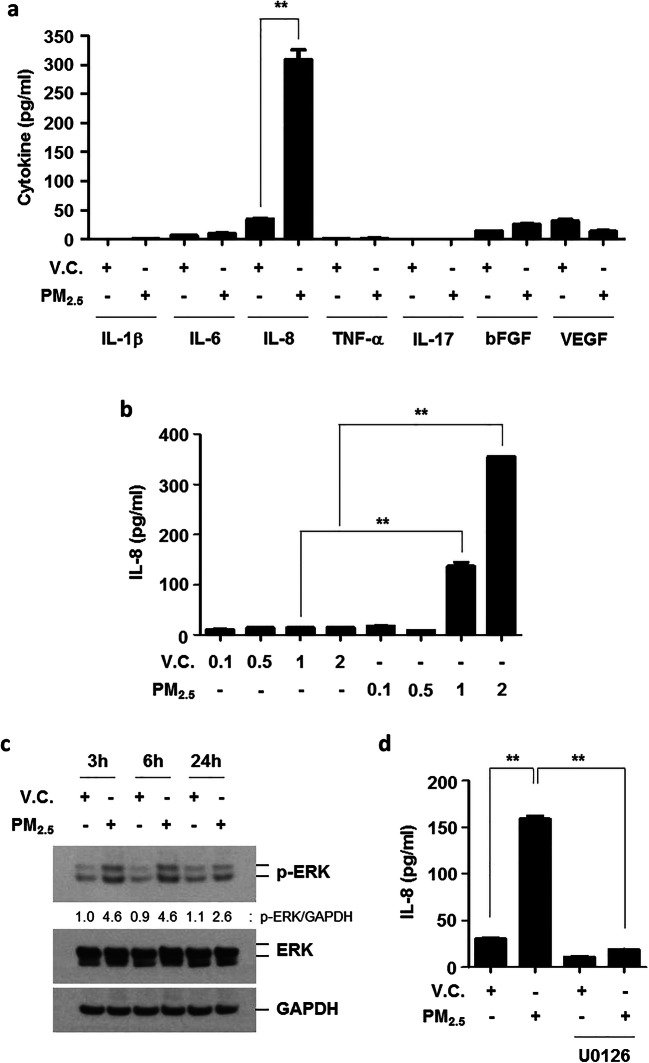
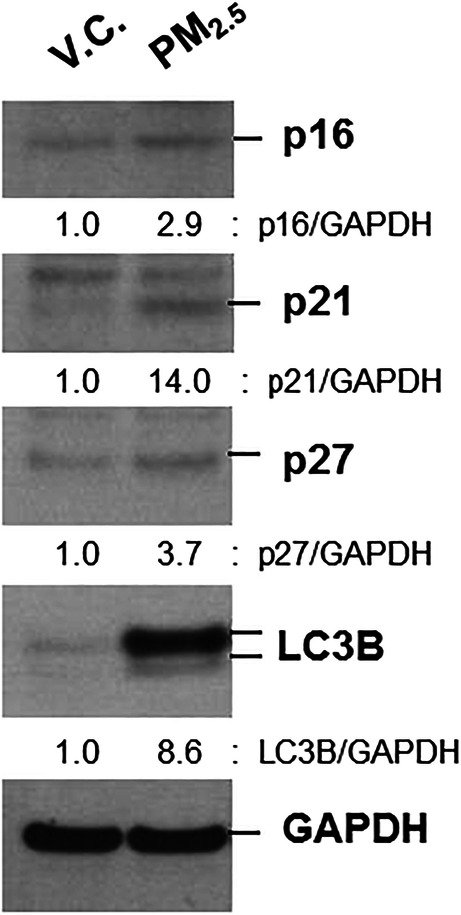
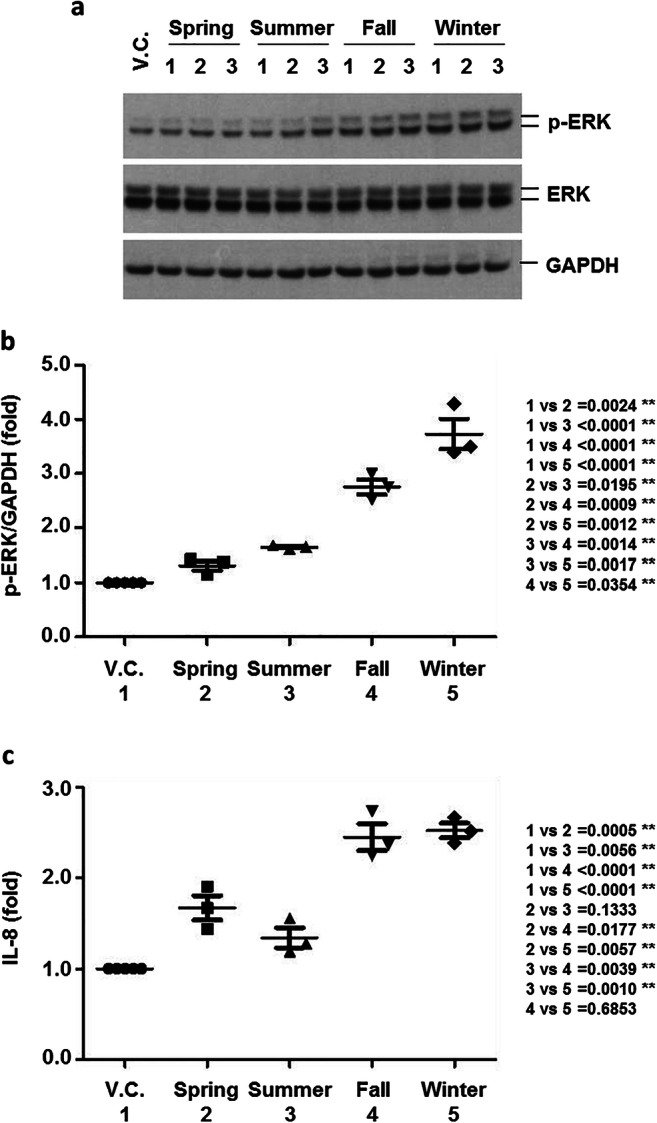
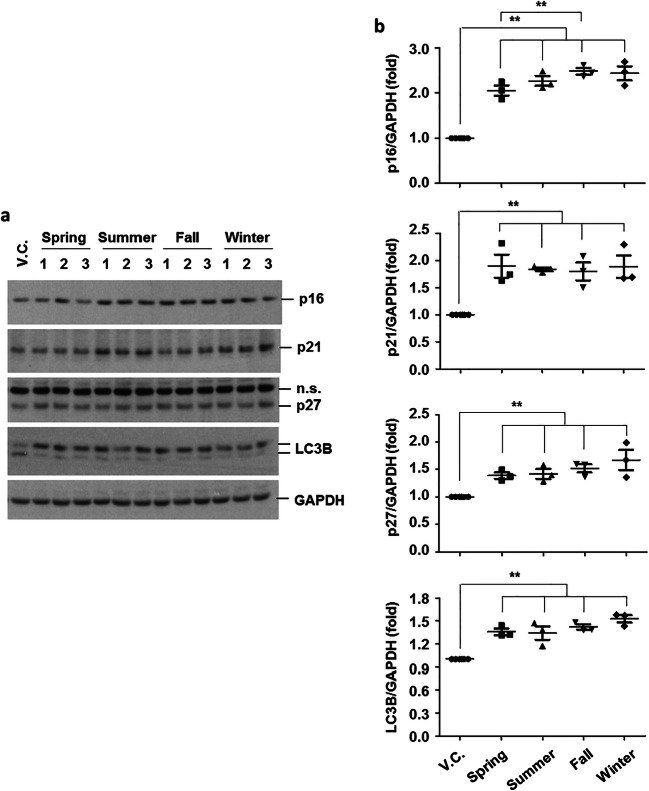
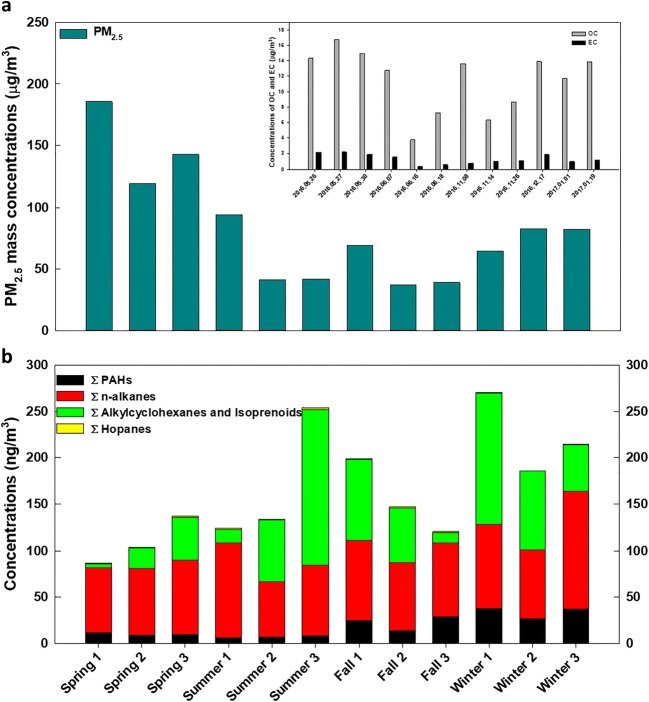
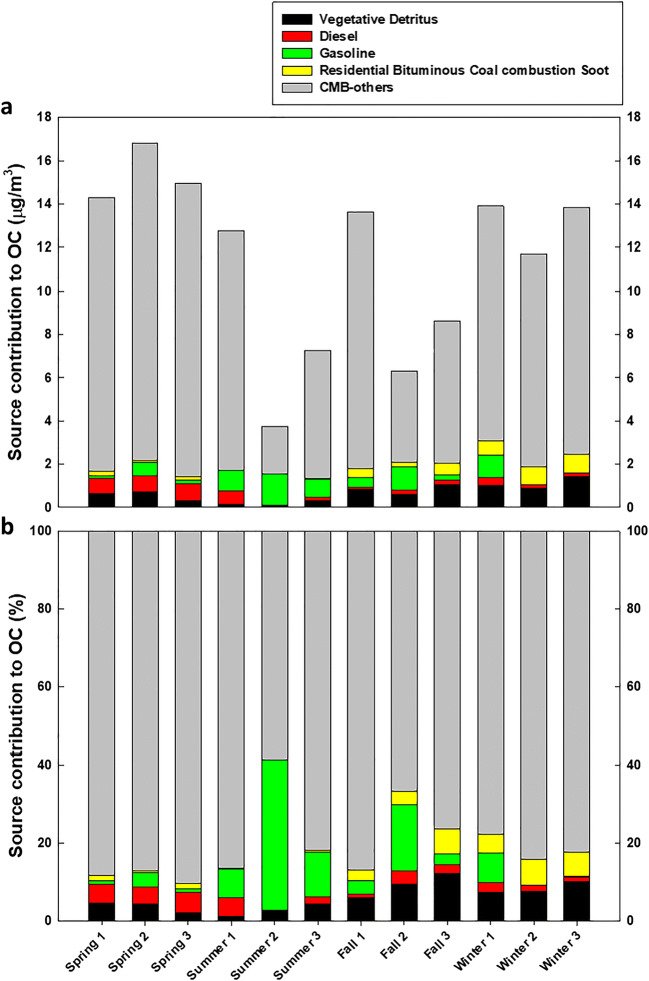
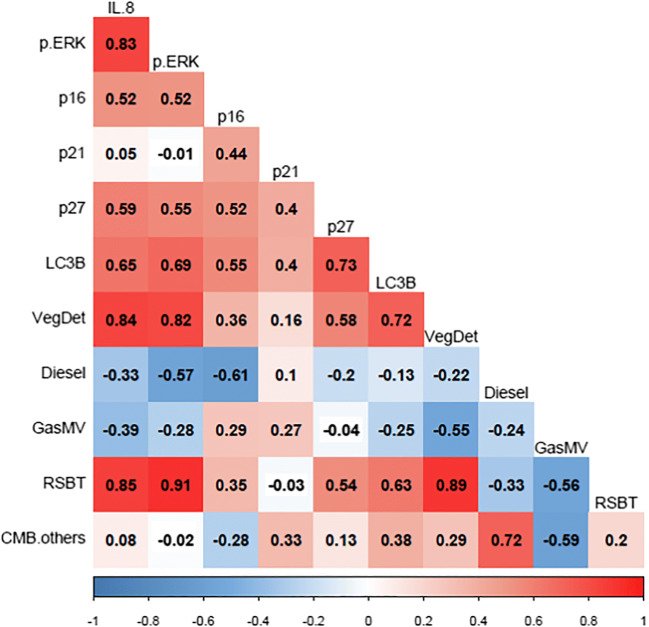
그림 출처: PubMed Central 공개 논문 (PMC8541986)
Conflict of interest statement
The authors declare no competing interests.
그 밖의 정보
- 출판 형태
- Journal Article
- 저널
- Environmental science and pollution research international · eISSN 1614-7499
- 전자 출판
- 2021-06-20
- MeSH
- Air Pollutants* / analysis · Environmental Monitoring · Epithelial Cells · Humans · Lung / chemistry · Particulate Matter / analysis · Polycyclic Aromatic Hydrocarbons* / analysis · Seasons
- Substances
- Air Pollutants · Particulate Matter · Polycyclic Aromatic Hydrocarbons
- 연구비
- National Strategic Project-Fine particle NRF-2017M3D8A1092019 · National Research Foundation of Korea NRF-2019R1A2C2007484 · Seoul National University Hospital grant 03-2019-0430
- 참고문헌
- 62편