
Endosc Ultrasound. 2020;9(1):31-36.
Long-term safety and efficacy of ethanol retention therapy via percutaneous approach and/or EUS guidance for symptomatic large hepatic cysts (with video).
제1저자 이동석 · 교신저자 서동완
소속 (2)
- Department of Gastroenterology, Seoul National University Boramae Medical Center, Seoul National University of College of Medicine; Department of Gastroenterology, Asan Medical Center, University of Ulsan College of Medicine, Seoul, Korea.
- Department of Gastroenterology, Asan Medical Center, University of Ulsan College of Medicine, Seoul, Korea.
Abstract
BACKGROUND AND OBJECTIVES Ethanol retention therapy (ERT) under EUS guidance or a percutaneous approach is a safe treatment for large symptomatic hepatic cysts. However, reports on the long-term outcomes after ERT are very rare. Therefore, we aimed to evaluate the long-term outcomes of ERT in symptomatic large hepatic cysts.
MATERIALS AND METHODS A total of 47 consecutive patients with large symptomatic hepatic cysts treated at the Asan Medical Center from April 2009 to October 2017 were analyzed. Thirty patients with right hepatic cysts were treated with ERT through a percutaneous approach, and 14 patients with left hepatic cysts were treated with ERT under EUS guidance. Three patients were treated with ERT using both methods.
RESULTS Of the 47 patients, 43 (91%) showed complete regression and four (9%) showed partial regression on abdominal computed tomography. Recurrence of the cysts was not observed during the follow-up surveillance of a median of 66 months.
CONCLUSIONS Percutaneous catheter drainage-guided ERT and EUS-guided ERT, based on their favorable long-term outcomes, may be considered as first-line treatments in patients with large symptomatic hepatic cysts.
Keywords
EUSEthanol retention therapyhepatic cystpercutaneous catheter drainage
Figures
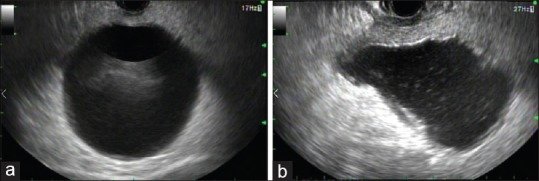
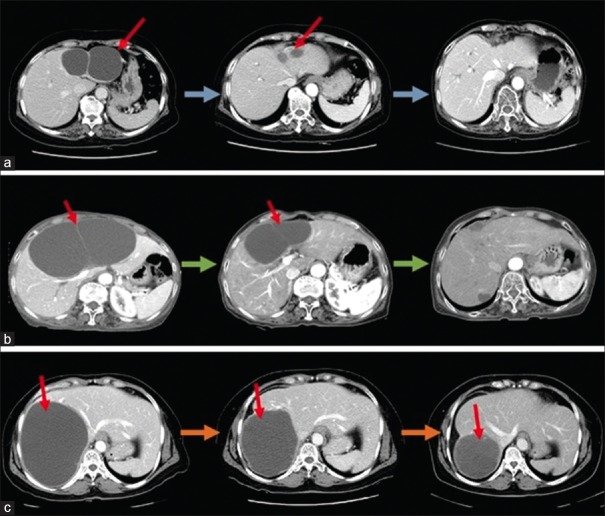
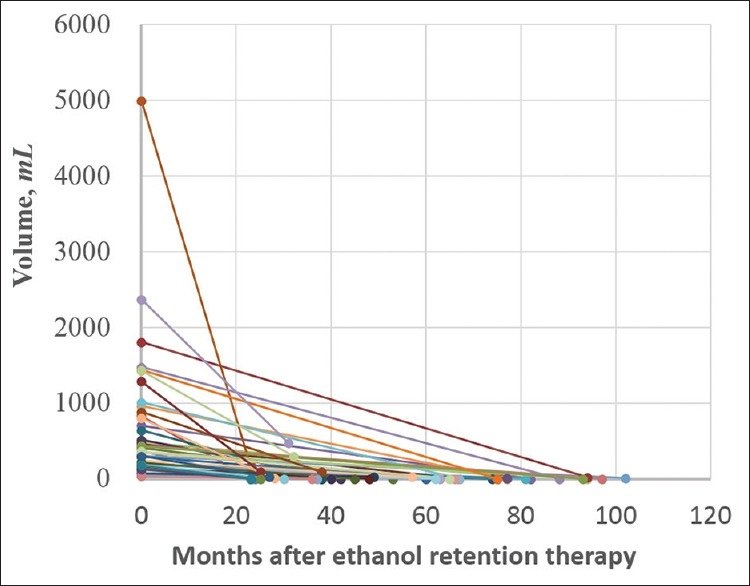
그림 출처: PubMed Central 공개 논문 (PMC7038734)
Conflict of interest statement
None
그 밖의 정보
- 출판 형태
- Journal Article
- 저널
- Endoscopic ultrasound · ISSN 2303-9027
- 참고문헌
- 14편