
NPJ Digit Med. 2026;9(1):10.1038/s41746-026-02503-x.
Prediction of antibiotic-associated cutaneous adverse drug reactions using electronic health record foundation models.
제1저자 김준모, 김경훈 · 교신저자 김광수, 김세훈
소속 (16)
- Interdisciplinary Program in Bioengineering, Seoul National University, Seoul, Republic of Korea.
- Department of Pediatrics, Seoul National University Bundang Hospital, Seongnam, Republic of Korea.
- Department of Pediatrics, Seoul National University College of Medicine, Seoul, Republic of Korea.
- Department of Internal Medicine, Chung-Ang University College of Medicine, Seoul, Republic of Korea.
- Department of Internal Medicine, Chungbuk National University College of Medicine and Chungbuk National University Hospital, Cheongju, Republic of Korea.
- Healthcare ICT Research Center, Office of eHealth Research and Businesses, Seoul National University Bundang Hospital, Seongnam, Republic of Korea.
- Interdisciplinary Program of Medical Informatics, Seoul National University, Seoul, Republic of Korea.
- Department of Transdisciplinary Medicine, Seoul National University Hospital, Seoul, Republic of Korea.
- Department of Clinical Medical Sciences, Seoul National University College of Medicine, Seoul, Republic of Korea.
- Center for Data Science, Healthcare AI Research Institute, Seoul National University Hospital, Seoul, Republic of Korea.
- Department of Transdisciplinary Medicine, Seoul National University Hospital, Seoul, Republic of Korea. kwangsookim@snu.ac.kr.
- Center for Data Science, Healthcare AI Research Institute, Seoul National University Hospital, Seoul, Republic of Korea. kwangsookim@snu.ac.kr.
- Department of Medicine, Seoul National University College of Medicine, Seoul, Republic of Korea. kwangsookim@snu.ac.kr.
- Department of Internal Medicine, Seoul National University Bundang Hospital, Seongnam, Republic of Korea. shkrins@snu.ac.kr.
- Department of Internal Medicine, Seoul National University College of Medicine, Seoul, Republic of Korea. shkrins@snu.ac.kr.
- Institute of Allergy and Clinical Immunology, Seoul National University Medical Research Center, Seoul, Republic of Korea. shkrins@snu.ac.kr.
Abstract
Cutaneous adverse drug reactions (CADRs) are the most common form of adverse drug reactions, ranging from mild rashes to life-threatening diseases, such as Stevens-Johnson syndrome and toxic epidermal necrolysis. However, there is no effective tool to predict antibiotic-associated CADRs. In this study, we propose an antibiotic-associated CADR prediction model using electronic health record (EHR) foundation models (FMs). EHR FMs are based on the pretraining-finetuning paradigms of language models, corresponding medical codes and their sequences to words and sentences. We included 802,131 inpatients across three tertiary hospitals in Korea, combining EHR data with nursing statements and reports to extract skin rash records. Our approach achieved the best predictive performance compared to all the other baseline models across all datasets. To enhance clinical relevance, we classified CADRs into immediate and delayed types and conducted a detailed sub-analysis. Finally, we found that properly configured EHR FMs can effectively predict the risk of developing antibiotics-associated CADRs, particularly for delayed-type reactions where predictive testing options are limited.
© 2026. The Author(s).
Figures
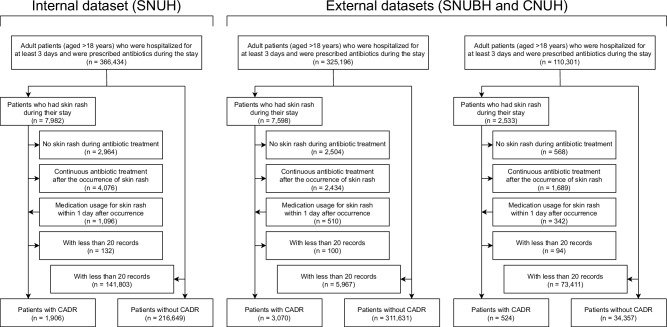
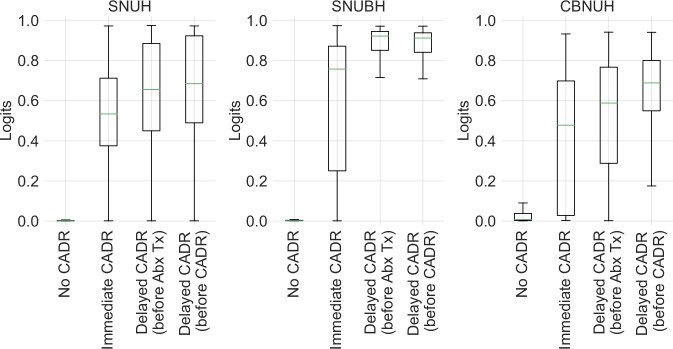
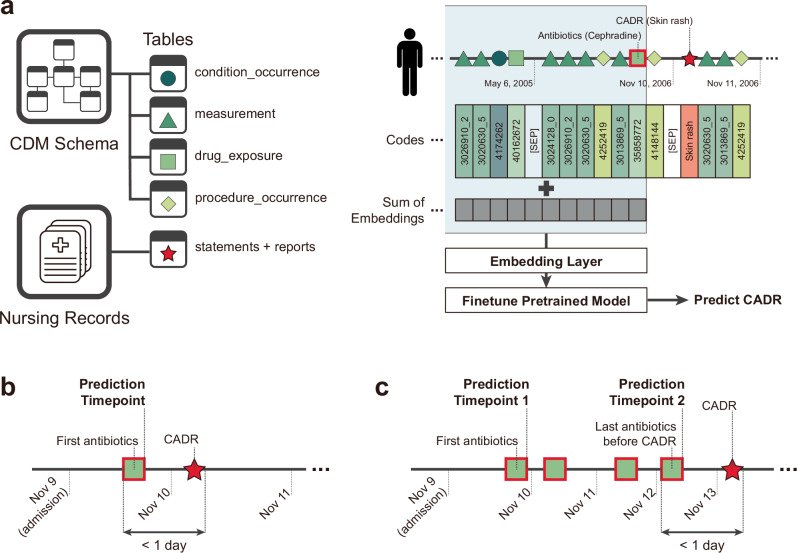
그림 출처: PubMed Central 공개 논문 (PMC13077068)
Conflict of interest statement
Competing interests: The authors declare no competing interests.
그 밖의 정보
- 출판 형태
- Journal Article
- 저널
- NPJ digital medicine · eISSN 2398-6352
- 전자 출판
- 2026-03-04
- 참고문헌
- 55편