
Eur J Med Res. 2022;27(1):215.
Transcriptome analysis of sputum cells reveals two distinct molecular phenotypes of "asthma and chronic obstructive pulmonary disease overlap" in the elderly.
제1저자 이서영 · 교신저자 박흥우
소속 (6)
- Department of Internal Medicine, Seoul National University Hospital, Seoul, Republic of Korea.
- Department of Internal Medicine, Seoul National University College of Medicine, Seoul, Republic of Korea.
- Biomedical Research Institute, Seoul National University Hospital, Seoul, Korea.
- Department of Internal Medicine, Seoul National University Hospital, Seoul, Republic of Korea. guinea71@snu.ac.kr.
- Department of Internal Medicine, Seoul National University College of Medicine, Seoul, Republic of Korea. guinea71@snu.ac.kr.
- Institute of Allergy and Clinical Immunology, Seoul National University Medical Research Center, Seoul, Republic of Korea. guinea71@snu.ac.kr.
Abstract
BACKGROUND Little is known about the pathogenesis of asthma and chronic obstructive pulmonary disease (COPD) overlap (ACO). This study examined the molecular phenotypes of ACO in the elderly.
METHODS A genome-wide investigation of gene expression in sputum cells from the elderly with asthma, ACO, or COPD was performed using gene set variation analysis (GSVA) with predefined asthma- or COPD-specific gene signatures. We then performed a subsequent cluster analysis using enrichment scores (ESs) to identify molecular clusters in the elderly with ACO. Finally, a second GSVA was conducted with curated gene signatures to gain insight into the pathogenesis of ACO associated with the identified molecular clusters.
RESULTS Seventy elderly individuals were enrolled (17 with asthma, 41 with ACO, and 12 with COPD). Two distinct molecular clusters of ACO were identified. Clinically, ACO cluster 1 (N = 23) was characterized by male and smoker dominance, more obstructive lung function, and higher proportions of both neutrophil and eosinophil in induced sputum compared to ACO cluster 2 (N = 18). ACO cluster 1 had molecular features similar to both asthma and COPD, with mitochondria and peroxisome dysfunction as important mechanisms in the pathogenesis of these diseases. The molecular features of ACO cluster 2 differed from those of asthma and COPD, with enhanced innate immune reactions to microorganisms identified as being important in the pathogenesis of this form of ACO.
CONCLUSION Recognition of the unique biological pathways associated with the two distinct molecular phenotypes of ACO will deepen our understanding of ACO in the elderly.
© 2022. The Author(s).
Keywords
AsthmaAsthma-chronic obstructive pulmonary disease overlap syndromeChronic obstructive pulmonary diseaseCluster analysisSputumTranscriptome
Figures
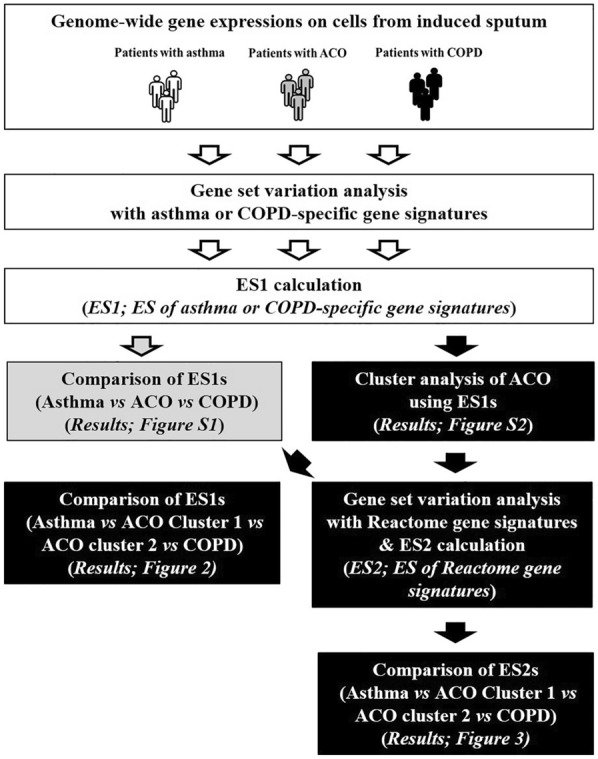
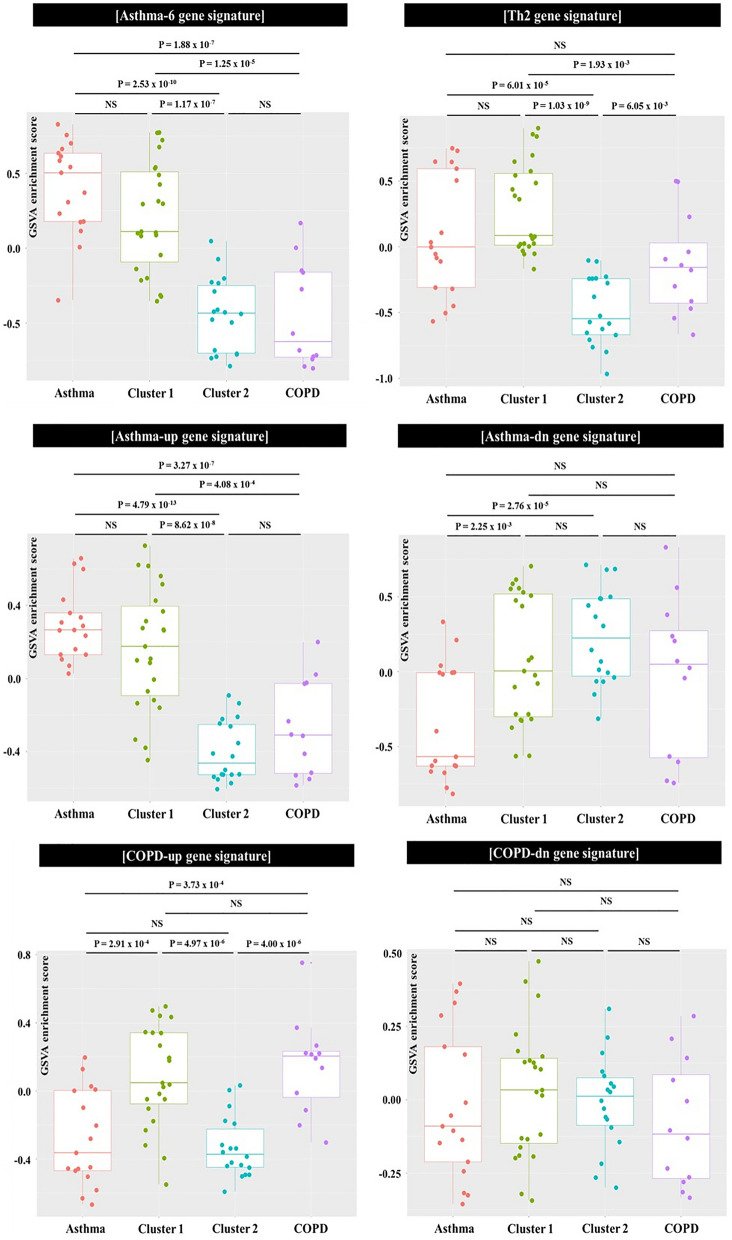
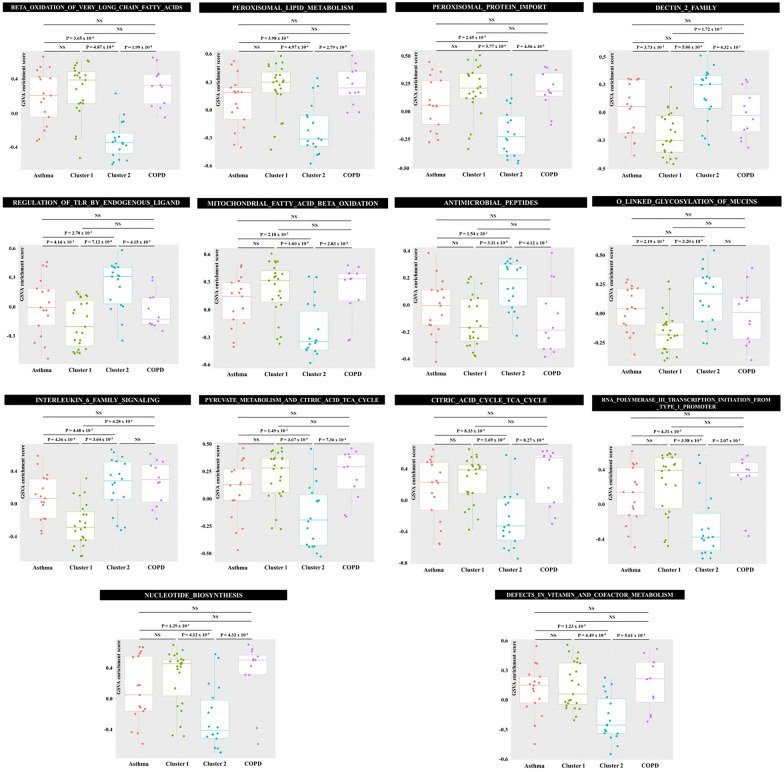
그림 출처: PubMed Central 공개 논문 (PMC9617312)
Conflict of interest statement
The authors declare that they have no competing interests.
그 밖의 정보
- 출판 형태
- Journal Article
- 저널
- European journal of medical research · eISSN 2047-783X
- 전자 출판
- 2022-10-28
- MeSH
- Male · Humans · Sputum / metabolism · Pulmonary Disease, Chronic Obstructive* / genetics / complications / metabolism · Asthma* / genetics / complications · Phenotype · Gene Expression Profiling
- 참고문헌
- 43편