
J Med Internet Res. 2025;27:e66366.
Developing a Machine Learning Model for Predicting 30-Day Major Adverse Cardiac and Cerebrovascular Events in Patients Undergoing Noncardiac Surgery: Retrospective Study.
제1저자 권주성, 안형범 · 교신저자 서정원
소속 (7)
- Cardiovascular Center, Department of Internal Medicine, Seoul National University Bundang Hospital, Seongnam-si, Republic of Korea.
- Department of Internal Medicine, Seoul National University College of Medicine, Seoul, Republic of Korea.
- Office of eHealth Research and Businesses, Seoul National University Bundang Hospital, Seongnam-si, Republic of Korea.
- Department of Health Science and Technology, Graduate School of Convergence Science and Technology, Seoul National University, Seoul, Republic of Korea.
- Division of Cardiology, Department of Internal Medicine, Asan Medical Center, University of Ulsan College of Medicine, Seoul, Republic of Korea.
- Department of Information Medicine, Big Data Research Center, Asan Medical Center, Seoul, Republic of Korea.
- Big Data Research Center, Asan Institute for Life Sciences, Asan Medical Center, Seoul, Republic of Korea.
Abstract
BACKGROUND Considering that most patients with low or no significant risk factors can safely undergo noncardiac surgery without additional cardiac evaluation, and given the excessive evaluations often performed in patients undergoing intermediate or higher risk noncardiac surgeries, practical preoperative risk assessment tools are essential to reduce unnecessary delays for urgent outpatient services and manage medical costs more efficiently.
OBJECTIVE This study aimed to use the Observational Medical Outcomes Partnership Common Data Model to develop a predictive model by applying machine learning algorithms that can effectively predict major adverse cardiac and cerebrovascular events (MACCE) in patients undergoing noncardiac surgery.
METHODS This retrospective observational network study collected data by converting electronic health records into a standardized Observational Medical Outcomes Partnership Common Data Model format. The study was conducted in 2 tertiary hospitals. Data included demographic information, diagnoses, laboratory results, medications, surgical types, and clinical outcomes. A total of 46,225 patients were recruited from Seoul National University Bundang Hospital and 396,424 from Asan Medical Center. We selected patients aged 65 years and older undergoing noncardiac surgeries, excluding cardiac or emergency surgeries, and those with less than 30 days of observation. Using these observational health care data, we developed machine learning-based prediction models using the observational health data sciences and informatics open-source patient-level prediction package in R (version 4.1.0; R Foundation for Statistical Computing). A total of 5 machine learning algorithms, including random forest, were developed and validated internally and externally, with performance assessed through the area under the receiver operating characteristic curve (AUROC), the area under the precision-recall curve, and calibration plots.
RESULTS All machine learning prediction models surpassed the Revised Cardiac Risk Index in MACCE prediction performance (AUROC=0.704). Random forest showed the best results, achieving AUROC values of 0.897 (95% CI 0.883-0.911) internally and 0.817 (95% CI 0.815-0.819) externally, with an area under the precision-recall curve of 0.095. Among 46,225 patients of the Seoul National University Bundang Hospital, MACCE occurred in 4.9% (2256/46,225), including myocardial infarction (907/46,225, 2%) and stroke (799/46,225, 1.7%), while in-hospital mortality was 0.9% (419/46,225). For Asan Medical Center, 6.3% (24,861/396,424) of patients experienced MACCE, with 1.5% (6017/396,424) stroke and 3% (11,875/396,424) in-hospital mortality. Furthermore, the significance of predictors linked to previous diagnoses and laboratory measurements underscored their critical role in effectively predicting perioperative risk.
CONCLUSIONS Our prediction models outperformed the widely used Revised Cardiac Risk Index in predicting MACCE within 30 days after noncardiac surgery, demonstrating superior calibration and generalizability across institutions. Its use can optimize preoperative evaluations, minimize unnecessary testing, and streamline perioperative care, significantly improving patient outcomes and resource use. We anticipate that applying this model to actual electronic health records will benefit clinical practice.
©Ju-Seung Kwun, Houng-Beom Ahn, Si-Hyuck Kang, Sooyoung Yoo, Seok Kim, Wongeun Song, Junho Hyun, Ji Seon Oh, Gakyoung Baek, Jung-Won Suh. Originally published in the Journal of Medical Internet Research (https://www.jmir.org), 09.04.2025.
Keywords
EHRMLcerebrovascularclinical practicecommon data modelelectronic health recordsmachine learningnoncardiac surgeriesnoncardiac surgeryperioperativeperioperative risk evaluationprediction modelspredictive modelingrisk
Figures

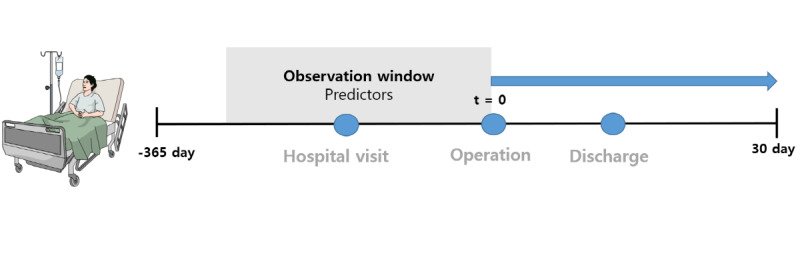
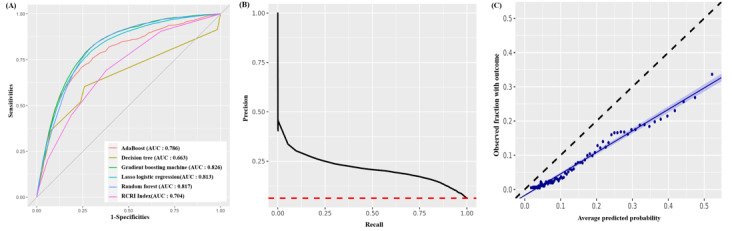

그림 출처: PubMed Central 공개 논문 (PMC12018863)
Conflict of interest statement
Conflicts of Interest: None declared.
그 밖의 정보
- 출판 형태
- Journal Article, Observational Study, Research Support, Non-U.S. Gov't
- 저널
- Journal of medical Internet research · eISSN 1438-8871
- 전자 출판
- 2025-04-09
- MeSH
- Humans · Machine Learning* · Retrospective Studies · Aged · Female · Male · Cerebrovascular Disorders* · Surgical Procedures, Operative* / adverse effects · Risk Assessment · Postoperative Complications* · Risk Factors
- 참고문헌
- 38편