
PLoS One. 2014;9(1):e87155.
What makes a difference in exercise-induced bronchoconstriction: an 8 year retrospective analysis.
제1저자 박한기 · 교신저자 강혜련
소속 (2)
- Department of Internal Medicine, Seoul National University College of Medicine, Seoul, Korea ; Institute of Allergy and Clinical Immunology, Seoul National University Medical Research Center, Seoul, Korea.
- Institute of Allergy and Clinical Immunology, Seoul National University Medical Research Center, Seoul, Korea ; Department of Internal Medicine, Chung-Ang University College of Medicine, Seoul, Korea.
Abstract
BACKGROUND Exercise-induced bronchoconstriction (EIB) was recently classified into EIB alone and EIB with asthma, based on the presence of concurrent asthma.
OBJECTIVE Differences between EIB alone and EIB with asthma have not been fully described.
METHODS We retrospectively reviewed who visited an allergy clinic for respiratory symptoms after exercise and underwent exercise bronchial provocation testing. More than a 15% decrease of forced expiratory volume in 1 second (FEV1) from baseline to the end of a 6 min free-running challenge test was interpreted as positive EIB.
RESULTS EIB was observed in 66.9% of the study subjects (89/133). EIB-positive subjects showed higher positivity to methacholine provocation testing (61.4% vs. 18.9%, p<0.001) compared with EIB-negative subjects. In addition, sputum eosinophilia was more frequently observed in EIB-positive subjects than in EIB-negative subjects (56% vs. 23.5%, p = 0.037). The temperature and relative humidity on exercise test day were significantly related with the EIB-positive rate. Positive EIB status was correlated with both temperature (p = 0.001) and relative humidity (p = 0.038) in the methacholine-negative EIB group while such a correlation was not observed in the methacholine-positive EIB group. In the methacholine-positive EIB group the time to reach a 15% decrease in FEV1 during exercise was significantly shorter than that in the methacholine-negative EIB group (3.2±0.7 min vs. 8.6±1.6 min, p = 0.004).
CONCLUSIONS EIB alone may be a distinct clinical entity from EIB with asthma. Conditions such as temperature and humidity should be considered when performing exercise tests, especially in subjects with EIB alone.
Figures

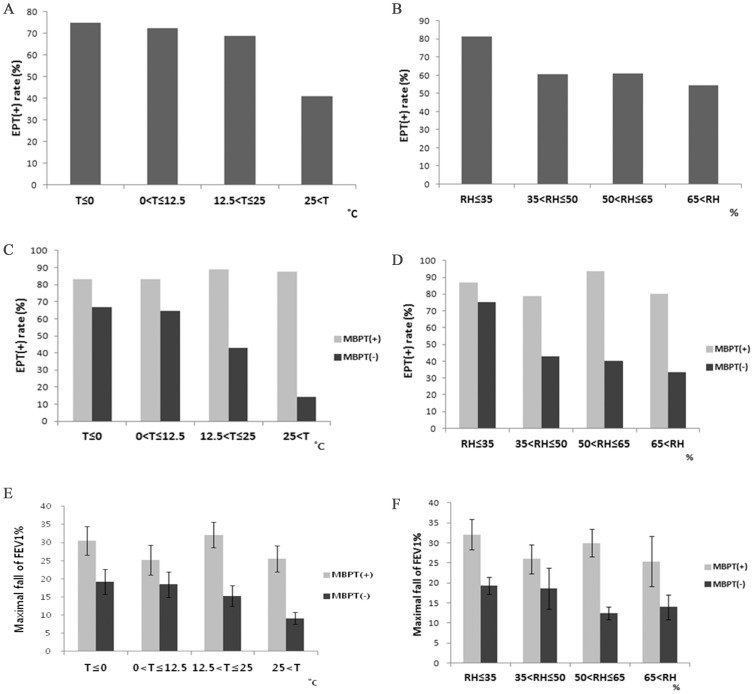
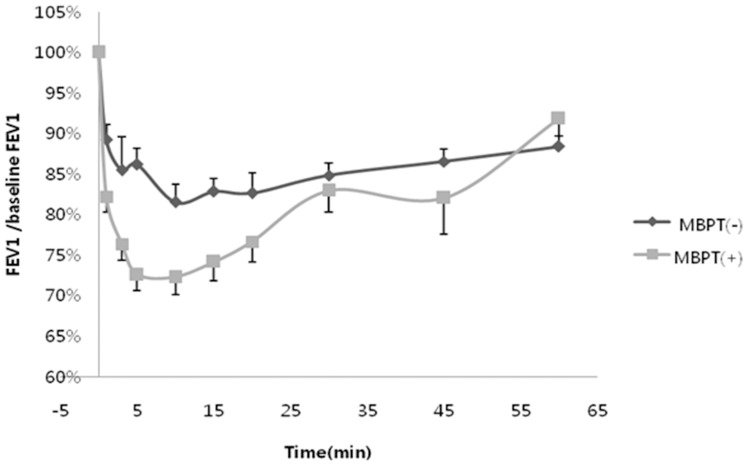
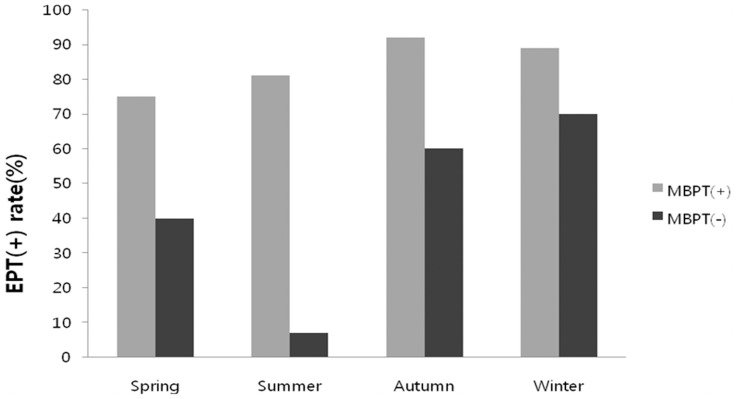
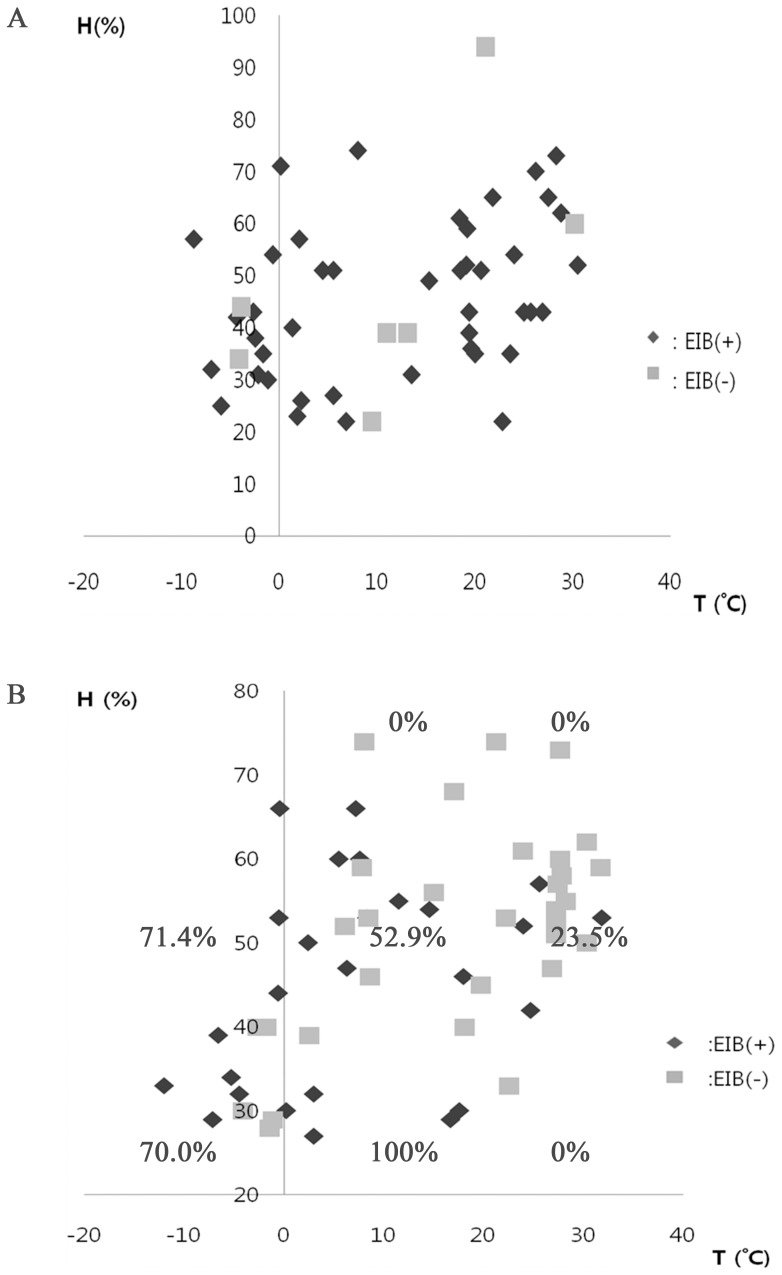
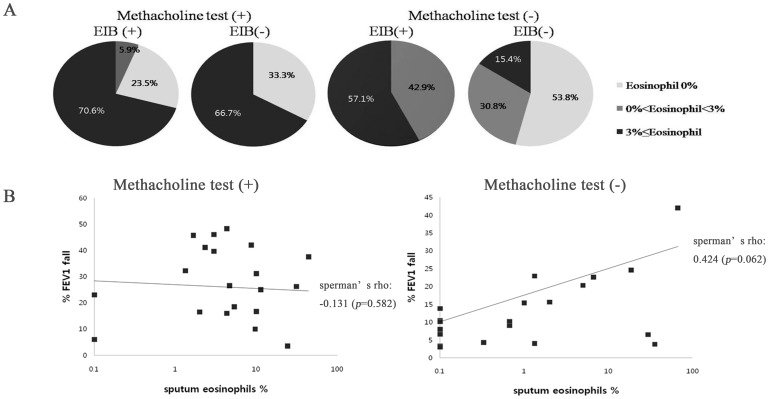
그림 출처: PubMed Central 공개 논문 (PMC3907485)
Conflict of interest statement
Competing Interests:The authors have declared that no competing interests exist.
그 밖의 정보
- 출판 형태
- Journal Article, Research Support, Non-U.S. Gov't
- 저널
- PloS one · eISSN 1932-6203
- 전자 출판
- 2014-01-30
- MeSH
- Adult · Asthma / physiopathology · Bronchial Hyperreactivity / physiopathology · Bronchoconstriction / drug effects / physiology · Bronchoconstrictor Agents / pharmacology · Exercise / physiology · Exercise Test / methods · Female · Humans · Humidity · Male · Methacholine Chloride / pharmacology · Retrospective Studies · Temperature · Young Adult
- Substances
- Bronchoconstrictor Agents · Methacholine Chloride
- 참고문헌
- 39편