
PLoS One. 2014;9(9):e106861.
Chronic low dose chlorine exposure aggravates allergic inflammation and airway hyperresponsiveness and activates inflammasome pathway.
제1저자 김세훈 · 교신저자 강혜련, 조상헌
소속 (3)
- Department of Internal Medicine, Seoul National University College of Medicine, Seoul, Republic of Korea; Institute of Allergy and Clinical Immunology, Seoul National University Medical Research Center, Seoul, Korea; Department of Internal Medicine, Seoul National University Bundang Hospital, Seongnam, Republic of Korea.
- Institute of Allergy and Clinical Immunology, Seoul National University Medical Research Center, Seoul, Korea.
- Department of Internal Medicine, Seoul National University College of Medicine, Seoul, Republic of Korea; Institute of Allergy and Clinical Immunology, Seoul National University Medical Research Center, Seoul, Korea.
Abstract
BACKGROUND Epidemiologic clinical studies suggested that chronic exposure to chlorine products is associated with development of asthma and aggravation of asthmatic symptoms. However, its underlying mechanism was not clearly understood. Studies were undertaken to define the effects and mechanisms of chronic low-dose chlorine exposure in the pathogenesis of airway inflammation and airway hyperresponsiveness (AHR).
METHODS Six week-old female BALB/c mice were sensitized and challenged with OVA in the presence and absence of chronic low dose chlorine exposure of naturally vaporized gas of 5% sodium hypochlorite solution. Airway inflammation and AHR were evaluated by bronchoalveolar lavage (BAL) cell recovery and non-invasive phlethysmography, respectively. Real-time qPCR, Western blot assay, and ELISA were used to evaluate the mRNA and protein expressions of cytokines and other inflammatory mediators. Human A549 and murine epithelial (A549 and MLE12) and macrophage (AMJ2-C11) cells were used to define the responses to low dose chlorine exposure in vitro.
RESULTS Chronic low dose chlorine exposure significantly augmented airway inflammation and AHR in OVA-sensitized and challenged mice. The expression of Th2 cytokines IL-4 and IL-5 and proinflammatory cytokine IL-1β and IL-33 were significantly increased in OVA/Cl group compared with OVA group. The chlorine exposure also activates the major molecules associated with inflammasome pathway in the macrophages with increased expression of epithelial alarmins IL-33 and TSLP in vitro.
CONCLUSION Chronic low dose exposure of chlorine aggravates allergic Th2 inflammation and AHR potentially through activation of inflammasome danger signaling pathways.
Figures
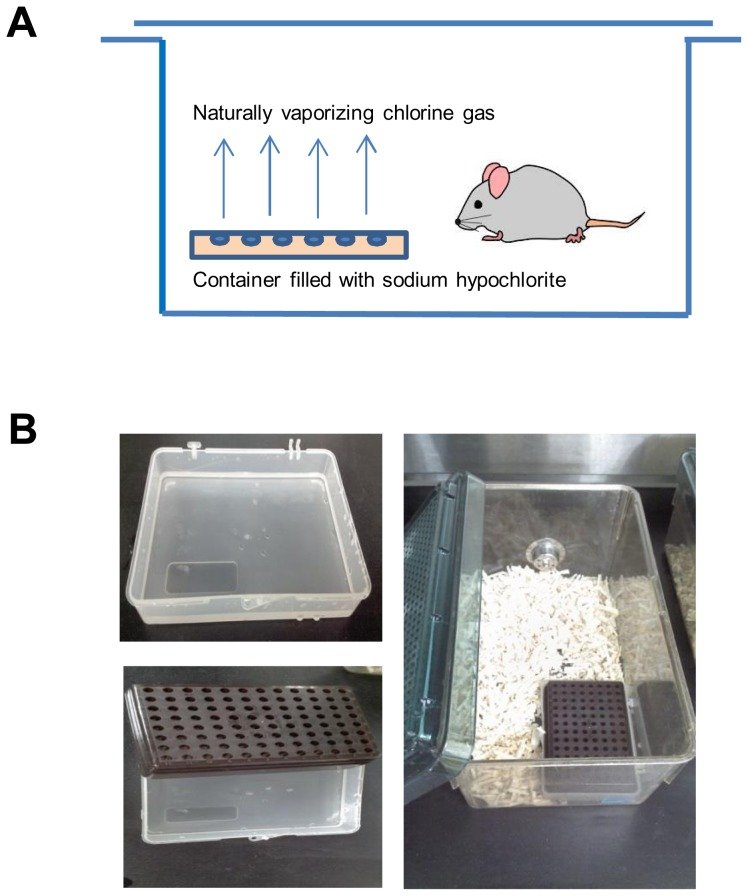
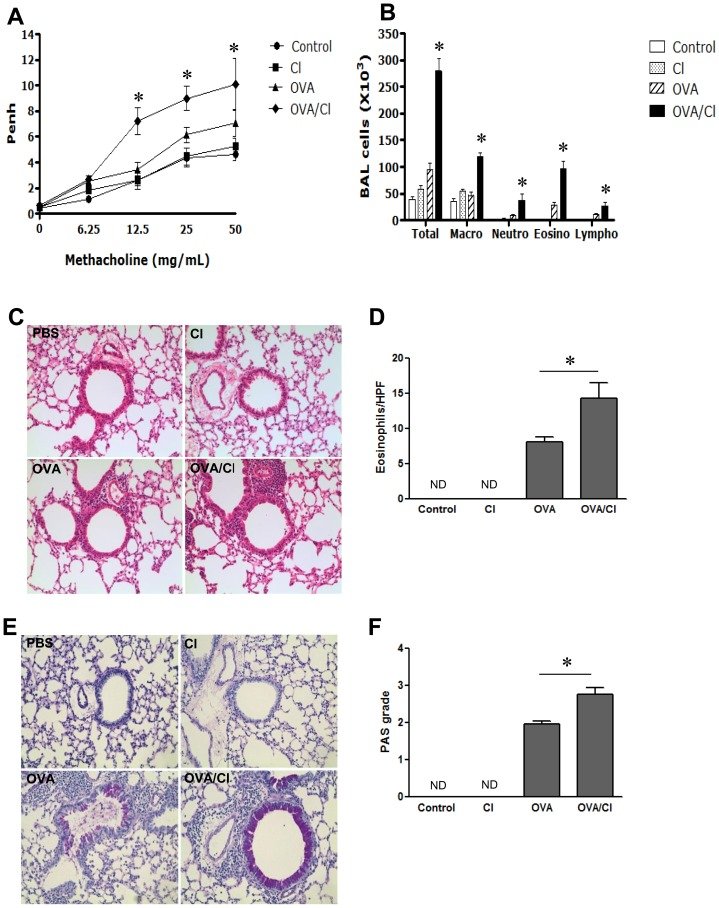
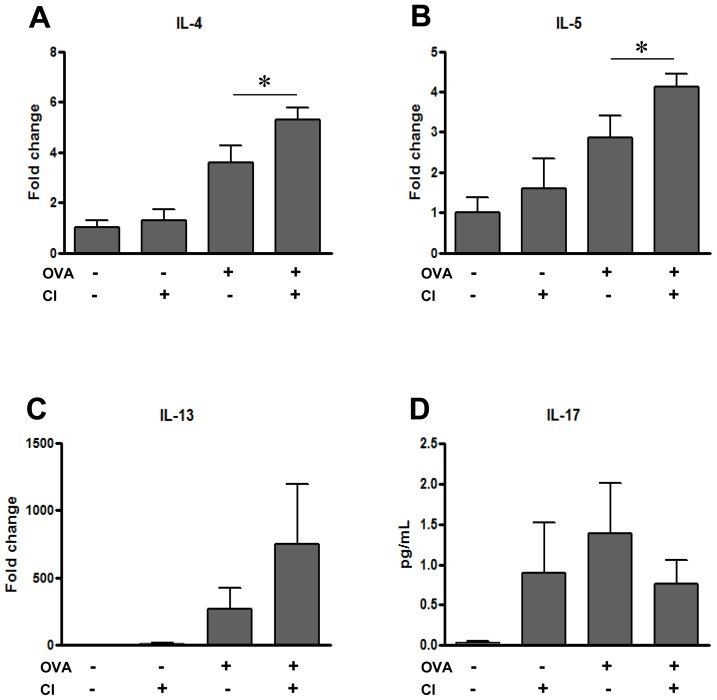
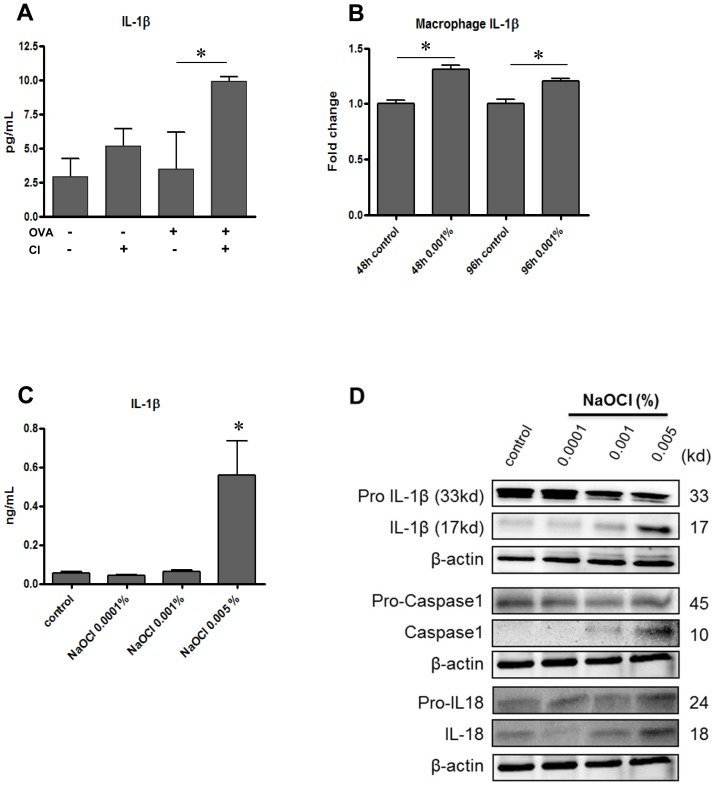
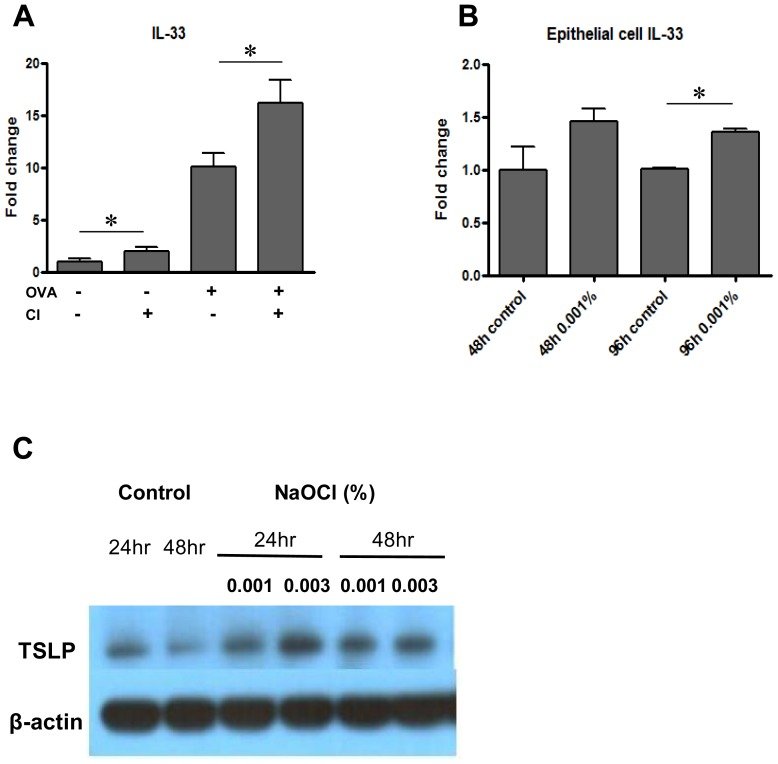
그림 출처: PubMed Central 공개 논문 (PMC4159271)
Conflict of interest statement
Competing Interests:The authors have declared that no competing interests exist.
그 밖의 정보
- 출판 형태
- Journal Article, Research Support, Non-U.S. Gov't
- 저널
- PloS one · eISSN 1932-6203
- 전자 출판
- 2014-09-09
- MeSH
- Animals · Asthma / chemically induced / genetics / immunology / pathology · Chlorine / adverse effects · Cytokines / genetics · Dose-Response Relationship, Drug · Epithelial Cells / drug effects / metabolism · Female · Gene Expression Regulation / drug effects · Humans · Inflammasomes / metabolism · Interleukin-33 · Interleukins / genetics · Mice · Mice, Inbred BALB C · Respiratory Hypersensitivity / chemically induced / genetics / immunology / pathology · Risk Factors · Signal Transduction / drug effects · Th2 Cells / drug effects / metabolism · Time Factors · Thymic Stromal Lymphopoietin
- Substances
- Cytokines · Il33 protein, mouse · Inflammasomes · Interleukin-33 · Interleukins · Chlorine · Thymic Stromal Lymphopoietin
- 참고문헌
- 45편