
Oncologist. 2019;24(8):1037-e636.
A First-in-Human Phase I Study of GC1118, a Novel Anti-Epidermal Growth Factor Receptor Antibody, in Patients with Advanced Solid Tumors.
제1저자 오도연, 이근욱 · 교신저자 방영주
소속 (11)
- Department of Internal Medicine, Seoul National University College of Medicine, Seoul National University Hospital, Seoul, Korea.
- Department of Internal Medicine, Seoul National University College of Medicine, Seoul National University Bundang Hospital, Seongnam, Korea.
- Department of Dermatology, Seoul National University College of Medicine, Seoul National University Bundang Hospital, Seongnam, Korea.
- Department of Dermatology, Seoul National University College of Medicine, Seoul National University Hospital, Seoul, Korea.
- GC Pharma, Yongin, Korea.
- Mogam Institute for Biomedical Research, Yongin, Korea.
- Division of Medical Statistics, Medical Research Collaborating Center, Seoul National University Hospital, Seoul, Korea.
- Department of Medicine, Seoul National University College of Medicine, Seoul, Korea.
- Department of Clinical Pharmacology and Therapeutics, Seoul National University College of Medicine, Seoul National University Hospital, Seoul, Korea.
- Department of Pathology, Seoul National University College of Medicine, Seoul National University Hospital, Seoul, Korea.
- Department of Internal Medicine, Seoul National University College of Medicine, Seoul National University Hospital, Seoul, Korea bangyj@snu.ac.kr.
Abstract
LESSONS LEARNED GC1118 is a novel fully human anti-epidermal growth factor receptor (EGFR) antibody with unique binding epitopes and different ligand-binding inhibitory activity compared with cetuximab or panitumumab.GC1118 showed promising antitumor activity, especially in patients with colorectal cancer resistant to prior EGFR antibody. Skin toxicities were more common and diarrhea was less frequent compared with other anti-EGFR antibodies.
BACKGROUND GC1118 is a novel monoclonal antibody targeting epidermal growth factor receptor (EGFR) with more potent ligand inhibition than cetuximab or panitumumab. We conducted a first-in-human, phase I study of GC118 in patients with refractory solid tumors.
METHODS In the dose escalation part, GC1118 was administered on days 1, 8, 15, and 22, followed by a 2-week rest, during which dose-limiting toxicities (DLTs) were evaluated. In the expansion part, patients were enrolled into three cohorts (Cohort 1 [C1], patients with colorectal cancer [CRC] without prior anti-EGFR treatment; Cohort 2 [C2], patients with CRC with tumors resistant to anti-EGFR therapy; Cohort 3 [C3], EGFR-overexpressing gastric cancer).
RESULTS In the dose escalation part, 24 patients were treated at five dose levels: 0.3, 1.0, 3.0, 4.0, and 5.0 mg/kg. In the 5.0 mg/kg cohort, two patients experienced DLTs (skin toxicities). The maximum-tolerated dose (MTD) was 4.0 mg/kg. Common adverse events were skin toxicities. In the expansion part, 39 patients were enrolled. In Cohort 1, stable disease (SD) was observed in 58%; in Cohort 2, partial response (PR) 17% and SD 8%; in Cohort 3, PR 8% and SD 17%.
CONCLUSION GC1118 showed promising antitumor activity and was well tolerated. Infrequent diarrhea compared with other anti-EGFR antibodies might be advantageous for further development.
© AlphaMed Press; the data published online to support this summary are the property of the authors.
Figures
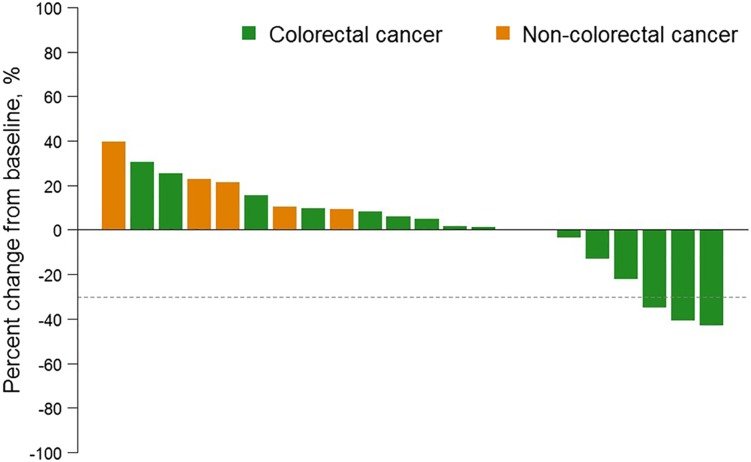
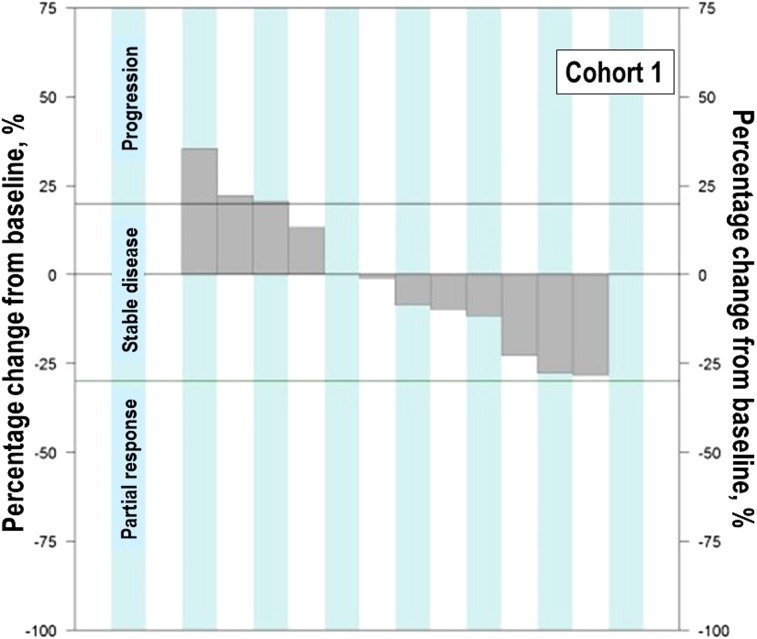
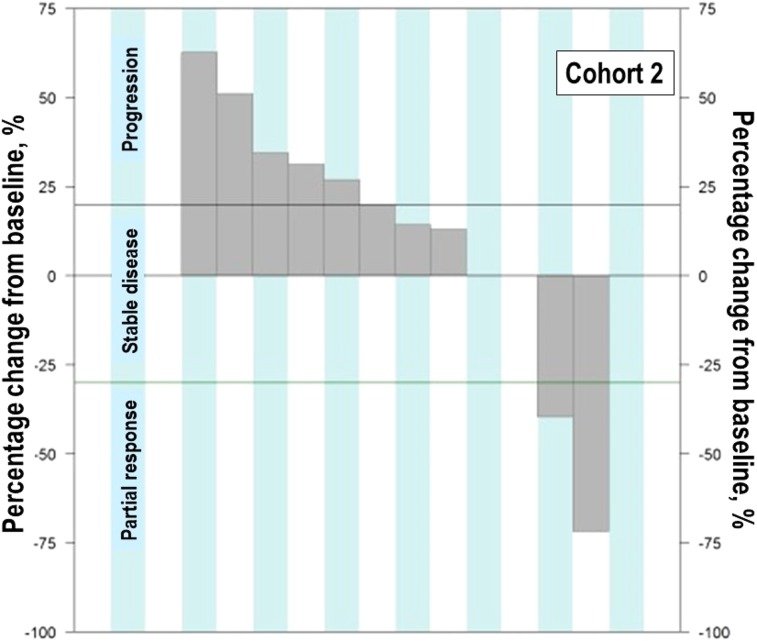
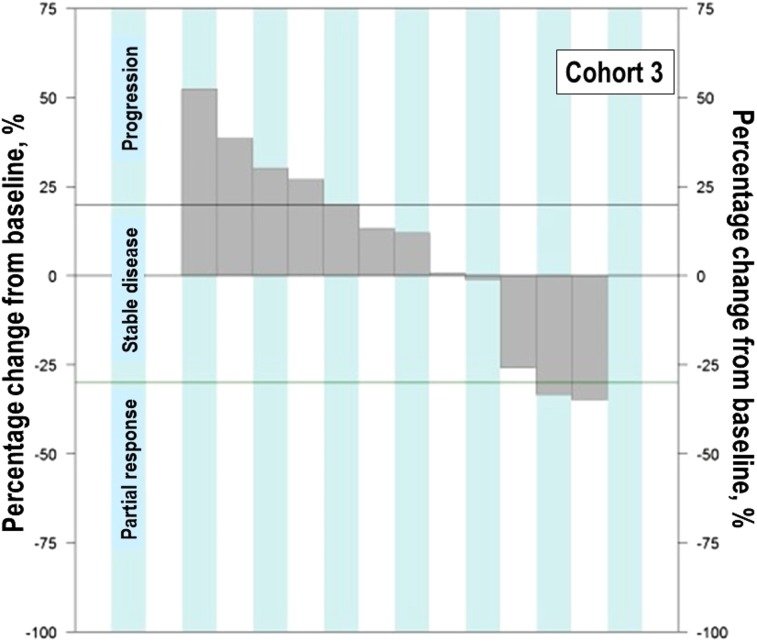


그림 출처: PubMed Central 공개 논문 (PMC6693725)
Conflict of interest statement
Disclosures of potential conflicts of interest may be found at the end of this article.
그 밖의 정보
- 출판 형태
- Clinical Trial, Phase I, Journal Article, Multicenter Study, Research Support, Non-U.S. Gov't
- 저널
- The oncologist · eISSN 1549-490X
- 전자 출판
- 2019-06-04
- MeSH
- Adult · Aged · Antibodies, Monoclonal, Humanized / administration & dosage / adverse effects / pharmacokinetics · Antineoplastic Agents / administration & dosage / adverse effects / pharmacokinetics · Colorectal Neoplasms / drug therapy / mortality / pathology · Dose-Response Relationship, Drug · Drug Administration Schedule · Drug Eruptions / epidemiology / etiology · ErbB Receptors / antagonists & inhibitors / immunology · Female · Humans · Male · Maximum Tolerated Dose · Middle Aged · Neoplasm Staging · Progression-Free Survival · Stomach Neoplasms / drug therapy / mortality / pathology
- Substances
- Antibodies, Monoclonal, Humanized · Antineoplastic Agents · GC1118 · EGFR protein, human · ErbB Receptors
- 데이터
- ClinicalTrials.gov: NCT02352571
- 참고문헌
- 18편