
BMC Pulm Med. 2024;24(1):7.
Understanding the effects of Haemophilus influenzae colonization on bronchiectasis: a retrospective cohort study.
제1저자 양서희 · 교신저자 김형준
소속 (5)
- Division of Pulmonary and Critical Care Medicine, Department of Internal Medicine, Seoul National University Bundang Hospital, 82, Gumi-ro 173 Beon-gil, Bundang-gu, Seongnam, Gyeonggi-do, 13620, Republic of Korea.
- Department of Internal Medicine, Seoul National University College of Medicine, 103, Daehak-ro, Jongno-gu, Seoul, 03080, Republic of Korea.
- Division of Pulmonary and Critical Care Medicine, Department of Internal Medicine, Seoul Veterans Hospital, 53, Jinhwangdo-ro 61-gil, Gangdong-gu, Seoul, 05368, Republic of Korea.
- Division of Pulmonary and Critical Care Medicine, Department of Internal Medicine, Seoul National University Bundang Hospital, 82, Gumi-ro 173 Beon-gil, Bundang-gu, Seongnam, Gyeonggi-do, 13620, Republic of Korea. dr.hjkim@snubh.org.
- Department of Internal Medicine, Seoul National University College of Medicine, 103, Daehak-ro, Jongno-gu, Seoul, 03080, Republic of Korea. dr.hjkim@snubh.org.
Abstract
BACKGROUND Bacterial colonization is an essential aspect of bronchiectasis. Although Haemophilus influenzae is a frequent colonizer in some regions, its clinical impacts are poorly understood. This study aimed to elucidate the impact of H. influenzae colonization in patients with bronchiectasis.
METHODS This retrospective study screened adult patients diagnosed with bronchiectasis at a tertiary referral center between April 1, 2003, and May 16, 2021, in South Korea. Propensity score matching was used to match patients with and without H. influenzae colonization. We assessed the severity of bronchiectasis as per the bronchiectasis severity index, the incidence of exacerbation, differences in lung function, and all-cause mortality.
RESULTS Out of the 4,453 patients with bronchiectasis, 79 (1.8%) were colonized by H. influenzae. After 1:2 propensity score matching, 78 and 154 patients were selected from the H. influenzae colonizer and non-colonizer groups, respectively. Although there were no significant differences between the groups regarding baseline demographics, patients colonized with H. influenzae had a higher bronchiectasis severity index (median 6 [interquartile range 4-8] vs. 4 [2-7], p = 0.002), associated with extensive radiographic involvement (52.2% vs. 37.2%, p = 0.045) and mild exacerbation without hospitalization (adjusted incidence rate ratio 0.15; 95% confidence interval 0.12-0.24). Lung function and mortality rates did not reveal significant differences, regardless of H. influenzae colonization.
CONCLUSION H. influenzae colonization in bronchiectasis was associated with more severe disease and greater incidence of mild exacerbation, but not lung function and mortality. Attention should be paid to patients with bronchiectasis with H. influenzae colonization.
© 2023. The Author(s).
Keywords
BronchiectasisHaemophilus influenzaePrognostic factorPropensity scoresPseudomonas
Figures
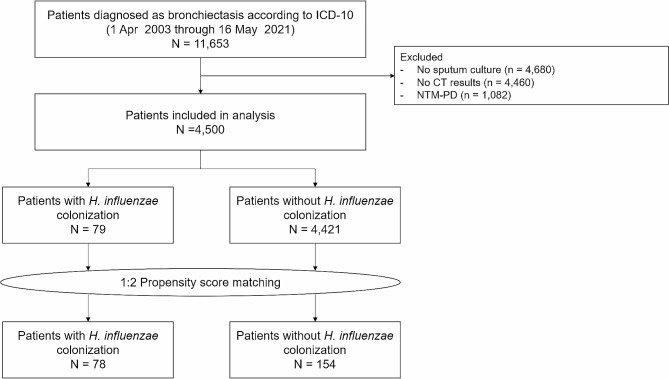
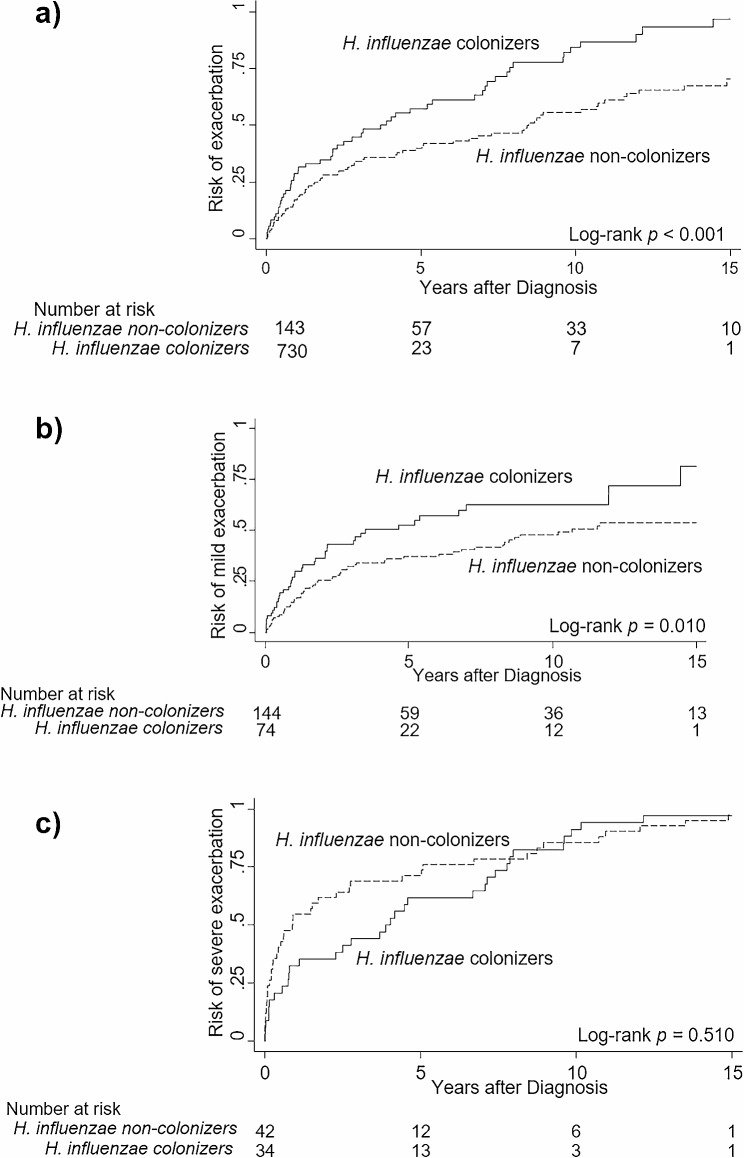
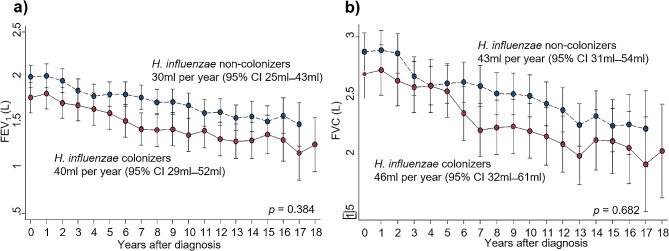
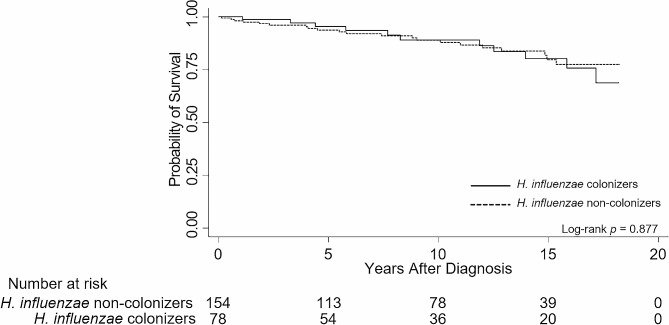
그림 출처: PubMed Central 공개 논문 (PMC10759404)
Comment · 정정
Conflict of interest statement
The authors declare no competing interests.
그 밖의 정보
- 출판 형태
- Journal Article
- 저널
- BMC pulmonary medicine · eISSN 1471-2466
- 전자 출판
- 2024-01-02
- MeSH
- Adult · Humans · Retrospective Studies · Haemophilus influenzae* · Bronchiectasis* / complications · Republic of Korea / epidemiology
- 연구비
- SNUBH Research Fund 06-2021-0345
- 참고문헌
- 25편