
Oncologist. 2019;24(1):20-e29.
A Phase II Trial of Pazopanib in Patients with Metastatic Alveolar Soft Part Sarcoma.
제1저자 김미소 · 교신저자 김태민
소속 (5)
- Department of Internal Medicine, Seoul National University Hospital, Seoul National University Cancer Research Institute, Seoul National University College of Medicine, Seoul, Korea.
- Department of Internal Medicine, Seoul National University Hospital, Seoul National University Cancer Research Institute, Seoul National University College of Medicine, Seoul, Korea gabriel9@snu.ac.kr.
- Department of Internal Medicine, Seoul National University Bundang Hospital, Seoul National University College of Medicine, Seongnam, Korea.
- Department of Nuclear Medicine, Seoul National University Hospital, Seoul National University College of Medicine, Seoul, Korea.
- Department of Pathology, Seoul National University Hospital, Seoul National University College of Medicine, Seoul, Korea.
Abstract
LESSONS LEARNED Pazopanib shows a modest efficacy in metastatic alveolar soft part sarcoma.Clinical outcomes were comparable to those in previous studies using antiangiogenic drugs.Further prospective studies evaluating the benefit of pazopanib in alveolar soft part sarcoma with a larger sample are warranted to validate results.
BACKGROUND Alveolar soft part sarcoma (ASPS) is a rare mesenchymal malignant tumor characterized by an unbalanced translocation, t(X;17)(p11.2;q25), which leads to the fusion of ASPSCR1 to the TFE3 transcription factor. Because this results in the upregulation of angiogenesis-related transcripts, antiangiogenic drugs have been used in ASPS patients.
METHODS This open-label, single-arm, multicenter, investigator-initiated phase II trial was designed to evaluate efficacy and safety of pazopanib 800 mg once daily in patients with metastatic ASPS. The primary endpoint was investigator-assessed overall response rate (ORR), and secondary endpoints were toxicity, progression-free survival (PFS), and overall survival (OS). 68Ga-RGD (Arg-Gly-Asp) positron emission tomography (PET) scan and gene expression profiling using NanoString platform were performed for biomarker analysis.
RESULTS Six patients with histologically confirmed metastatic ASPS were enrolled between December 2013 and November 2014. Among six patients, one achieved a partial response (PR) (ORR 16.7%) and five patients showed stable disease (SD). With a median follow-up of 33 months (range 18.7-39.3 months), median PFS was 5.5 months (95% confidence interval [CI] 3.4-7.6 months), and median OS was not reached. There were no severe toxicities except one patient with grade 3 diarrhea.
CONCLUSION Pazopanib showed modest antitumor activity with manageable toxicities for patients with metastatic ASPS.
© AlphaMed Press; the data published online to support this summary is the property of the authors.
Figures

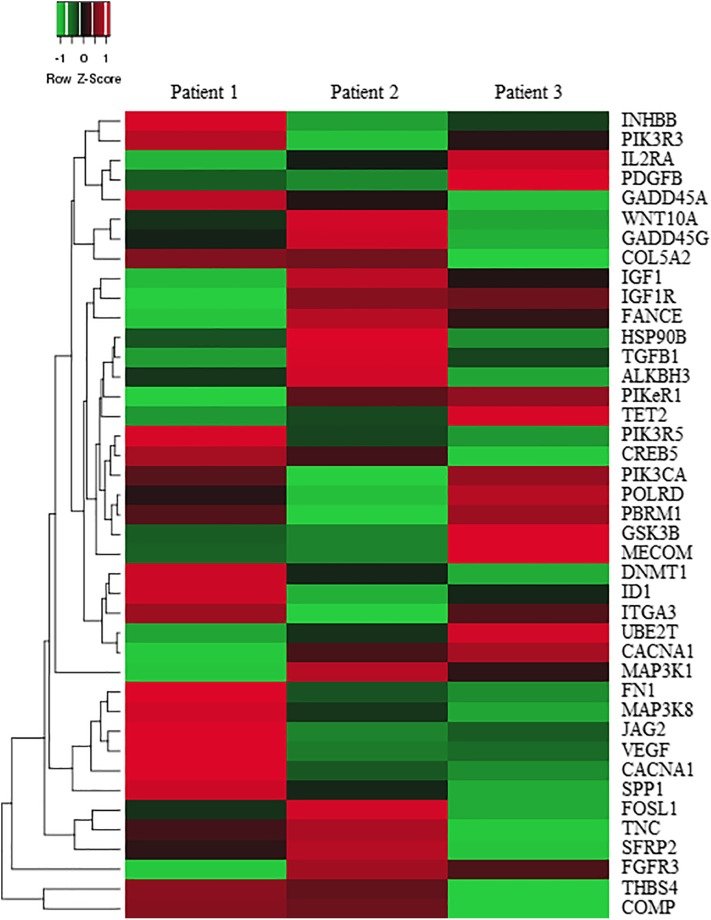
그림 출처: PubMed Central 공개 논문 (PMC6324645)
그 밖의 정보
- 출판 형태
- Clinical Trial, Phase II, Journal Article, Multicenter Study, Research Support, Non-U.S. Gov't
- 저널
- The oncologist · eISSN 1549-490X
- 전자 출판
- 2018-09-25
- MeSH
- Adult · Angiogenesis Inhibitors / pharmacology / therapeutic use · Female · Humans · Indazoles · Male · Neoplasm Metastasis · Pyrimidines / pharmacology / therapeutic use · Sarcoma, Alveolar Soft Part / drug therapy / pathology · Sulfonamides / pharmacology / therapeutic use
- Substances
- Angiogenesis Inhibitors · Indazoles · Pyrimidines · Sulfonamides · pazopanib
- 데이터
- ClinicalTrials.gov: NCT02113826
- 참고문헌
- 16편