
Clin Mol Hepatol. 2017;23(3):205-211.
Current status and strategies for hepatitis B control in Korea.
제1저자 조은주 · 교신저자 김윤준
소속 (6)
- Department of Internal Medicine and Liver Research Institute, Seoul National University College of Medicine, Seoul, Korea.
- Department of Internal Medicine, Hallym University Sacred Heart Hospital, Hallym University College of Medicine, Anyang, Korea.
- Department of Internal Medicine, Hallym University College of Medicine, Chuncheon, Korea.
- Asan Medical Center, University of Ulsan College of Medicine, Seoul, Korea.
- Department of Internal Medicine, Soonchunhyang University Hospital, Seoul, Korea.
- Department of Internal Medicine, Keimyung University School of Medicine, Daegu, Korea.
Abstract
Hepatitis B virus (HBV) infection is the most common cause of chronic liver diseases in Korea. After the introduction of the universal HBV vaccination program, the prevalence of hepatitis B surface antigen was markedly reduced, and Korea is now classified as an area of intermediate endemicity for HBV. However, there are still hurdles for elimination of hepatitis B, such as immunoprophylaxis failure against vertical transmission, occurrence of acute hepatitis B among peoples who did not have vaccination at younger age, and rapid increase of immigrant populations from HBV endemic areas. To achieve the World Health Organization goal of viral hepatitis elimination by 2030 in Korea, we suggest comprehensive policies for more effective control of hepatitis B as following: i) insurance coverage for antiviral prophylaxis in mothers with high viremia, ii) screening for hepatitis B seromarkers and catch-up HBV vaccinations of susceptible persons with hepatitis B, iii) establishment of an independent 'viral hepatitis sector' in Centers for Disease Control & Prevention to organize and execute comprehensive strategy for management of viral hepatitis, iv) encourage of management of HBV infection in immigrant populations, v) national campaign to promote awareness of hepatitis B.
Keywords
Hepatitis BKoreaViral hepatitis
Figures
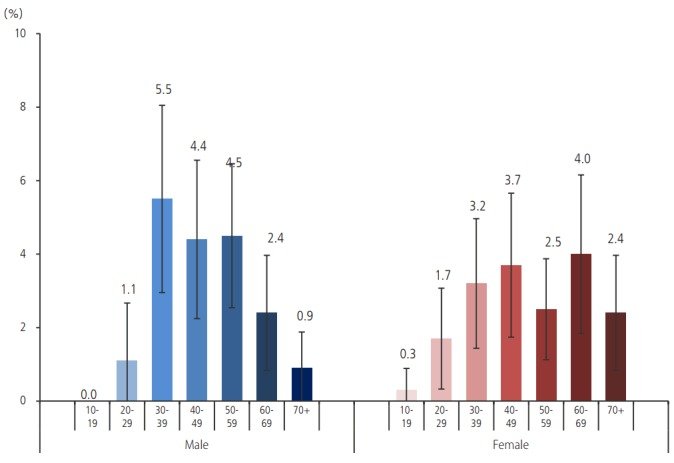
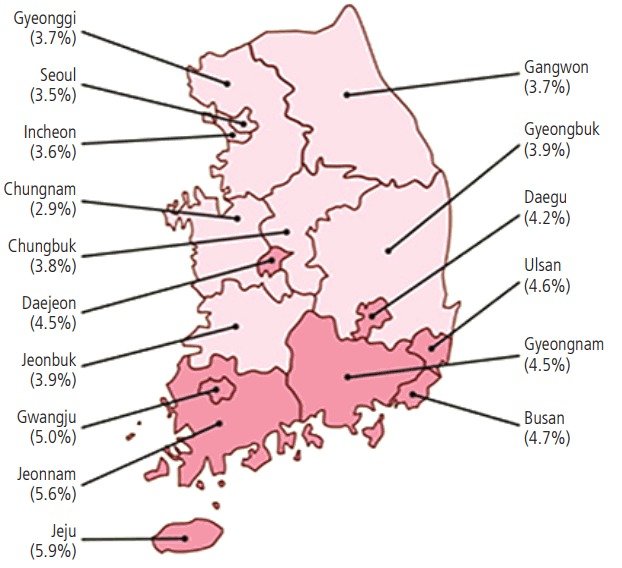
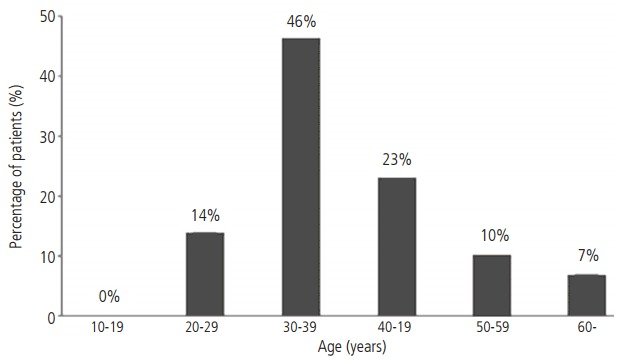
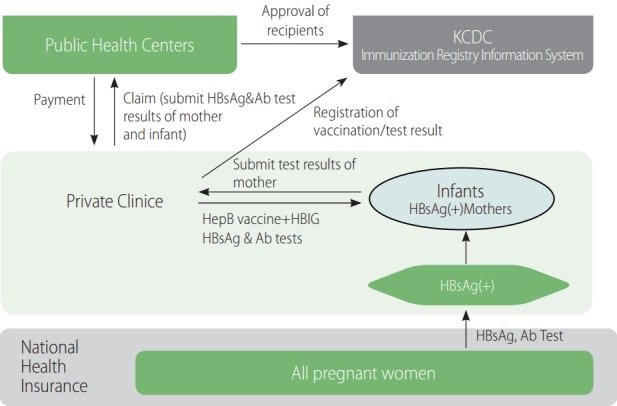
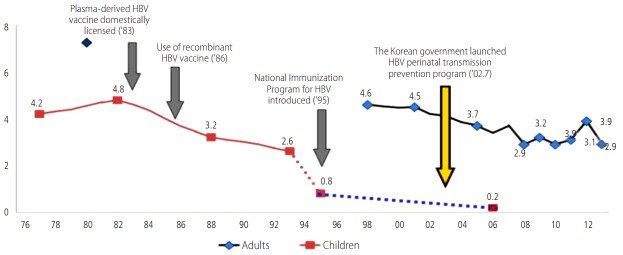
그림 출처: PubMed Central 공개 논문 (PMC5628005)
Conflict of interest statement
Conflicts of Interest: The authors have no conflicts to disclose.
그 밖의 정보
- 출판 형태
- Journal Article, Review
- 저널
- Clinical and molecular hepatology · eISSN 2287-285X
- 전자 출판
- 2017-09-19
- MeSH
- Antiviral Agents / therapeutic use · Emigrants and Immigrants · Female · Hepatitis B / drug therapy / epidemiology / prevention & control · Humans · Pregnancy · Prevalence · Republic of Korea / epidemiology
- Substances
- Antiviral Agents
- 참고문헌
- 10편