
Rev Endocr Metab Disord. 2022;23(3):579-599.
Association of vitamin D status with COVID-19 and its severity : Vitamin D and COVID-19: a narrative review.
제1저자 배재현, 최훈지 · 교신저자 임수
소속 (4)
- Department of Internal Medicine, Korea University Anam Hospital, Korea University College of Medicine, Seoul, South Korea.
- Department of Internal Medicine, Seoul National University Hospital, Seoul, South Korea.
- Section of Endocrinology, Diabetes, Nutrition and Weight Management, Department of Medicine, Boston University Medical Campus, 715 Albany St #437, Boston, MA, 02118, USA.
- Department of Internal Medicine, Seoul National University College of Medicine, Seoul National University Bundang Hospital, 82, Gumi-ro, 173 Beon-gil, Bundang-gu, Seongnam, 13620, South Korea. limsoo@snu.ac.kr.
Abstract
Vitamin D is associated with biological activities of the innate and adaptive immune systems, as well as inflammation. In observational studies, an inverse relationship has been found between serum 25-hydroxyvitamin D (25(OH)D) concentrations and the risk or severity of coronavirus disease 2019 (COVID-19). Several mechanisms have been proposed for the role of vitamin D in COVID-19, including modulation of immune and inflammatory responses, regulation of the renin-angiotensin-aldosterone system, and involvement in glucose metabolism and cardiovascular system. Low 25(OH)D concentrations might predispose patients with COVID-19 to severe outcomes not only via the associated hyperinflammatory syndrome but also by worsening preexisting impaired glucose metabolism and cardiovascular diseases. Some randomized controlled trials have shown that vitamin D supplementation is beneficial for reducing severe acute respiratory syndrome coronavirus 2 RNA positivity but not for reducing intensive care unit admission or all-cause mortality in patients with moderate-to-severe COVID-19. Current evidence suggests that taking a vitamin D supplement to maintain a serum concentration of 25(OH)D of at least 30 ng/mL (preferred range 40-60 ng/mL), can help reduce the risk of COVID-19 and its severe outcomes, including mortality. Although further well designed studies are warranted, it is prudent to recommend vitamin D supplements to people with vitamin D deficiency/insufficiency during the COVID-19 pandemic according to international guidelines.
© 2022. The Author(s), under exclusive licence to Springer Science+Business Media, LLC, part of Springer Nature.
Keywords
COVID-19ImmunomodulationInflammationRenin–angiotensin–aldosterone systemVitamin D
Figures
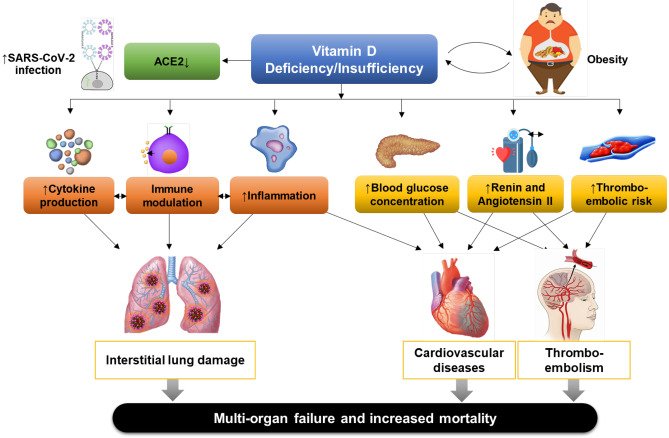
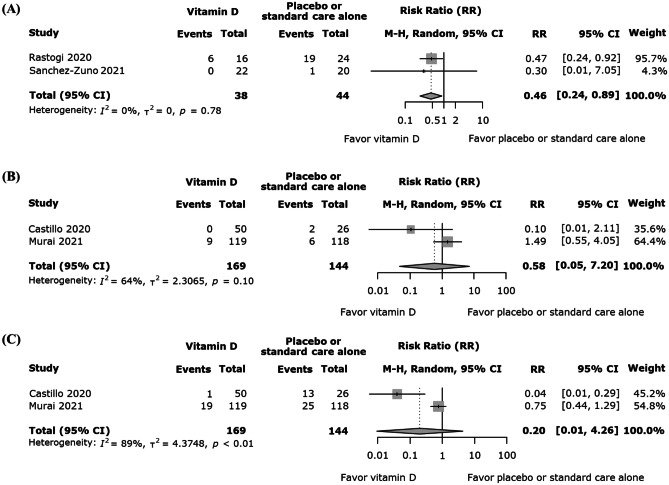
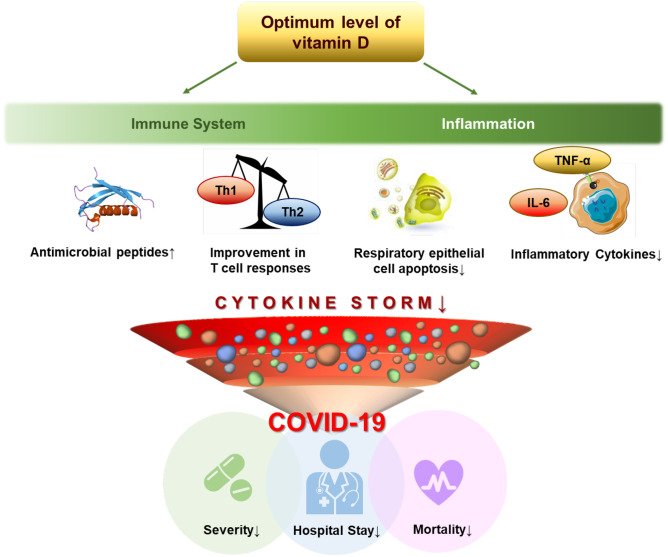
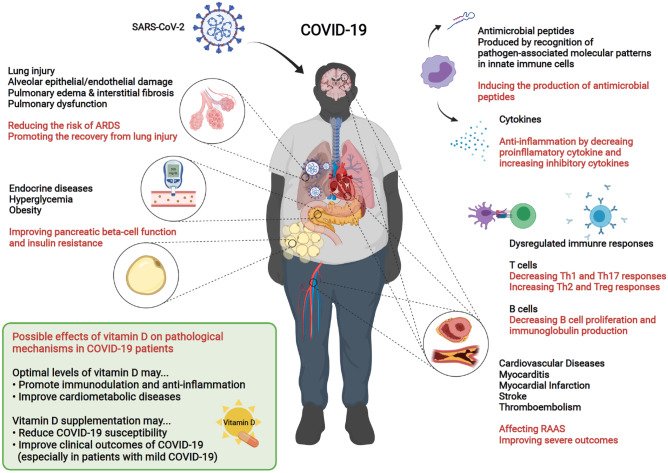
그림 출처: PubMed Central 공개 논문 (PMC8724612)
Conflict of interest statement
The authors declare no competing interests.
그 밖의 정보
- 출판 형태
- Journal Article, Review
- 저널
- Reviews in endocrine & metabolic disorders · eISSN 1573-2606
- 전자 출판
- 2022-01-04
- MeSH
- Glucose · Humans · Pandemics · SARS-CoV-2 · Vitamin D · COVID-19 Drug Treatment*
- Substances
- Vitamin D · Glucose
- 참고문헌
- 178편