
Respir Res. 2022;23(1):237.
Peripheral blood transcriptomic clusters uncovered immune phenotypes of asthma.
제1저자 이현우, 백민경 · 교신저자 이하나, 강혜련
소속 (14)
- Department of Internal Medicine, Seoul Metropolitan Government-Seoul National University Boramae Medical Center, Seoul, Korea.
- Interdisciplinary Program in Precision Public Health, Korea University, Seoul, Korea.
- Department of Internal Medicine, Seoul National University Hospital, 101 Daehak-ro, Jongno-Gu, Seoul, 110-744, Korea.
- Department of Translational Medicine, Seoul National University College of Medicine, Seoul, Korea.
- Department of Internal Medicine, Kyung Hee University Hospital, Seoul, Korea.
- Department of Internal Medicine, Chungbuk National University College of Medicine, Chungbuk National University Hospital, Cheongju, Korea.
- Department of Internal Medicine, Chung-Ang University College of Medicine, Seoul, Korea.
- Department of Pulmonology and Allergy, Allergy and Clinical Immunology Research Center, Hallym University College of Medicine, Chuncheon, Korea.
- Institute of Allergy and Clinical Immunology, Seoul National University Medical Research Center, Seoul National University College of Medicine, Seoul, Korea.
- Interdisciplinary Program in Precision Public Health, Korea University, Seoul, Korea. hanayi@korea.ac.kr.
- School of Biosystems and Biomedical Sciences, Korea University, 145 Anam-ro, Seongbuk-gu, Seoul, 02841, Korea. hanayi@korea.ac.kr.
- Department of Internal Medicine, Seoul National University Hospital, 101 Daehak-ro, Jongno-Gu, Seoul, 110-744, Korea. helenmed@snu.ac.kr.
- Department of Translational Medicine, Seoul National University College of Medicine, Seoul, Korea. helenmed@snu.ac.kr.
- Institute of Allergy and Clinical Immunology, Seoul National University Medical Research Center, Seoul National University College of Medicine, Seoul, Korea. helenmed@snu.ac.kr.
Abstract
BACKGROUND Transcriptomic analysis has been used to elucidate the complex pathogenesis of heterogeneous disease and may also contribute to identify potential therapeutic targets by delineating the hub genes. This study aimed to investigate whether blood transcriptomic clustering can distinguish clinical and immune phenotypes of asthmatics, and microbiome in asthmatics.
METHODS Transcriptomic expression of peripheral blood mononuclear cells (PBMCs) from 47 asthmatics and 21 non-asthmatics was measured using RNA sequencing. A hierarchical clustering algorithm was used to classify asthmatics. Differentially expressed genes, clinical phenotypes, immune phenotypes, and microbiome of each transcriptomic cluster were assessed.
RESULTS In asthmatics, three distinct transcriptomic clusters with numerously different transcriptomic expressions were identified. The proportion of severe asthmatics was highest in cluster 3 as 73.3%, followed by cluster 2 (45.5%) and cluster 1 (28.6%). While cluster 1 represented clinically non-severe T2 asthma, cluster 3 tended to include severe non-T2 asthma. Cluster 2 had features of both T2 and non-T2 asthmatics characterized by the highest serum IgE level and neutrophil-dominant sputum cell population. Compared to non-asthmatics, cluster 1 showed higher CCL23 and IL1RL1 expression while the expression of TREML4 was suppressed in cluster 3. CTSD and ALDH2 showed a significant positive linear relationship across three clusters in the order of cluster 1 to 3. No significant differences in the diversities of lung and gut microbiomes were observed among transcriptomic clusters of asthmatics and non-asthmatics. However, our study has limitations in that small sample size data were analyzed with unmeasured confounding factors and causal relationships or function pathways were not verified.
CONCLUSIONS Genetic clustering based on the blood transcriptome may provide novel immunological insight, which can be biomarkers of asthma immune phenotypes. Trial registration Retrospectively registered.
© 2022. The Author(s).
Keywords
AsthmaCluster analysisMicrobiomeRNA-SeqTranscriptome
Figures
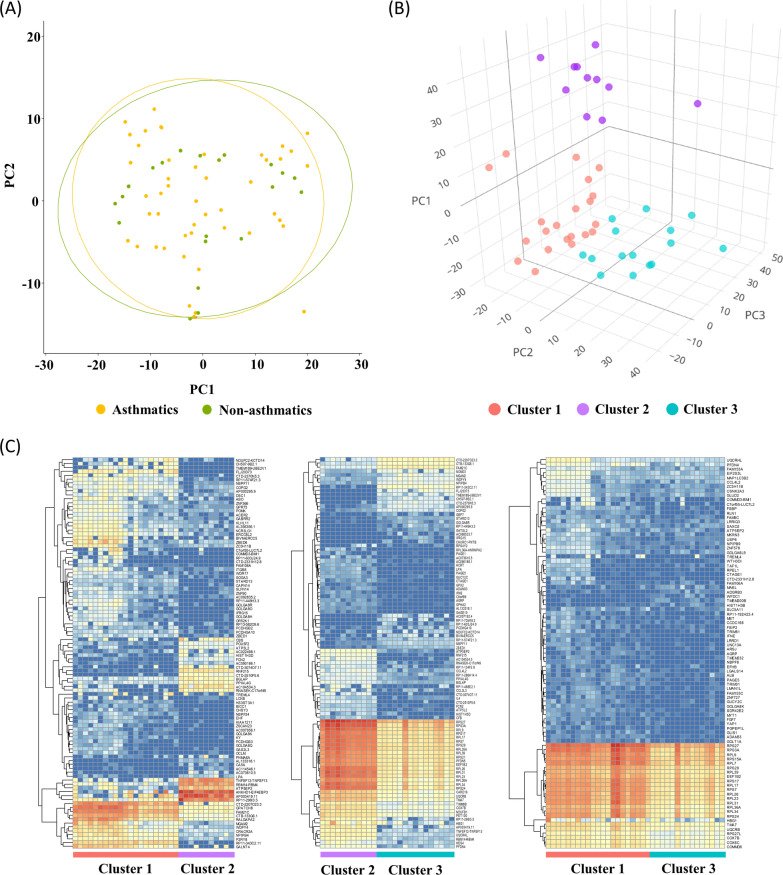
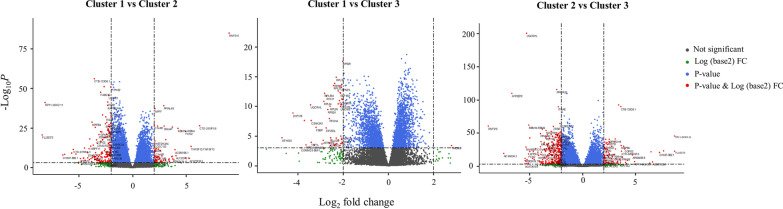
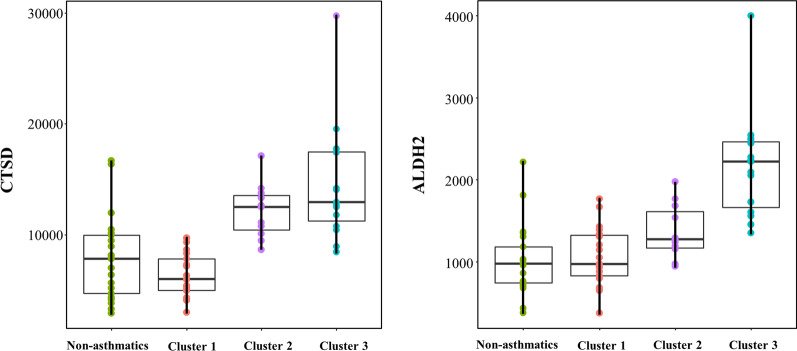
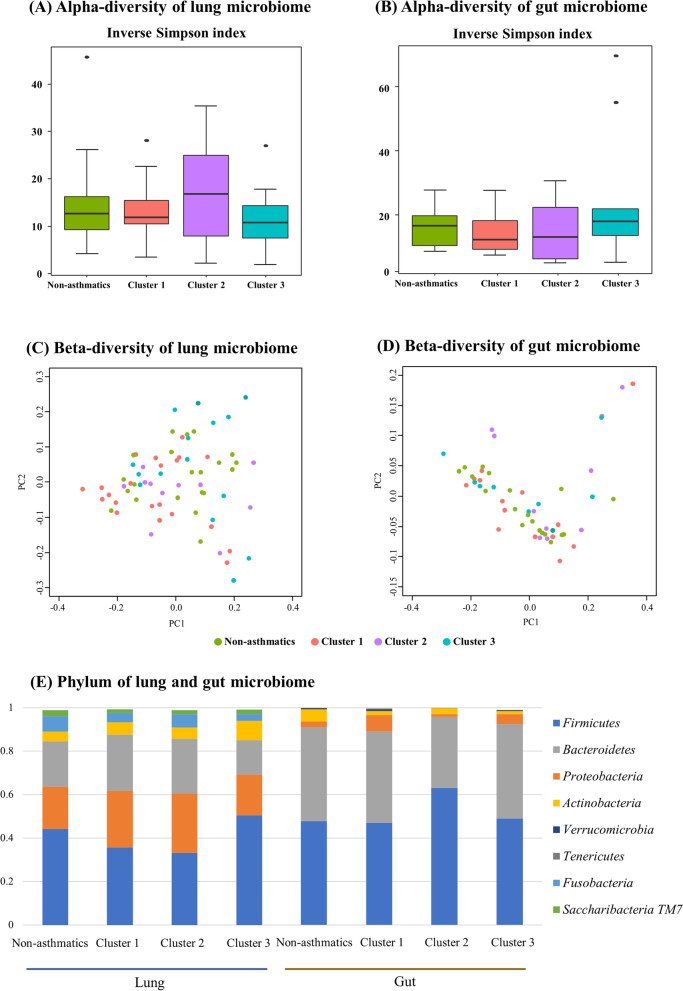
그림 출처: PubMed Central 공개 논문 (PMC9461267)
Conflict of interest statement
The authors declare that they have no competing interests.
그 밖의 정보
- 출판 형태
- Journal Article
- 저널
- Respiratory research · eISSN 1465-993X
- 전자 출판
- 2022-09-08
- MeSH
- Aldehyde Dehydrogenase, Mitochondrial / genetics · Asthma* / diagnosis / genetics · Humans · Leukocytes, Mononuclear / metabolism · Phenotype · Receptors, Immunologic / genetics · Sputum / metabolism · Transcriptome*
- Substances
- Receptors, Immunologic · TREML4 protein, human · ALDH2 protein, human · Aldehyde Dehydrogenase, Mitochondrial
- 연구비
- Research of Korea Centers for Disease Control and Prevention 2017ER670100, 2017ER670101, and 2017ER670103 · Research of Korea Centers for Disease Control and Prevention 2017ER670100, 2017ER670101, and 2017ER670103
- 참고문헌
- 52편