
BMC Cardiovasc Disord. 2023;23(1):6.
Real-world evidence of switching P2Y12 receptor-inhibiting therapies to prasugrel after PCI in patients with ACS: results from EFF-K registry.
제1저자 강지훈 · 교신저자 김효수
소속 (8)
- Cardiovascular Center, Seoul National University College of Medicine, Seoul National University Hospital, 101 Daehak-Ro Jongno-Gu, Seoul, 03080, Republic of Korea.
- Department of Critical Care Medicine, Seoul National University Hospital, Seoul, Republic of Korea.
- Department of Internal Medicine, Seoul St. Mary's Hospital, Seoul, Republic of Korea.
- Department of Internal Medicine, Kangbuk Samsung Hospital, Sungkyunkwan University School of Medicine, Seoul, Republic of Korea.
- Department of Internal Medicine, Inha University Hospital, Incheon, Republic of Korea.
- Department of Internal Medicine, Hanyang University College of Medicine, Seoul, Republic of Korea.
- Daiichi Sankyo Korea Co., Ltd., Seoul, Republic of Korea.
- Cardiovascular Center, Seoul National University College of Medicine, Seoul National University Hospital, 101 Daehak-Ro Jongno-Gu, Seoul, 03080, Republic of Korea. hyosoo@snu.ac.kr.
Abstract
BACKGROUND Potent P2Y12 inhibitors are recommended for up to 12 months after percutaneous coronary intervention (PCI) in patients diagnosed with acute coronary syndrome (ACS). However, the prescription pattern is diverse in real world practice, which includes various switching between antiplatelet regimens. In this study, we analyzed the prescription patterns of prasugrel, and assessed the safety and effectiveness of P2Y12 inhibitors switching patterns in a real world registry of patients subjected to PCI after ACS.
METHODS The EFF-K study included 3077 ACS patients receiving prasugrel-based dual antiplatelet therapy. The cohort was divided into those who were administered with prasugrel as the primary antiplatelet treatment (naïve cohort) or as a substitute agent after clopidogrel or ticagrelor pre-treatment (switch cohort). The primary endpoint was a net adverse clinical event (NACE; a composite of cardiovascular death, non-fatal myocardial infarction, non-fatal stroke, or TIMI major bleeding unrelated to coronary-artery bypass grafting).
RESULTS A total of 3077 patients diagnosed with ACS were included in the analysis. Among the total population, 726 patients (23.6%) were classed as the naïve cohort and 2351 patients (76.4%) as the switch cohort. Baseline characteristics showed that the switch cohort had more comorbidities, such as hypertension, diabetes mellitus, heart failure and previous PCI. The major cause of switching to prasugrel in the switch cohort was the necessity for a more potent antiplatelet agent (56.3%). During a 12-month follow-up period, 51 patients (1.7%) experienced at least one NACE. The incidence of NACE did not differ between the naïve and switch cohort (1.5% vs. 1.7%, Hazard ratio 1.17, 95% Confidence interval 0.56-2.43, P = 0.677). In subgroup analysis, no significant interaction was observed between the treatment strategy and the incidence of NACE across various subgroups.
CONCLUSIONS Dual antiplatelet therapy with prasugrel seems to be safe and effective both as a primary treatment and as a substitute for other P2Y12 inhibitors in a real world registry of Asian ACS patients receiving PCI.
TRIAL REGISTRATION KCT0002356, registered June 13, 2017.
© 2023. The Author(s).
Keywords
Acute coronary syndromeObservational studyPercutaneous coronary interventionPrasugrel
Figures
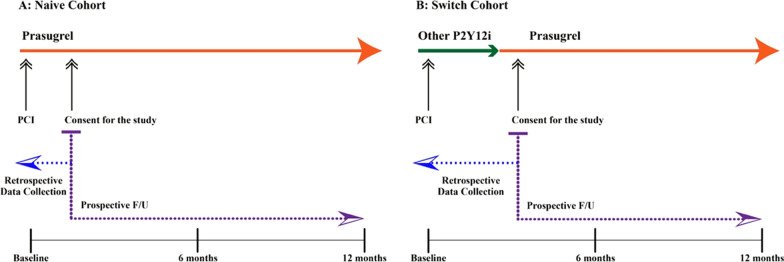
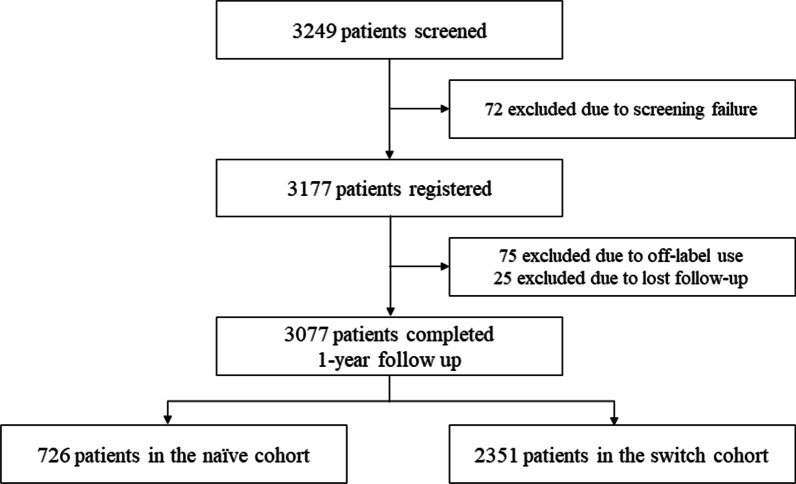
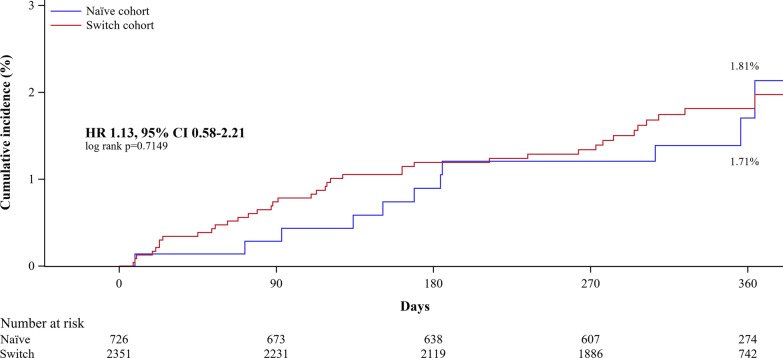
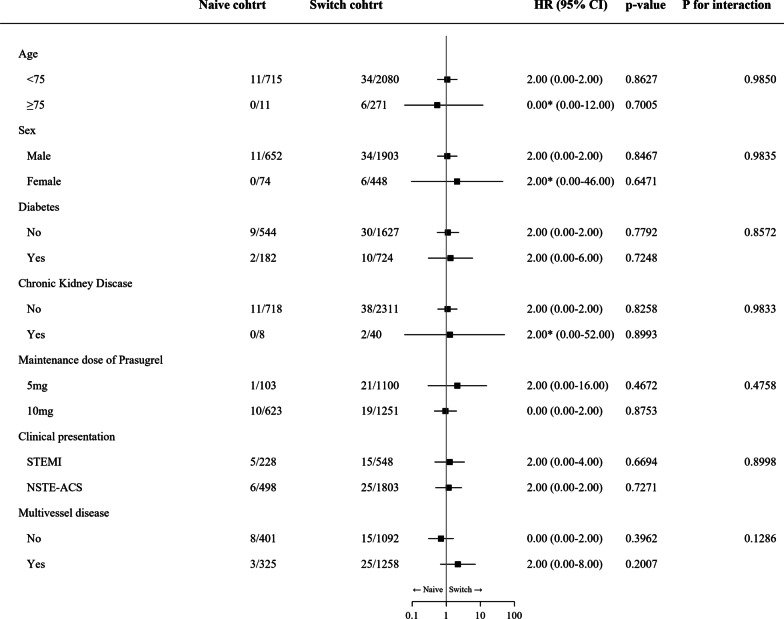
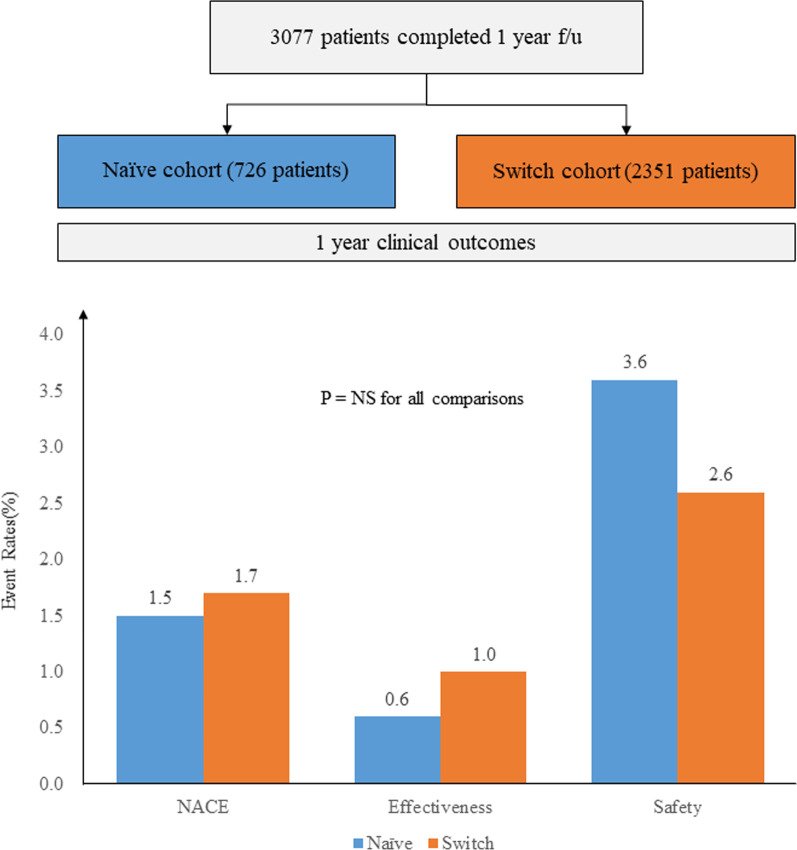
그림 출처: PubMed Central 공개 논문 (PMC9827633)
Conflict of interest statement
H-SK has received research grants or speaker’s fees from Daiichi Sankyo, Medtronic, Abbott Vascular, Edwards Life Science, Boston Scientific, Terumo, Biotronik and Dio, Amgen, Pfizer, AstraZeneca, MSD and Behringer Ingelheim. H-MK and J-HH are full-time employees of Daiichi Sankyo Korea. All other authors (JK, J-KH, H-MY, KWP, H-JK, B-KK, E-HC, J-YL, S-DP, and Y-HL) have no competing interests.
그 밖의 정보
- 출판 형태
- Journal Article, Research Support, Non-U.S. Gov't
- 저널
- BMC cardiovascular disorders · eISSN 1471-2261
- 전자 출판
- 2023-01-09
- MeSH
- Humans · Acute Coronary Syndrome* / therapy / drug therapy · Percutaneous Coronary Intervention* · Platelet Aggregation Inhibitors / therapeutic use · Prasugrel Hydrochloride* / therapeutic use · Purinergic P2Y Receptor Antagonists / therapeutic use · Registries · Treatment Outcome · Drug Substitution*
- Substances
- Platelet Aggregation Inhibitors · Prasugrel Hydrochloride · Purinergic P2Y Receptor Antagonists
- 참고문헌
- 25편