
J Nutr Health Aging. 2019;23(1):79-83.
Relationship between Within-Visit Blood Pressure Variability and Skeletal Muscle Mass.
제1저자 김광일 · 교신저자 김광일
소속 (1)
- Kwang-il, Kim, MD, PhD, Professor, Department of Internal Medicine, Seoul National University College of Medicine, Seoul National University Bundang Hospital, 82 Gumi-ro, 173 Beon-gil, Bundang-gu, Seongnam-si, Kyeongi-do, 13620, Republic of Korea. E-mail: kikim907@snu.ac.kr; Telephone: +82-31-787-7032; Fax: +82-31-787-4052.
Abstract
Sarcopenia, defined as loss of skeletal muscle mass and function with age, is an important health issue in aging society. We tried to investigate the relationship between blood pressure variability and skeletal muscle mass in nation-wide large population cohort. This cross-sectional study was based on data acquired in the Korea National Health and Nutrition Examination Survey (KNHANES), conducted from 2009 to 2011 by the Korean Centers for Disease Control and Prevention. We included 14,481 participants (age ≥ 20 years, male 6,302) for the analysis who had both blood pressure and whole-body dual energy X-ray absorptiometry (DXA) scan data. As an intra-individual within-visit blood pressure variability index, we calculated standard deviation (SD), coefficient of variation (CV), and maximum minus minimum BP difference (MMD) of systolic and diastolic blood pressure, which was measured 3 times. Appendicular skeletal muscle mass (ASM) was the sum of lean masses of both arms and legs. We adjusted ASM by body mass index. Significant inverse relationship was observed between blood pressure variability index (SD, CV, and MMD) and adjusted ASM. Blood pressure variability index were significantly higher in the lowest ASM quintile group both in male and female participants (p<0.001). In multivariate analysis, blood pressure variability index were significantly associated with ASM, even after adjusting confounding factors (p<0.001). In conclusion, hemodynamic influence may play an important role in the development of sarcopenia.
Keywords
Blood pressure variabilitycohortskeletal muscle mass
Figures
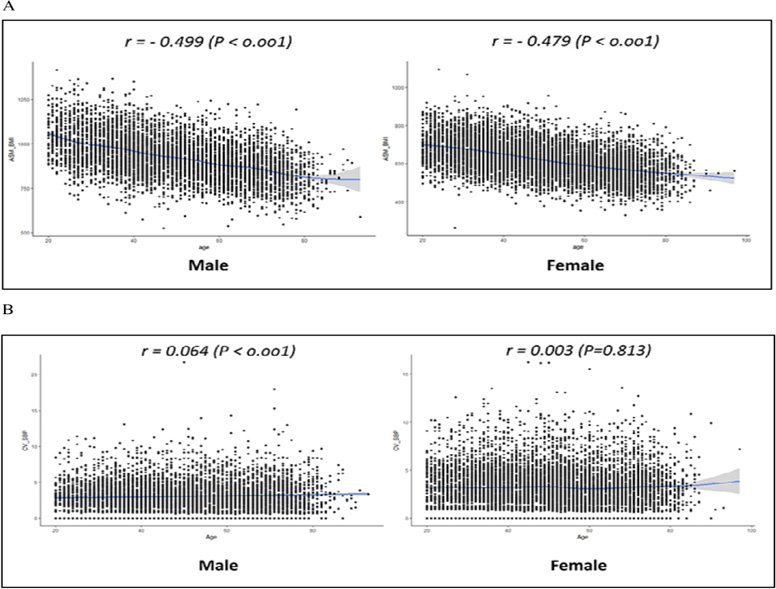
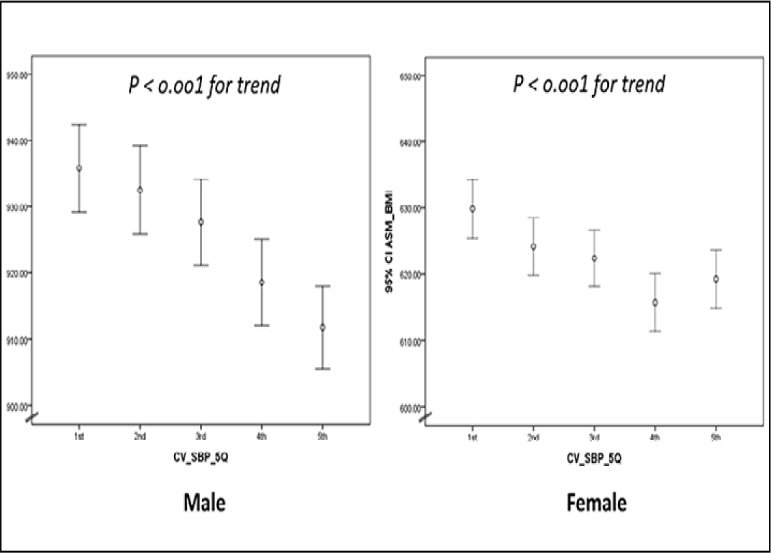
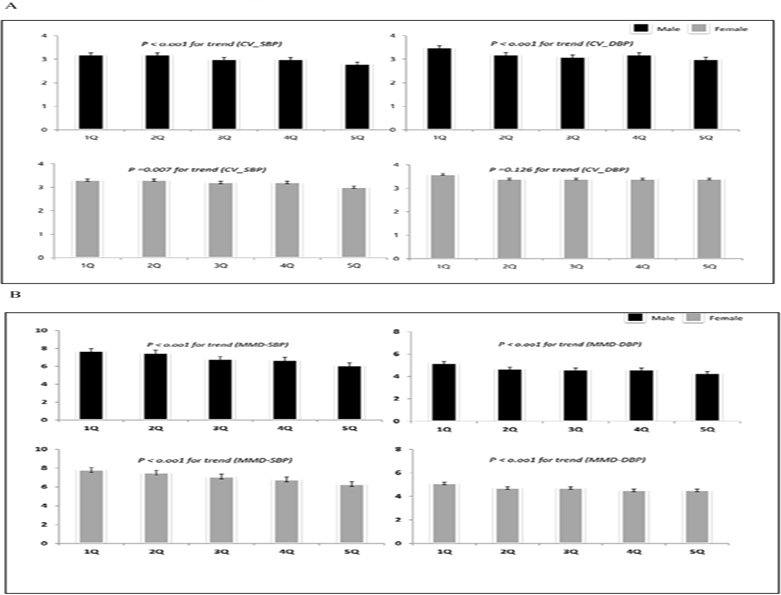
그림 출처: PubMed Central 공개 논문 (PMC12280376)
Conflict of interest statement
Kwang-il Kim, Min-gu Kang, Sol-Ji Yoon, Jung-Yeon Choi, Sun-wook Kim, and Cheol-Ho Kim declare that they have no conflict of interest.
그 밖의 정보
- 출판 형태
- Journal Article
- 저널
- The journal of nutrition, health & aging · eISSN 1760-4788
- MeSH
- Absorptiometry, Photon / methods · Adult · Aged · Aging / physiology · Blood Pressure / physiology · Cohort Studies · Cross-Sectional Studies · Female · Humans · Male · Middle Aged · Muscle, Skeletal / physiopathology · Sarcopenia / physiopathology · Young Adult
- 참고문헌
- 16편