
Arthritis Res Ther. 2020;22(1):63.
Reduction of circulating innate lymphoid cell progenitors results in impaired cytokine production by innate lymphoid cells in patients with lupus nephritis.
제1저자 류승원 · 교신저자 이하정, 김혜영
소속 (11)
- Laboratory of Mucosal Immunology, Department of Biomedical Sciences, Seoul National University College of Medicine, Seoul, 03080, South Korea.
- Division of Rheumatology, Department of Internal Medicine, Seoul National University Hospital, Seoul, South Korea.
- Division of Nephrology, Department of Internal Medicine, Seoul National University Hospital, Seoul, South Korea.
- Kidney Research Institute, Seoul National University College of Medicine, Seoul, 03080, South Korea.
- Department of Pathology, Seoul National University College of Medicine, Seoul, South Korea.
- Laboratory of Immune Regulation, Department of Biomedical Sciences, Seoul National University College of Medicine, Seoul, South Korea.
- College of Life Sciences and Biotechnology, Korea University, Seoul, South Korea.
- Division of Nephrology, Department of Internal Medicine, Seoul National University Hospital, Seoul, South Korea. mdhjlee@gmail.com.
- Kidney Research Institute, Seoul National University College of Medicine, Seoul, 03080, South Korea. mdhjlee@gmail.com.
- Laboratory of Mucosal Immunology, Department of Biomedical Sciences, Seoul National University College of Medicine, Seoul, 03080, South Korea. hykim11@snu.ac.kr.
- Institute of Allergy and Clinical Immunology, Seoul National University Medical Research Center, Seoul, South Korea. hykim11@snu.ac.kr.
Abstract
BACKGROUND Innate lymphoid cells (ILCs) play an essential role in maintaining homeostasis; however, they can also cause chronic inflammation and autoimmune disease. This study aimed to identify the role of ILCs in the pathogenesis of lupus nephritis (LN).
METHODS The percentage of ILCs within the peripheral blood mononuclear cell (PBMC) population and urine of patients with LN (n = 16), healthy controls (HC; n = 8), and disease controls (ANCA-associated vasculitis (AAV; n = 6), IgA nephropathy (IgAN; n = 9), and other glomerular diseases (n = 5)) was determined by flow cytometry analysis. In addition, ILCs were sorted and cultured with plasma from LN patients or HC to elucidate whether the reduced population of CD117+ ILCs observed in LN was due to changes in the ILC progenitor population.
RESULTS The percentage of total ILCs and CD117+ ILCs in LN was significantly lower than that in HC. The percentage of cytokine-secreting ILCs was also lower in LN; however, when the disease stabilized, cytokine production was restored to levels similar to those in HC. The increase in the number of exhausted ILCs (cells unable to secrete cytokines) correlated positively with disease activity. When CD117+ ILCs were cultured with LN plasma, the number of CD117+ ILCs fell, but that of other ILC subsets increased.
CONCLUSIONS The percentage of CD117+ ILCs and the capacity of ILCs to secrete cytokines fell as LN severity increased, suggesting that an inflammatory environment of LN induces persistent differentiation and exhaustion of ILCs.
Keywords
Autoimmune kidney diseaseCytokineInnate lymphoid cells (ILCs)Lupus nephritis
Figures
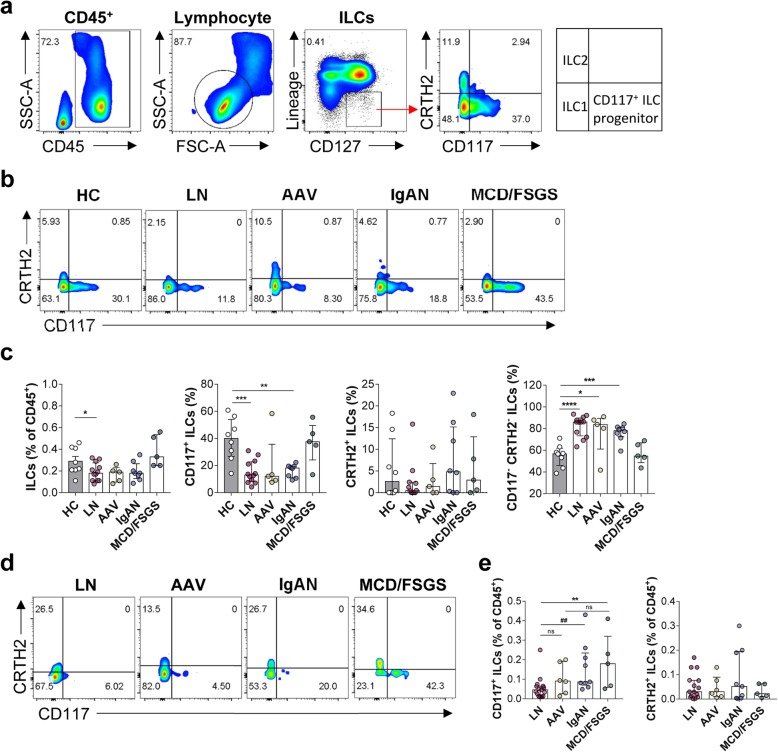
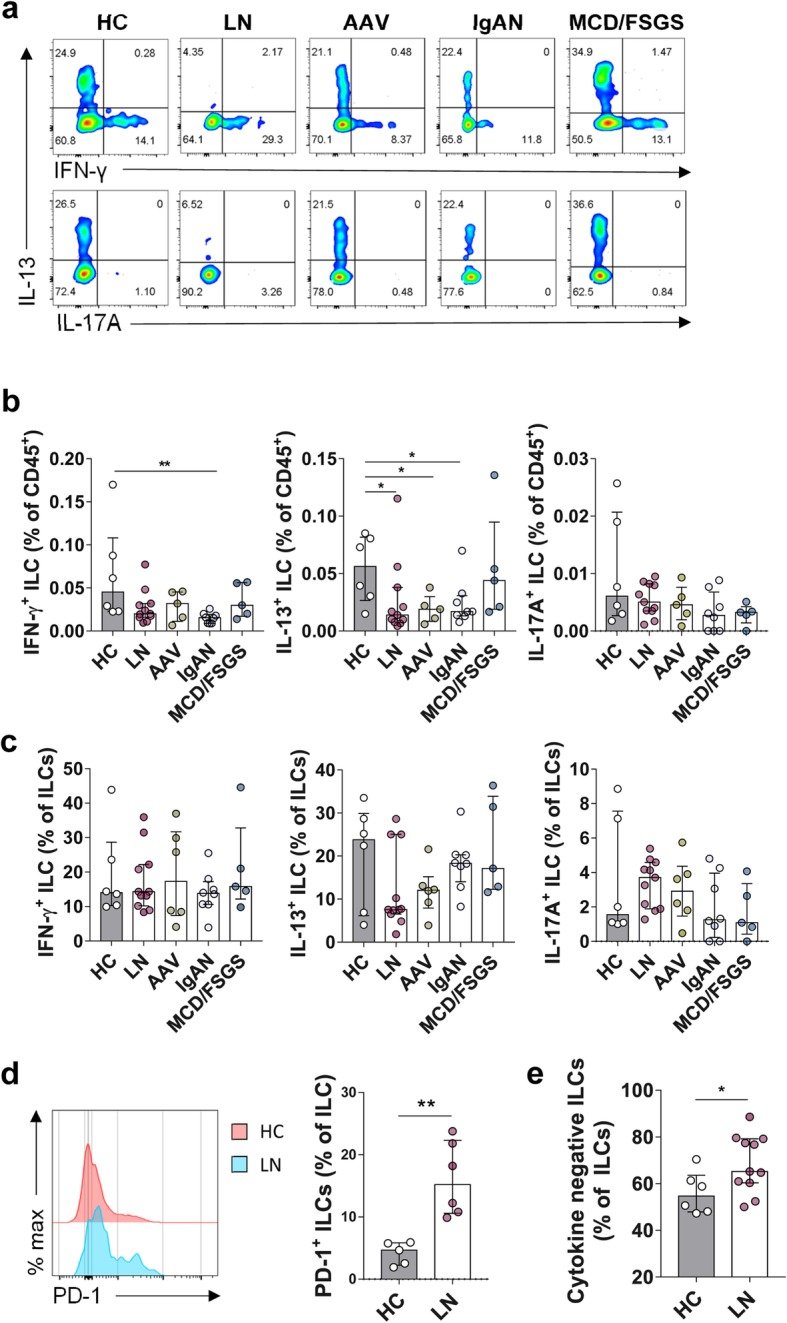
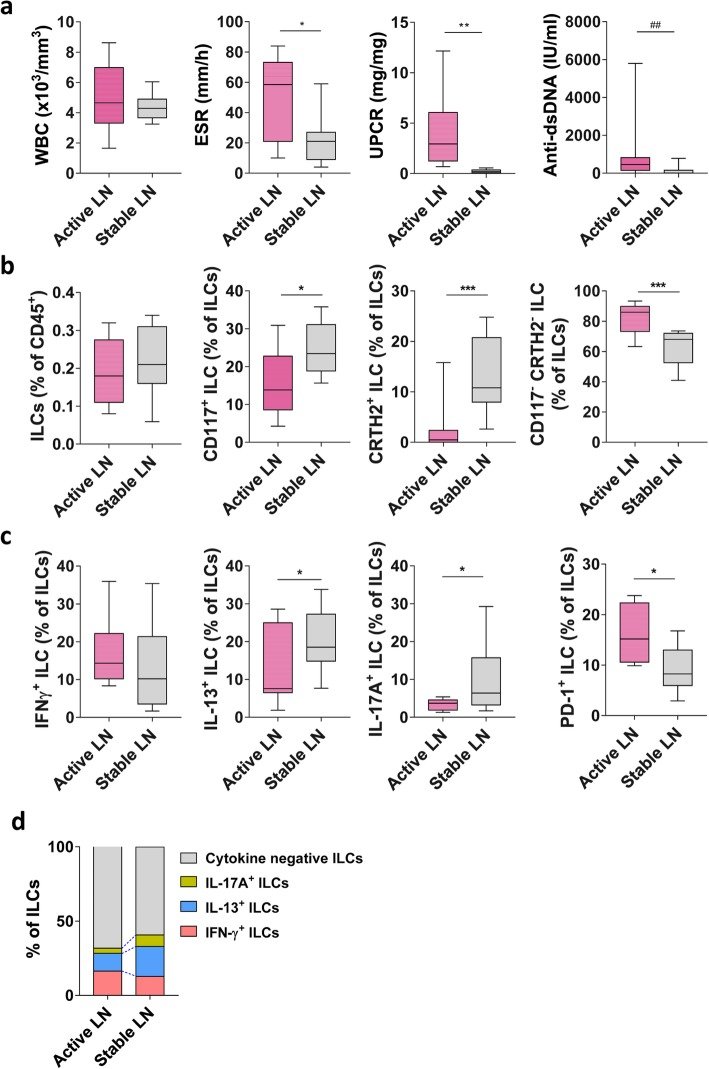
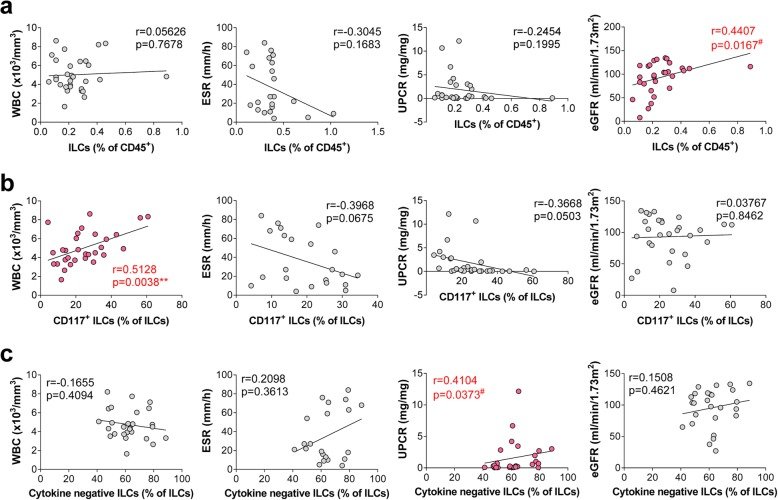
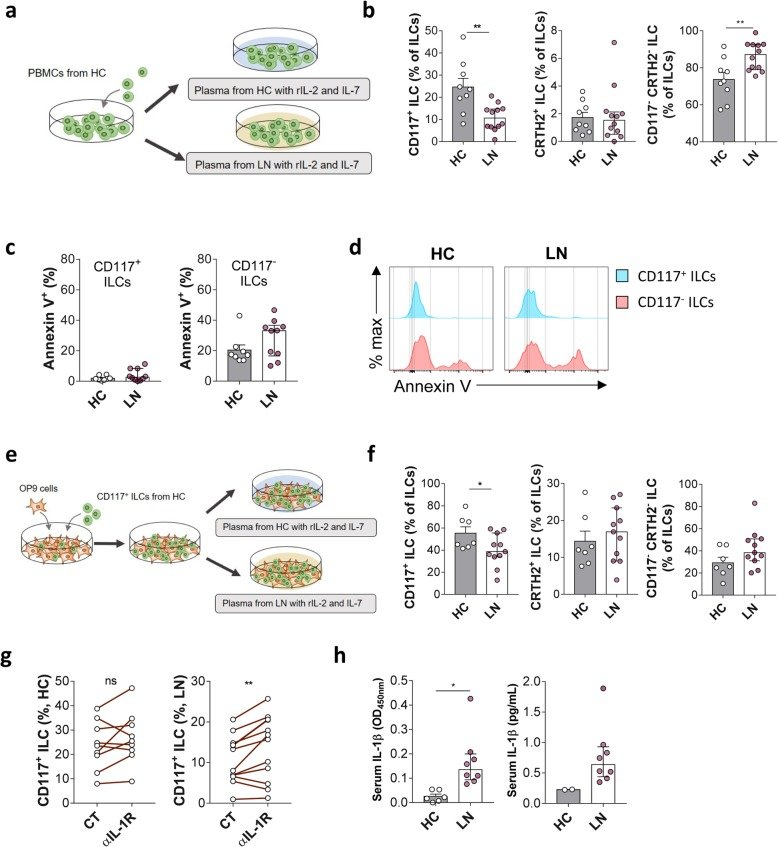
그림 출처: PubMed Central 공개 논문 (PMC7104540)
Conflict of interest statement
The authors declare that they have no competing interests.
그 밖의 정보
- 출판 형태
- Journal Article, Research Support, Non-U.S. Gov't
- 저널
- Arthritis research & therapy · eISSN 1478-6362
- 전자 출판
- 2020-03-29
- MeSH
- Adult · Cell Count · Cell Differentiation / immunology · Cells, Cultured · Cytokines / immunology / metabolism · Flow Cytometry · Humans · Immunity, Innate / immunology · Leukocytes, Mononuclear / cytology / immunology / metabolism · Lupus Nephritis / blood / immunology / metabolism · Lymphocytes / cytology / immunology / metabolism · Male · Middle Aged · Proto-Oncogene Proteins c-kit / immunology / metabolism · Stem Cells / cytology / immunology / metabolism · Young Adult
- Substances
- Cytokines · Proto-Oncogene Proteins c-kit
- 연구비
- Korea Healthcare Technology R&D Project, Ministry of Health and Welfare HI15C3083 · National Research Foundation of Korea SRC 2017R1A5A1014560 · Korea Healthcare Technology R&D Project, Ministry of Health and Welfare, Korea HI15C1736
- 참고문헌
- 46편