
Cardiovasc Diabetol. 2023;22(1):30.
Systemic proinflammatory-profibrotic response in aortic stenosis patients with diabetes and its relationship with myocardial remodeling and clinical outcome.
제1저자 이현정 · 교신저자 이승표
소속 (7)
- Division of Cardiology, Department of Internal Medicine, Seoul National University Hospital, 101 Daehak-Ro, Jongno-Gu, Seoul, 03080, South Korea.
- Division of Cardiology, Department of Internal Medicine, Asan Medical Center, University of Ulsan College of Medicine, Seoul, South Korea.
- Department of Internal Medicine, Seoul National University College of Medicine, Seoul, South Korea.
- Division of Cardiology, Department of Medicine, Cardiovascular Imaging Center, Heart Vascular Stroke Institute, Samsung Medical Center, Sungkyunkwan University School of Medicine, Seoul, South Korea.
- Division of Cardiology, Department of Internal Medicine, Seoul National University Hospital, 101 Daehak-Ro, Jongno-Gu, Seoul, 03080, South Korea. sproll1@snu.ac.kr.
- Department of Internal Medicine, Seoul National University College of Medicine, Seoul, South Korea. sproll1@snu.ac.kr.
- Center for Precision Medicine, Seoul National University Hospital, Seoul, South Korea. sproll1@snu.ac.kr.
Abstract
BACKGROUND Previous studies have mainly focused more on how diabetes affects the valve than the myocardium in aortic stenosis (AS). In the pressure-overloaded heart, myocardial fibrosis is an important driver of the progression from compensated hypertrophy to heart failure. Using comprehensive noninvasive imaging and plasma proteomics, we investigated whether and how diabetes aggravates the remodeling of the myocardium and its relation with prognosis in AS patients.
METHODS Severe AS patients were enrolled in two prospective cohorts for imaging and biomarker analysis. The imaging cohort (n = 253) underwent echocardiography and cardiac magnetic resonance, and the biomarker cohort (n = 100) blood sampling with multiplex proximity extension assay for 92 proteomic biomarkers. The composite outcome of hospitalization for heart failure admissions and death was assessed in the imaging cohort.
RESULTS Diabetic patients were older (70.4 ± 6.8 versus 66.7 ± 10.1 years) with more advanced ventricular diastolic dysfunction and increased replacement and diffuse interstitial fibrosis (late gadolinium enhancement % 0.3 [0.0-1.6] versus 0.0 [0.0-0.5], p = 0.009; extracellular volume fraction % 27.9 [25.7-30.1] versus 26.7 [24.9-28.5], p = 0.025) in the imaging cohort. Plasma proteomics analysis of the biomarker cohort revealed that 9 proteins (E-selectin, interleukin-1 receptor type 1, interleukin-1 receptor type 2, galectin-4, intercellular adhesion molecule 2, integrin beta-2, galectin-3, growth differentiation factor 15, and cathepsin D) were significantly elevated and that pathways related to inflammatory response and extracellular matrix components were enriched in diabetic AS patients. During follow-up (median 6.3 years), there were 53 unexpected heart failure admissions or death in the imaging cohort. Diabetes was a significant predictor of heart failure and death, independent of clinical covariates and aortic valve replacement (HR 1.88, 95% CI 1.06-3.31, p = 0.030).
CONCLUSIONS Plasma proteomic analyses indicate that diabetes potentiates the systemic proinflammatory-profibrotic milieu in AS patients. These systemic biological changes underlie the increase of myocardial fibrosis, diastolic dysfunction, and worse clinical outcomes in severe AS patients with concomitant diabetes.
© 2023. The Author(s).
Keywords
Aortic valve stenosisDiabetes mellitusMagnetic resonance imagingProteome
Figures
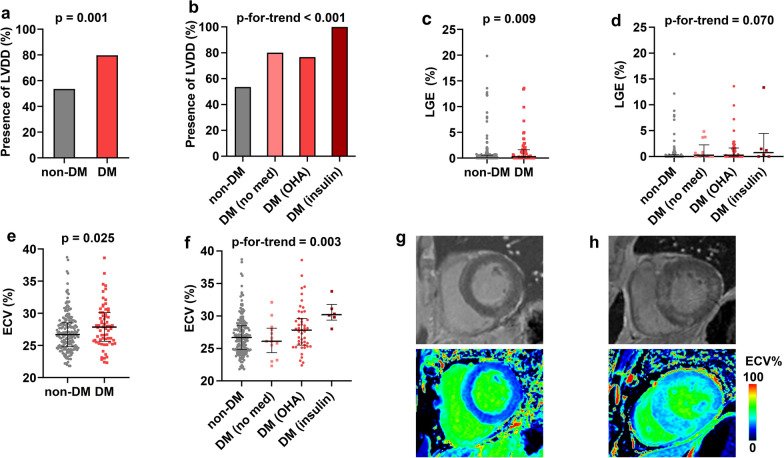
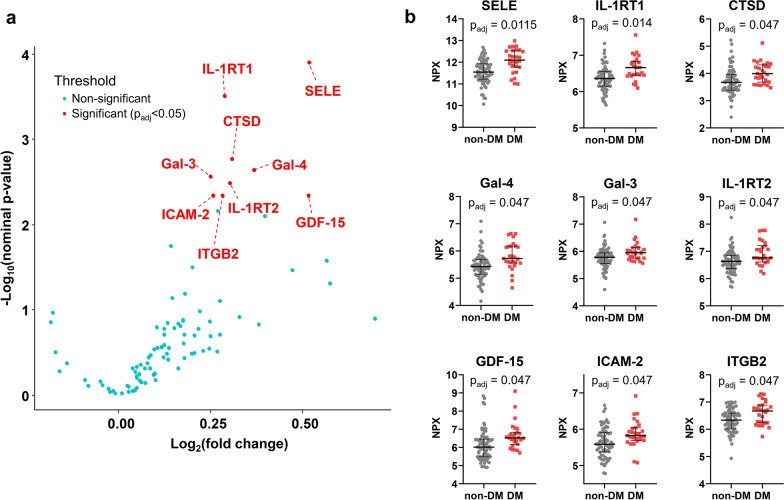
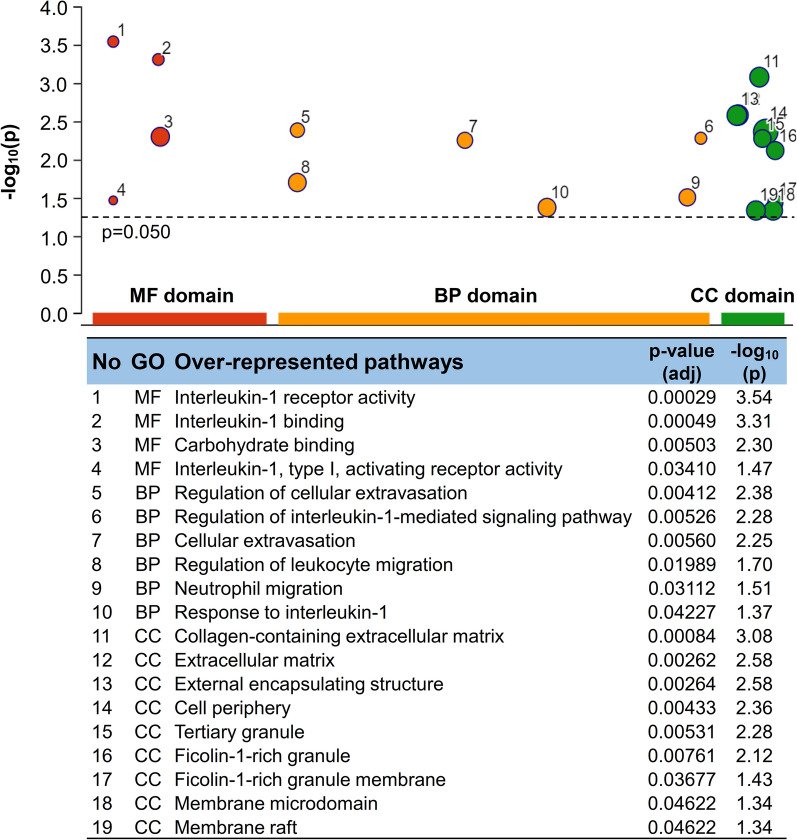
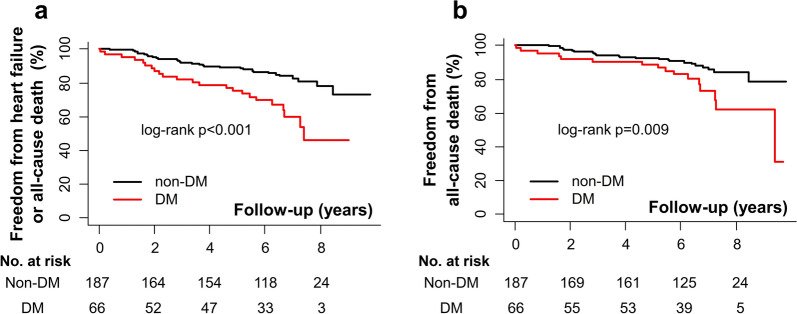
그림 출처: PubMed Central 공개 논문 (PMC9921197)
Conflict of interest statement
The authors declare that they have no known competing financial interests or personal relationships that could influence the work reported in this paper.
그 밖의 정보
- 출판 형태
- Journal Article, Research Support, Non-U.S. Gov't
- 저널
- Cardiovascular diabetology · eISSN 1475-2840
- 전자 출판
- 2023-02-10
- MeSH
- Humans · Prospective Studies · Contrast Media · Proteomics · Gadolinium · Myocardium / pathology · Heart Failure* / etiology / complications · Aortic Valve Stenosis* / complications · Fibrosis · Cardiomyopathies* / pathology · Biomarkers · Diabetes Mellitus* / diagnosis / epidemiology / pathology · Receptors, Interleukin-1 · Ventricular Remodeling · Ventricular Function, Left
- Substances
- Contrast Media · Gadolinium · Biomarkers · Receptors, Interleukin-1
- 참고문헌
- 46편