
BMC Med. 2024;22(1):273.
Long-term comparison of renal and metabolic outcomes after sodium-glucose co-transporter 2 inhibitor or glucagon-like peptide-1 receptor agonist therapy in type 2 diabetes.
제1저자 손민지 · 교신저자 임수
소속 (3)
- Department of Internal Medicine, Seoul National University Bundang Hospital, Seoul National University College of Medicine, 82, Gumi-ro 173 Beon-gil, Bundang-gu, Seongnam-City, 13620, South Korea.
- Section Diabetes, Endocrinology, Metabolism, Medical Department I Katholisches Klinikum Bochum gGmbH, St. Josef Hospital Ruhr-University Bochum, Bochum, Germany.
- Department of Internal Medicine, Seoul National University Bundang Hospital, Seoul National University College of Medicine, 82, Gumi-ro 173 Beon-gil, Bundang-gu, Seongnam-City, 13620, South Korea. limsoo@snu.ac.kr.
Abstract
BACKGROUND Renal outcomes in patients with type 2 diabetes following treatment with sodium-glucose co-transporter-2 inhibitors (SGLT2is) or glucagon-like peptide-1 receptor agonists (GLP1RAs) have not been directly compared. This study compared the impact of SGLT2i and GLP1RA therapy on renal function and metabolic parameters.
METHODS Patients with type 2 diabetes who initiated SGLT2i or GLP1RA therapy in a tertiary hospital between January 2009 and August 2023 were included to assess composite renal outcomes, such as a 40% decline in estimated glomerular filtration rate (eGFR), onset of end-stage renal disease, renal death, or new-onset macroalbuminuria. Alterations in blood pressure, glucose regulation parameters, lipid profile, and anthropometric parameters, including body fat and muscle masses, were examined over 4-years.
RESULTS A total of 2,112 patients were enrolled using a one-to-three propensity-score matching approach (528 patients for GLP1RAs, 1,584 patients for SGLT2i). SGLT2i treatment was favoured over GLP1RA treatment, though not significantly, for composite renal outcomes (hazard ratio [HR], 0.63; p = 0.097). SGLT2i therapy preserved renal function effectively than GLP1RAs (decrease in eGFR, ≥ 40%; HR, 0.46; p = 0.023), with improving albuminuria regression (HR, 1.72; p = 0.036). SGLT2i therapy decreased blood pressure and body weight to a greater extent. However, more patients attained HbA1c levels < 7.0% with GLP1RAs than with SGLT2is (40.6% vs 31.4%; p < 0.001). GLP1RA therapy enhanced β-cell function and decreased LDL-cholesterol levels below baseline values.
CONCLUSIONS SGLT2is were superior for preserving renal function and reducing body weight, whereas GLP1RAs were better for managing glucose dysregulation and dyslipidaemia.
© 2024. The Author(s).
Keywords
AlbuminuriaGLP1 receptor agonistRenal outcomeSGLT2 inhibitoreGFR
Figures
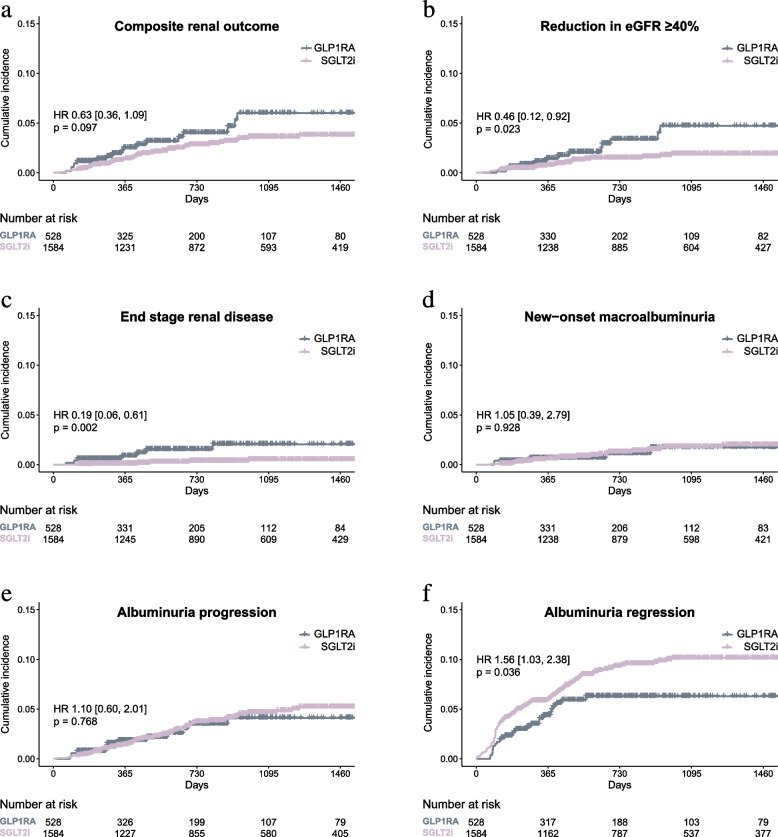
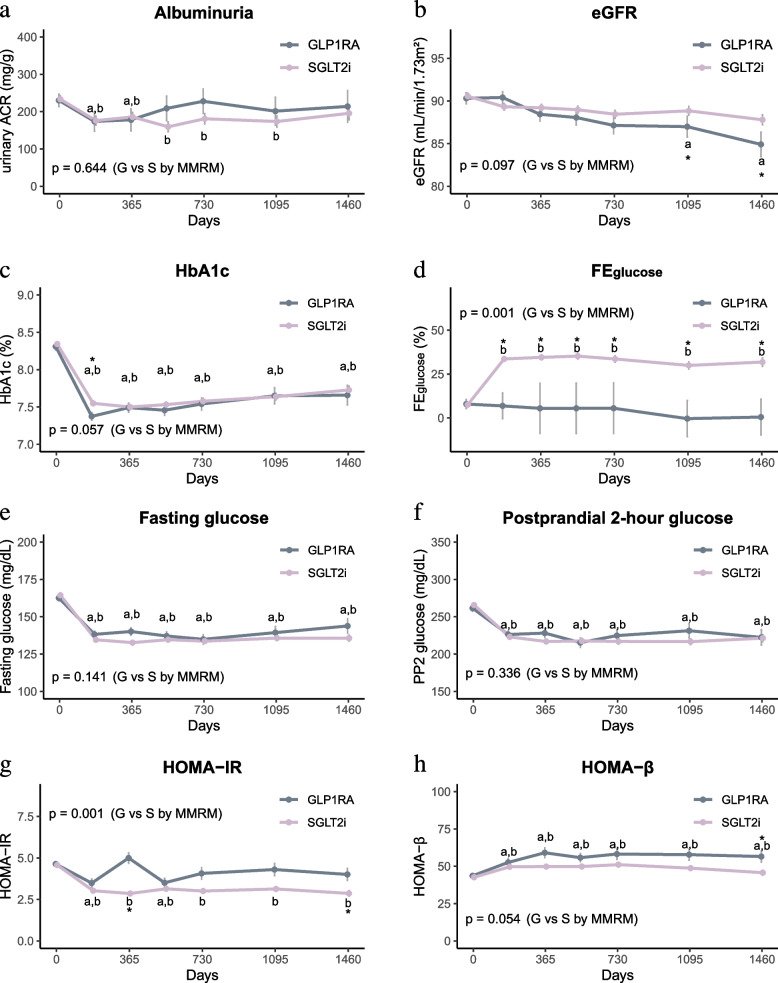
그림 출처: PubMed Central 공개 논문 (PMC11218058)
Conflict of interest statement
The authors declare that they have no competing interests.
그 밖의 정보
- 출판 형태
- Journal Article, Comparative Study, Research Support, Non-U.S. Gov't
- 저널
- BMC medicine · eISSN 1741-7015
- 전자 출판
- 2024-07-02
- MeSH
- Humans · Diabetes Mellitus, Type 2* / drug therapy · Sodium-Glucose Transporter 2 Inhibitors* / therapeutic use · Male · Female · Middle Aged · Aged · Treatment Outcome · Hypoglycemic Agents / therapeutic use · Kidney / drug effects · Glomerular Filtration Rate / drug effects · Retrospective Studies · Glucagon-Like Peptide-1 Receptor Agonists*
- Substances
- Sodium-Glucose Transporter 2 Inhibitors · Hypoglycemic Agents · Glucagon-Like Peptide-1 Receptor Agonists
- 참고문헌
- 50편