
BMC Gastroenterol. 2021;21(1):175.
Optimal timing of endoscopic retrograde cholangiopancreatography for acute cholangitis associated with distal malignant biliary obstruction.
제1저자 박남영 · 교신저자 이상협
소속 (2)
- Division of Gastroenterology, Department of Internal Medicine, Liver Research Institute, College of Medicine, Seoul National University Hospital, Seoul National University, 101, Daehak-ro, Jongno-gu, Seoul, 03080, Republic of Korea.
- Division of Gastroenterology, Department of Internal Medicine, Liver Research Institute, College of Medicine, Seoul National University Hospital, Seoul National University, 101, Daehak-ro, Jongno-gu, Seoul, 03080, Republic of Korea. gidoctor@snuh.org.
Abstract
BACKGROUND There is a lack of studies regarding the optimal timing for endoscopic retrograde cholangiopancreatography (ERCP) in patients with cholangitis caused by distal malignant biliary obstruction (MBO). This study aims to investigate the optimal timing of ERCP in patients with acute cholangitis associated with distal MBO with a naïve papilla.
METHODS A total of 421 patients with acute cholangitis, associated with distal MBO, were enrolled for this study. An urgent ERCP was defined as being an ERCP performed within 24 h following emergency room (ER) arrival, and early ERCP was defined as an ERCP performed between 24 and 48 h following ER arrival. We evaluated both 30-day and 180-day mortality as primary outcomes, according to the timing of the ERCP.
RESULTS The urgent ERCP group showed the lowest 30-day mortality rate (2.2%), as compared to the early and delayed ERCP groups (4.3% and 13.5%) (P < 0.001). The 180-day mortality rate was lowest in the urgent ERCP group, followed by early ERCP and delayed ERCP groups (39.4%, 44.8%, 60.8%; P = 0.006). A subgroup analysis showed that in both the primary distal MBO group, as well as in the moderate-to-severe cholangitis group, the urgent ERCP had significantly improved in both 30-day and 180-day mortality rates. However, in the secondary MBO and mild cholangitis groups, the difference in mortality rate between urgent, early, and delayed ERCP groups was not significant.
CONCLUSIONS In patients with acute cholangitis associated with distal MBO, urgent ERCP might be helpful in improving the prognosis, especially in patients with primary distal MBO or moderate-to-severe cholangitis.
Keywords
CholangitisEarly interventionEndoscopic retrograde cholangiopancreatographyNeoplasmsTreatment outcomes
Figures
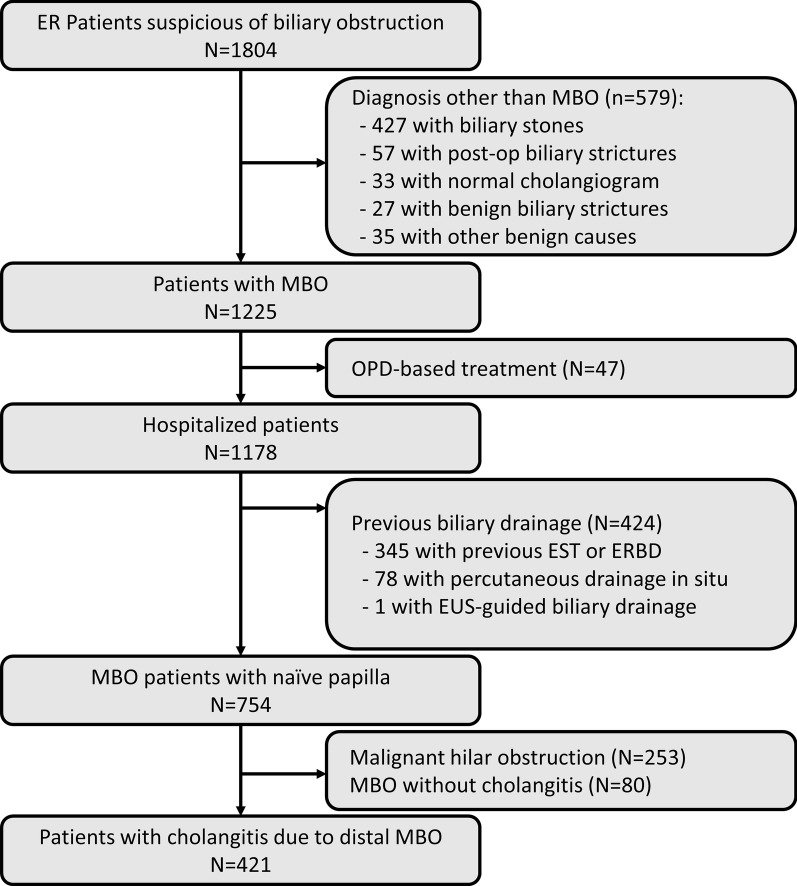
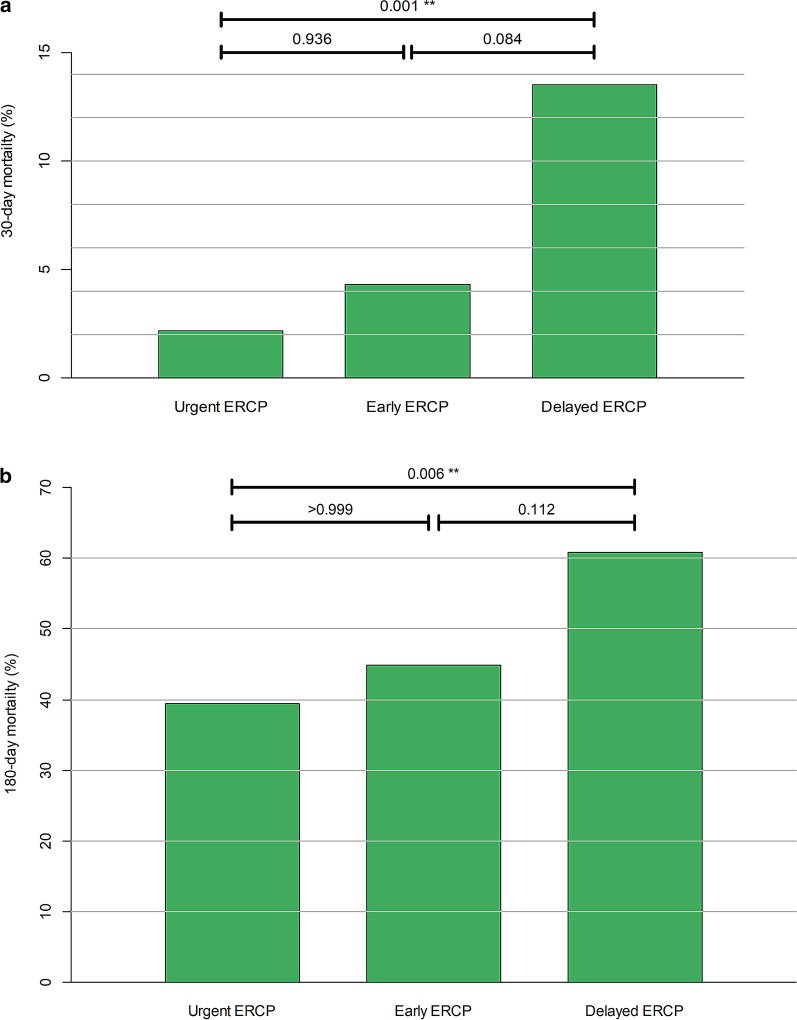
그림 출처: PubMed Central 공개 논문 (PMC8052855)
Conflict of interest statement
The authors declare that they have no competing interests.
그 밖의 정보
- 출판 형태
- Journal Article
- 저널
- BMC gastroenterology · eISSN 1471-230X
- 전자 출판
- 2021-04-17
- MeSH
- Acute Disease · Aged · Biliary Tract Neoplasms / pathology / surgery · Cholangiopancreatography, Endoscopic Retrograde / methods · Cholangitis / etiology / surgery · Cholestasis / etiology / pathology · Female · Humans · Male · Middle Aged · Retrospective Studies · Time Factors · Treatment Outcome
- 참고문헌
- 29편