
BMC Infect Dis. 2020;20(1):680.
Predictive scoring models for persistent gram-negative bacteremia that reduce the need for follow-up blood cultures: a retrospective observational cohort study.
제1저자 정종탁 · 교신저자 송경호
소속 (4)
- Department of Internal Medicine, Seoul National University Bundang Hospital, 82, Gumi-ro173 Beon-gil, Bundang-gu, Seongnam-si, Gyeonggi-do, 13620, Republic of Korea.
- Department of Internal Medicine, Seoul National University College of Medicine, Seoul, Republic of Korea.
- Department of Internal Medicine, Seoul National University Bundang Hospital, 82, Gumi-ro173 Beon-gil, Bundang-gu, Seongnam-si, Gyeonggi-do, 13620, Republic of Korea. khsongmd@gmail.com.
- Department of Internal Medicine, Seoul National University College of Medicine, Seoul, Republic of Korea. khsongmd@gmail.com.
Abstract
BACKGROUND Although the risk factors for positive follow-up blood cultures (FUBCs) in gram-negative bacteremia (GNB) have not been investigated extensively, FUBC has been routinely carried out in many acute care hospitals. We attempted to identify the risk factors and develop a predictive scoring model for positive FUBC in GNB cases.
METHODS All adults with GNB in a tertiary care hospital were retrospectively identified during a 2-year period, and GNB cases were assigned to eradicable and non-eradicable groups based on whether removal of the source of infection was possible. We performed multivariate logistic analyses to identify risk factors for positive FUBC and built predictive scoring models accordingly.
RESULTS Out of 1473 GNB cases, FUBCs were carried out in 1268 cases, and the results were positive in 122 cases. In case of eradicable source of infection, we assigned points according to the coefficients from the multivariate logistic regression analysis: Extended spectrum beta-lactamase-producing microorganism (+ 1 point), catheter-related bloodstream infection (+ 1), unfavorable treatment response (+ 1), quick sequential organ failure assessment score of 2 points or more (+ 1), administration of effective antibiotics (- 1), and adequate source control (- 2). In case of non-eradicable source of infection, the assigned points were end-stage renal disease on hemodialysis (+ 1), unfavorable treatment response (+ 1), and the administration of effective antibiotics (- 2). The areas under the curves were 0.861 (95% confidence interval [95CI] 0.806-0.916) and 0.792 (95CI, 0.724-0.861), respectively. When we applied a cut-off of 0, the specificities and negative predictive values (NPVs) in the eradicable and non-eradicable sources of infection groups were 95.6/92.6% and 95.5/95.0%, respectively.
CONCLUSIONS FUBC is commonly carried out in GNB cases, but the rate of positive results is less than 10%. In our simple predictive scoring model, zero scores-which were easily achieved following the administration of effective antibiotics and/or adequate source control in both groups-had high NPVs. We expect that the model reported herein will reduce the necessity for FUBCs in GNB cases.
Keywords
Follow-up blood cultureGram-negative bacteremiaPersistent bacteremiaPredictive scoring modelRisk factor
Figures
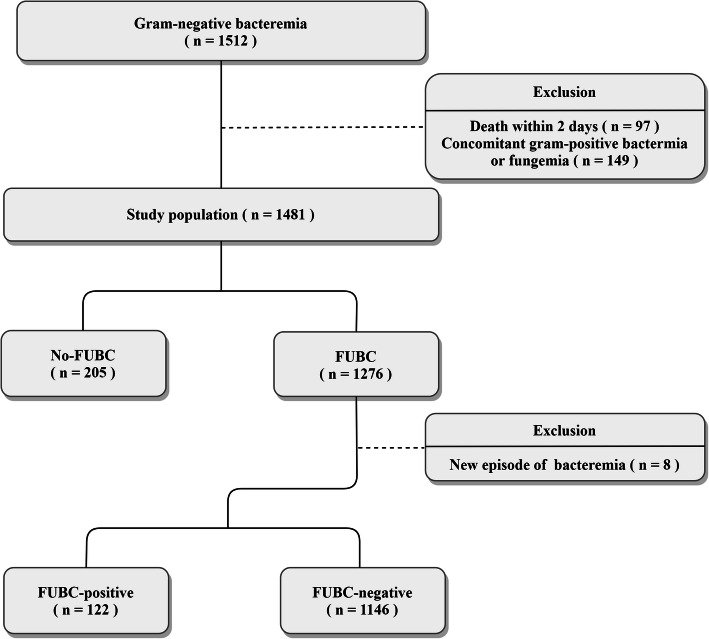
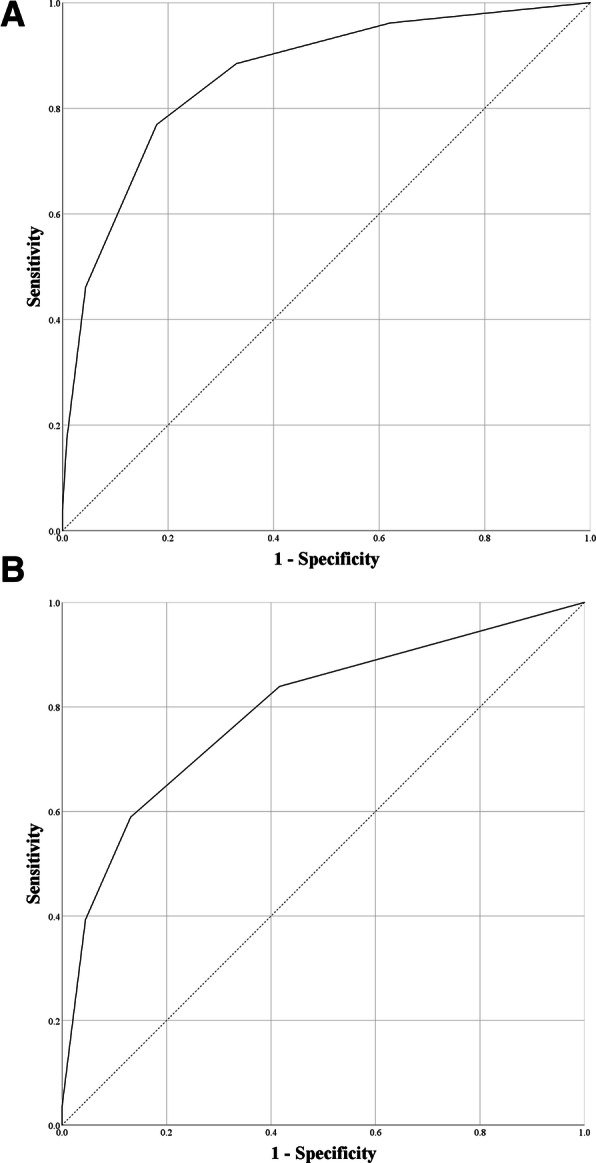
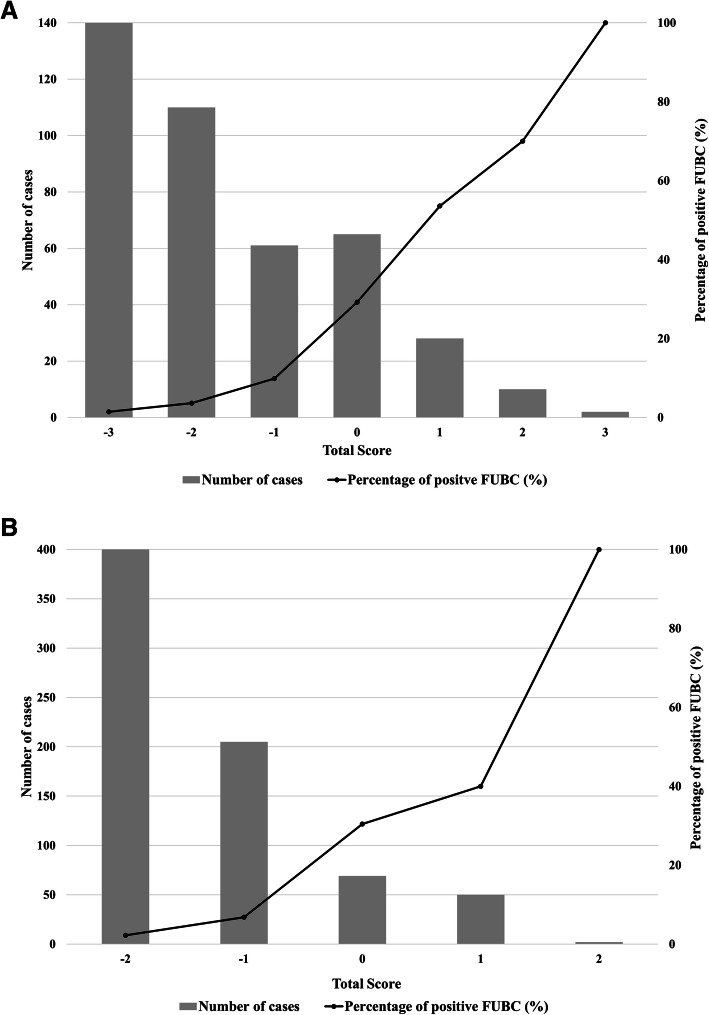
그림 출처: PubMed Central 공개 논문 (PMC7499917)
Conflict of interest statement
There are no conflicts of interest to declare.
그 밖의 정보
- 출판 형태
- Journal Article, Observational Study
- 저널
- BMC infectious diseases · eISSN 1471-2334
- 전자 출판
- 2020-09-17
- MeSH
- Aged · Aged, 80 and over · Anti-Bacterial Agents / therapeutic use · Bacteremia / drug therapy / etiology / microbiology · Blood Culture* · Female · Follow-Up Studies · Gram-Negative Bacteria / metabolism · Gram-Negative Bacterial Infections / complications / drug therapy / microbiology · Humans · Kidney Failure, Chronic / microbiology · Logistic Models · Male · Middle Aged · Models, Theoretical · ROC Curve · Retrospective Studies · Risk Factors · Treatment Outcome · beta-Lactamases / metabolism
- Substances
- Anti-Bacterial Agents · beta-Lactamases
- 참고문헌
- 17편