
Clin Kidney J. 2026;19(7):sfag195.
Association between nephrolithiasis and kidney disease progression in patients with autosomal dominant polycystic kidney disease: a prospective cohort study.
제1저자 문홍란 · 교신저자 류현진, 오윤규
소속 (8)
- Department of Internal Medicine, Seoul National University College of Medicine, Seoul, Korea.
- Department of Internal Medicine, Seoul National University Hospital, Seoul, Korea.
- Department of Internal Medicine, Hallym University Kangnam Sacred Heart Hospital, Seoul, Korea.
- Kidney Research Institute, Hallym University College of Medicine, Seoul, Korea.
- Department of Radiology, Seoul National University Hospital, Seoul, Korea.
- Department of Urology, Seoul National University Hospital, Seoul National University College of Medicine, Seoul, Korea.
- Department of Nephrology, National Medical Center, Seoul, Korea.
- Department of Internal Medicine, Seoul Metropolitan Government Seoul National University Boramae Medical Center, Seoul, Korea.
Abstract
BACKGROUND Nephrolithiasis is a common complication in autosomal dominant polycystic kidney disease (ADPKD), yet its impact on long-term kidney outcomes remains uncertain. Although experimental and retrospective studies suggest a potential role of kidney stones in accelerating disease progression, prospective evidence based on imaging-confirmed nephrolithiasis is limited.
METHODS This prospective cohort study included 410 patients with ADPKD from the HOPE-PKD cohort who underwent baseline abdominal computed tomography (CT) within 1 year of enrollment. Nephrolithiasis was defined as radiopaque lesions located within the collecting system, whereas cyst wall calcifications were excluded based on established CT criteria. The primary outcome was initiation of renal replacement therapy (RRT) due to kidney failure. The secondary outcome was a composite of ≥50% decline in estimated glomerular filtration rate, doubling of serum creatinine, or initiation of RRT. Multivariable Cox proportional hazards models were constructed with adjustment for demographic, metabolic, genetic, and imaging-based risk factors, including imaging-based risk stratification.
RESULTS During a median follow-up of 5.18 years, 51 (12.4%) and 96 (23.4%) participants reached the primary and secondary endpoints, respectively. After adjustment for demographic, metabolic, and disease severity factors, the stone group showed a significantly higher risk of both the primary [Hazard ratio (HR) 2.84; 95% Confidence interval (CI) 1.26-6.38; P = .012] and secondary (HR 1.83; 95% CI 1.03-3.27; P = .041) endpoints compared with the no-stone group. Associations appear to be more pronounced in males, individuals with higher body mass index, worse baseline kidney function, larger kidney volume, and PKD1 genotype.
CONCLUSIONS Imaging-confirmed nephrolithiasis is independently associated with adverse kidney outcomes in patients with ADPKD. Early detection and targeted management of kidney stones may improve risk stratification and kidney prognosis in this population.
© The Author(s) 2026. Published by Oxford University Press on behalf of the ERA.
Keywords
autosomal dominant polycystic kidney diseasekidney failurenephrolithiasisprognosisrisk stratification
Figures
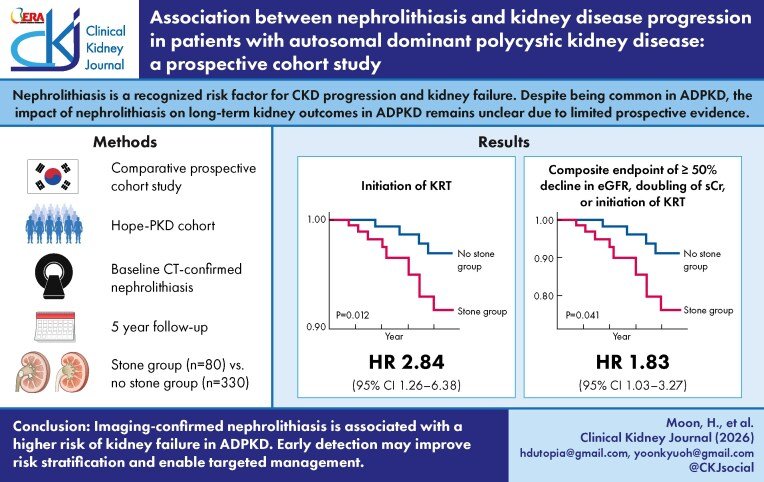
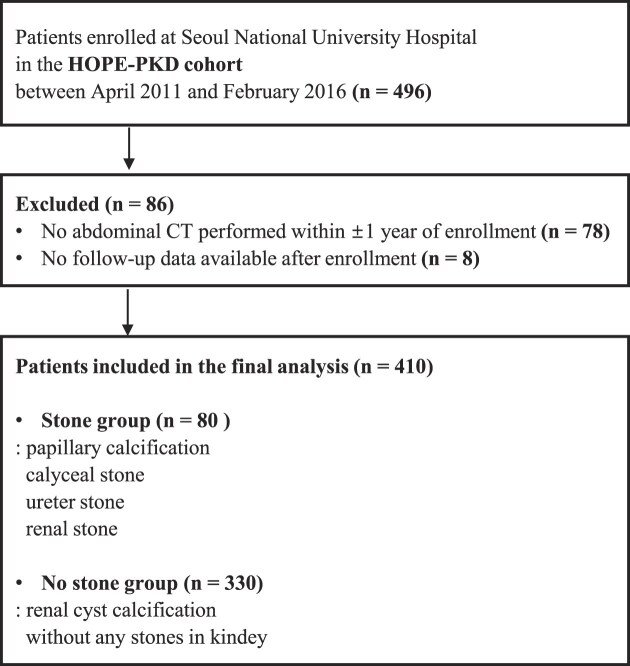
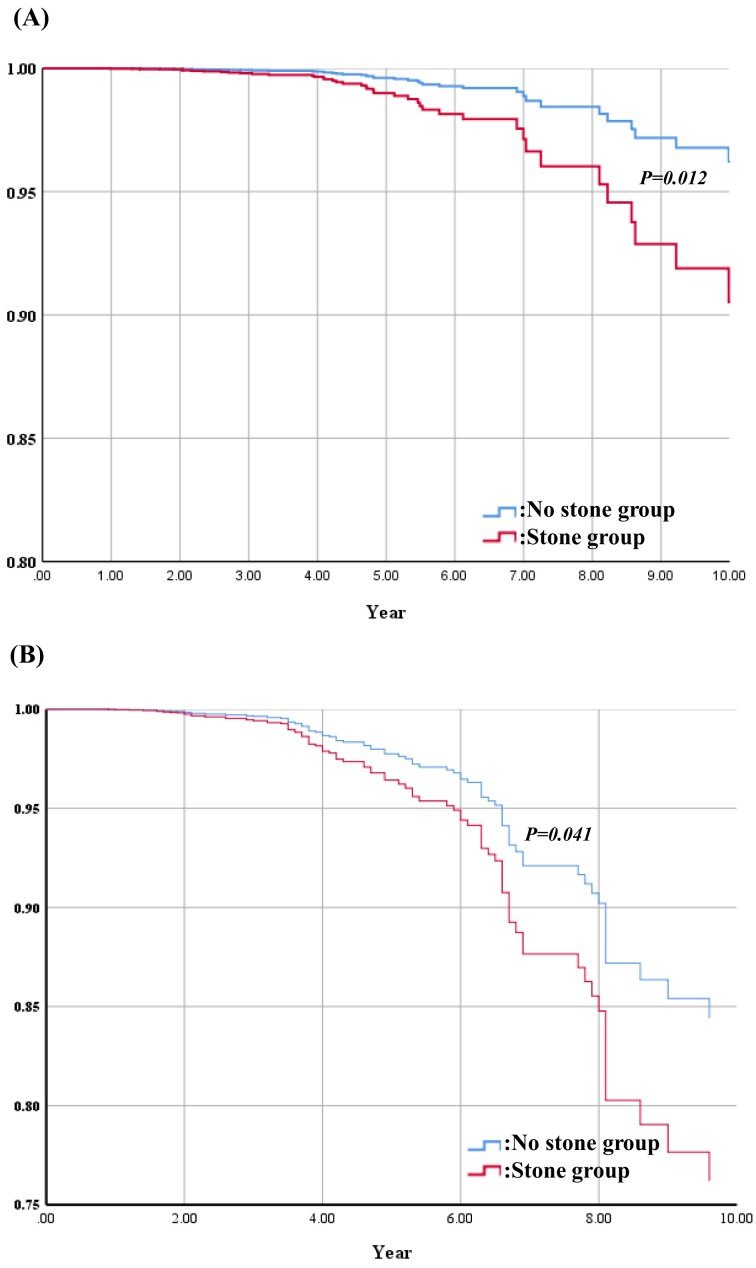
그림 출처: PubMed Central 공개 논문 (PMC13348242)
Conflict of interest statement
Y.K.O. reports receiving research grants from Korea Otsuka Pharmaceutical. The other authors declare no conflicts of interest.
그 밖의 정보
- 출판 형태
- Journal Article
- 저널
- Clinical kidney journal · ISSN 2048-8505
- 전자 출판
- 2026-06-11
- 참고문헌
- 26편