
BMC Pulm Med. 2019;19(1):189.
Healthcare utilization, medical expenditure, and mortality in Korean patients with pulmonary hypertension.
제1저자 황인창 · 교신저자 조구영
소속 (6)
- Department of Cardiology, Cardiovascular Center, Seoul National University Bundang Hospital, Seongnam, Gyeonggi, South Korea.
- Department of Internal Medicine, Seoul National University College of Medicine, Seoul, South Korea.
- Department of Cardiology, Cardiovascular Center, Seoul National University Bundang Hospital, Seongnam, Gyeonggi, South Korea. cardioch@snu.ac.kr.
- Department of Internal Medicine, Seoul National University College of Medicine, Seoul, South Korea. cardioch@snu.ac.kr.
- Division of Cardiology, Hallym Sacred Heart Hospital, Hallym University College of Medicine, Anyang, South Korea.
- Cardiovascular Center and Department of Internal Medicine, Seoul National University Hospital, Seoul, South Korea.
Abstract
BACKGROUND Limited data exists regarding healthcare utilization, medical expenses, and prognosis of pulmonary hypertension (PH) according to the World Health Organization (WHO) classification. We aimed to investigate mortality risk, healthcare utilization and medical expenditure in patients with PH across the five diagnostic subgroups.
METHODS We identified 2185 patients with PH, defined as peak tricuspid regurgitation velocity > 3.4 m/sec, among the consecutive patients referred for echocardiography between 2009 and 2015. Using diagnostic codes, medical records, and echocardiographic findings, the enrolled patients were classified according to the five subgroups by WHO classification. Healthcare utilization, costs, and all-cause mortality were assessed.
RESULTS Diagnostic subgroups of PH demonstrated significantly different clinical features. During a median of 32.4 months (interquartile range, 16.2-57.8), 749 patients (34.3%) died. Mortality risk was the lowest in group II (left heart disease) and highest in group III (chronic lung disease). The etiologies of pulmonary arterial hypertension (PAH) had significant influence on the mortality risk in group I, showing the worst prognosis in PAH associated with connective tissue disease. Medical expenditure and healthcare utilization were different between the PH subgroups: groups II and V had more hospitalizations and medical expenses than other groups. Regardless of PH subgroups, the severity of PH was associated with higher mortality risk, more healthcare utilization and medical expenditure.
CONCLUSIONS Significant differences in clinical features and prognostic profiles between PH subgroups reflect the differences in pathophysiology and clinical consequences. Our findings highlight the importance of comprehensive understanding of PH according to the etiology and its severity.
Keywords
Healthcare utilizationMortalityPulmonary hypertension
Figures
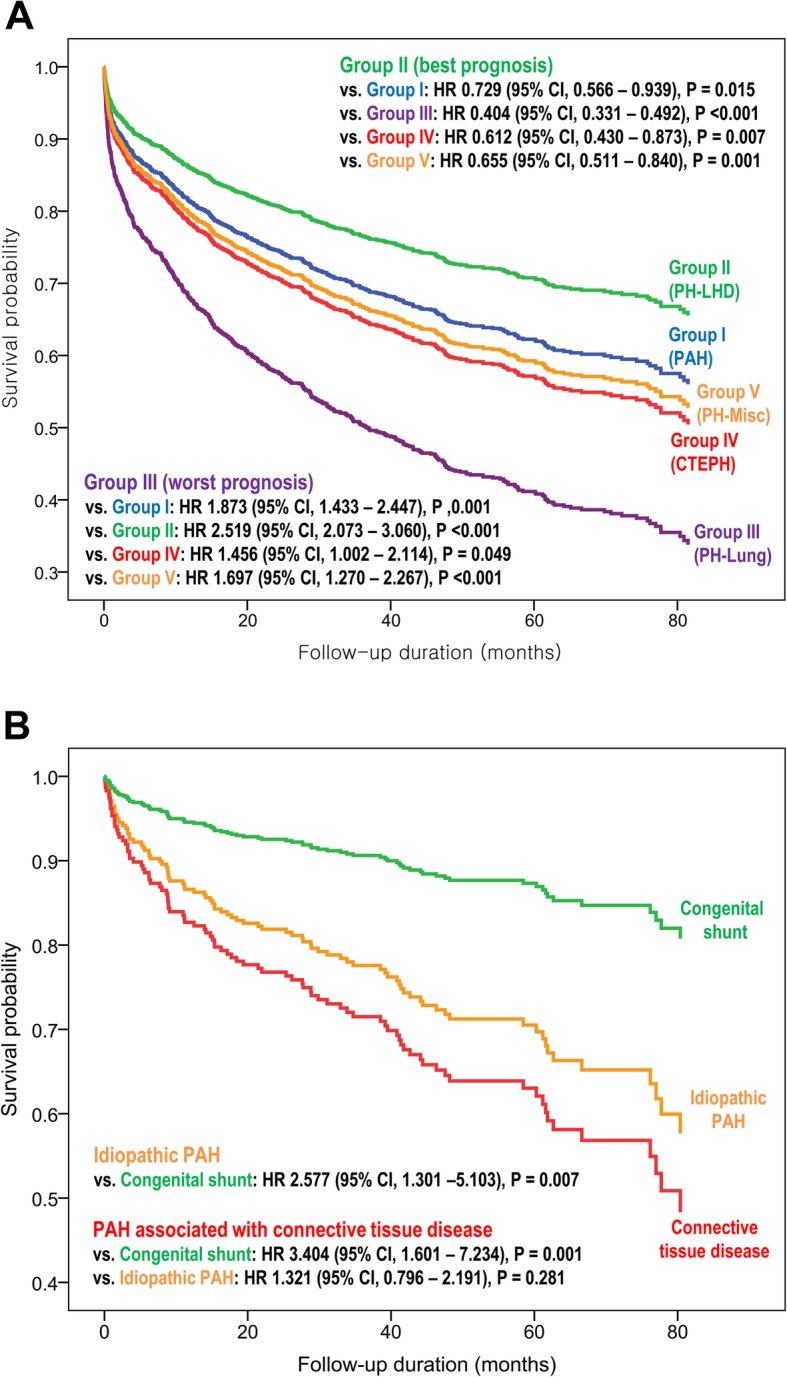
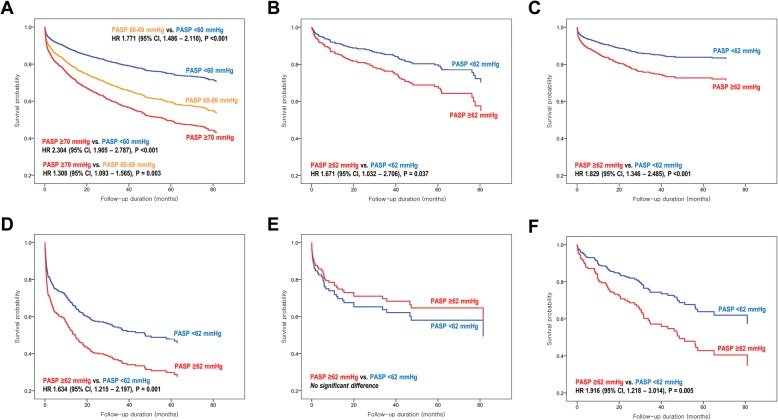
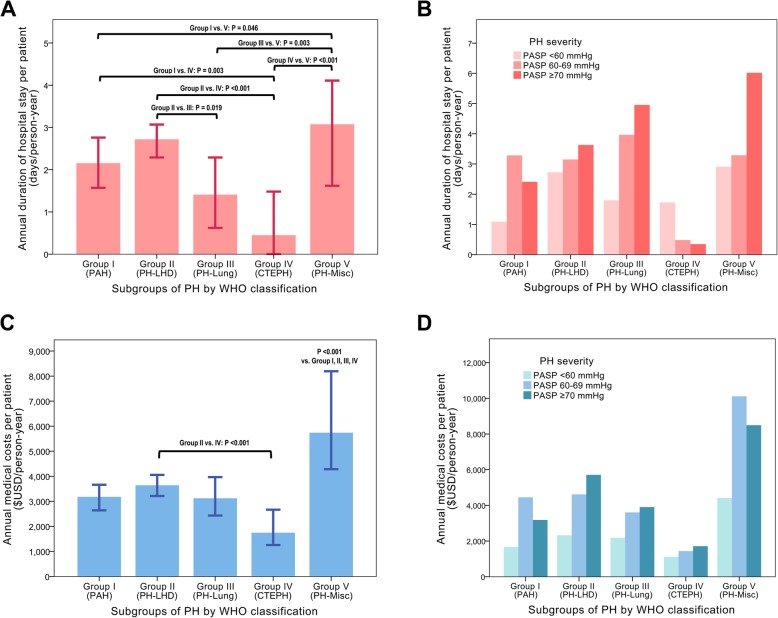
그림 출처: PubMed Central 공개 논문 (PMC6822398)
Conflict of interest statement
The authors declare that they have no competing interests.
그 밖의 정보
- 출판 형태
- Journal Article
- 저널
- BMC pulmonary medicine · eISSN 1471-2466
- 전자 출판
- 2019-10-30
- MeSH
- Adult · Aged · Aged, 80 and over · Cause of Death · Echocardiography · Female · Health Expenditures / statistics & numerical data · Hospitalization / economics · Humans · Hypertension, Pulmonary / economics / mortality / therapy · Male · Middle Aged · Patient Acceptance of Health Care / statistics & numerical data · Prognosis · Proportional Hazards Models · Republic of Korea / epidemiology · Retrospective Studies
- 연구비
- Seoul National University Bundang Hospital 13-2016-018
- 참고문헌
- 25편