
BMC Pulm Med. 2017;17(1):213.
Implication of species change of Nontuberculous Mycobacteria during or after treatment.
제1저자 이종식 · 교신저자 임재준
소속 (4)
- Division of Pulmonary and Critical Care Medicine, Department of Internal Medicine, Seoul National University College of Medicine, 101, Daehak-ro, Jongno-gu, Seoul, 03080, Republic of Korea.
- Department of Radiology, Seoul National University College of Medicine, 101, Daehak-ro, Jongno-gu, Seoul, 03080, Republic of Korea.
- Department of Laboratory Medicine, Seoul National University Hospital, 101, Daehak-ro, Jongno-gu, Seoul, 03080, Republic of Korea.
- Division of Pulmonary and Critical Care Medicine, Department of Internal Medicine, Seoul National University College of Medicine, 101, Daehak-ro, Jongno-gu, Seoul, 03080, Republic of Korea. yimjj@snu.ac.kr.
Abstract
BACKGROUND Co-existence or subsequent isolation of multiple nontuberculous mycobacteria (NTM) species in same patient has been reported. However, clinical significance of these observations is unclear. The aim of this study was to determine clinical implications of changes of NTM species during or after treatment in patients with NTM lung disease.
METHODS Patients with NTM lung disease, who experienced changes of NTM species during treatment or within 2 years of treatment completion between January 1, 2009 and December 31, 2015, were included in the analysis. Demographic, clinical, microbiological, and radiographic data were reviewed and analyzed.
RESULTS During the study period, 473 patients were newly diagnosed with NTM lung disease. Treatment was started in 164 patients (34.6%). Among these 164 patients, 16 experienced changes of NTM species during or within 2 years of treatment completion. Seven showed changes from M. avium complex (MAC) to M. abscessus subspecies abscessus (MAA) and five patients displayed changes from M. abscessus subspecies massiliense (MAM) to MAC. With isolation of new NTM species, 6 out of 7 patients with change from MAC to MAA reported worsening of symptoms, whereas none of the five patients with change from MAM to MAC reported worsening of symptoms. All MAA isolated during or after treatment for MAC lung diseases showed inducible resistance to clarithromycin.
CONCLUSIONS Change of NTM species may occur during or after treatment for NTM lung disease. Especially, changes from MAC to MAA is accompanied by symptomatic and radiographic worsening as well as inducible resistance to clarithromycin.
Keywords
Clarithromcycin resistanceMycobacterium abscessus subspecies abscessusMycobacterium avium ComplexNontuberculous mycobacteria species change
Figures
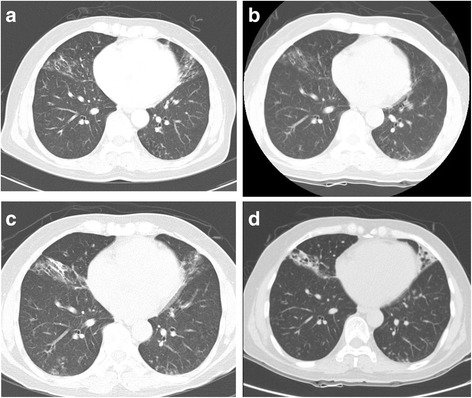
그림 출처: PubMed Central 공개 논문 (PMC5738815)
Conflict of interest statement
ETHICS APPROVAL AND CONSENT TO PARTICIPATE: The study protocol was approved by the Institutional Review Board of Seoul National University Hospital (IRB No: 1608-046-784) and was conducted in accordance with the amended Declaration of Helsinki. All participants provided written informed consent before enrollment. CONSENT FOR PUBLICATION: Not applicable COMPETING INTERESTS: The authors declare that they have no competing interests. PUBLISHER’S NOTE: Springer Nature remains neutral with regard to jurisdictional claims in published maps and institutional affiliations.
그 밖의 정보
- 출판 형태
- Journal Article
- 저널
- BMC pulmonary medicine · eISSN 1471-2466
- 전자 출판
- 2017-12-20
- MeSH
- Aged · Clarithromycin / therapeutic use · Drug Resistance, Bacterial · Female · Humans · Lung Diseases / drug therapy / microbiology · Male · Middle Aged · Mycobacterium Infections, Nontuberculous / drug therapy / microbiology · Nontuberculous Mycobacteria / classification / isolation & purification · Seoul · Severity of Illness Index · Tomography, X-Ray Computed
- Substances
- Clarithromycin
- 참고문헌
- 21편