
BMC Cardiovasc Disord. 2018;18(1):130.
The natural course of nonculprit coronary artery lesions; analysis by serial quantitative coronary angiography.
제1저자 강지훈 · 교신저자 박경우
소속 (3)
- Department of Internal Medicine and Cardiovascular Center, Seoul National University Hospital, 101 Daehakro, Jongno Gu, Seoul, 110-744, South Korea.
- Department of Internal Medicine and Cardiovascular Center, Seoul National University Hospital, 101 Daehakro, Jongno Gu, Seoul, 110-744, South Korea. kwparkmd@snu.ac.kr.
- Division of Cardiology, University of California Los Angeles Medical Center, Los Angeles, CA, USA.
Abstract
BACKGROUND Nonculprit lesions are the major cause of future cardiovascular events. However, the natural course of nonculprit lesions and angiographic predictors of plaque progression are not well-studied. The purpose of our study was to observe the natural course of nonculprit lesions, and to identify predictors of unanticipated future events and angiographic progression in nonculprit lesions.
METHODS We analyzed 640 nonculprit lesions with a length of ≥2 mm and luminal narrowing ≥30% from 320 patients who had two serial angiographic follow-ups; 9 to 13 months post-PCI and 24 months post-PCI. The study endpoints were nonculprit-ischemia driven revascularization (IDR) and the rate of diameter stenosis (DS) progression. Those with progression of DS > 12%/year were defined as 'rapid progressors'.
RESULTS During the median follow-up period of 737 days, 20 lesions in 20 patients (6.3%) required nonculprit-IDR. Independent predictors of nonculprit-IDR were diabetes (hazard ratio [HR] 2.93, 95% confidence interval [CI] 1.072-8.007, p = 0.036) and lesion type B2/C (HR 4.017, 95% CI 1.614-9.997, p = 0.003). The presence of one or both of the two major risk factors was associated with significant DS progression (3.0 ± 6.8% vs. 3.5 ± 6.1% vs. 6.8 ± 9.9% for lesions with 0, 1 and both risk factors, p < 0.001). Among the 640 lesions, 38 lesions (5.9%) in 33 patients were rapid progressors, while risk factors of rapid progressors included lesion type B2/C as a lesion-related risk factor (HR 1.998, 95% CI 1.006-3.791, p = 0.048) and diabetes mellitus as a patient-related risk factor (HR 3.725, 95% CI 1.937-7.538, p < 0.001). Lesions with both risk factors (type B2/C lesions in diabetic patients) were at the highest risk of rapid progression (odds ratio 3.250, 95% CI 1.451-7.282), compared to type A/B1 lesions in non-diabetic patients.
CONCLUSION Nonculprit-IDR was not uncommon during the 2-year follow up period in our population. The major risk factors of nonculprit lesion progression were diabetes and lesion type B2/C.
TRIAL REGISTRATION Retrospectively registered and approved by the institutional review board of Seoul National University Hospital (No.: 1801-138-918) on February 2nd, 2018.
Keywords
Coronary angiographyNonculprit lesionPlaque progressionQuantitative coronary angiography
Figures
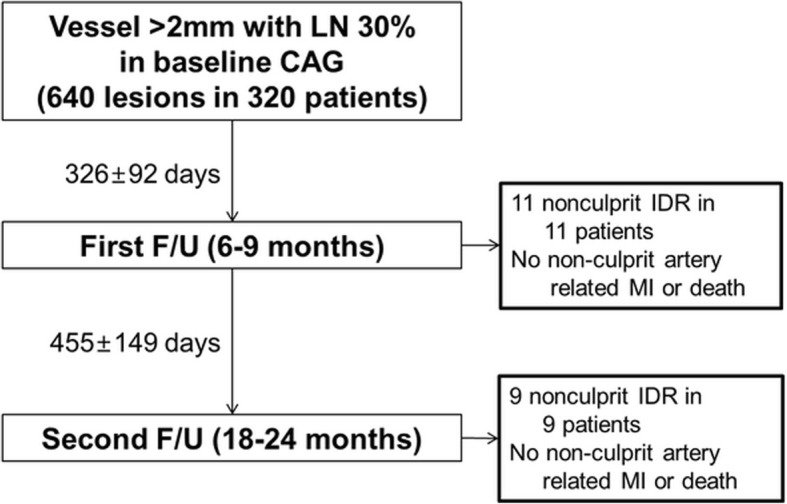
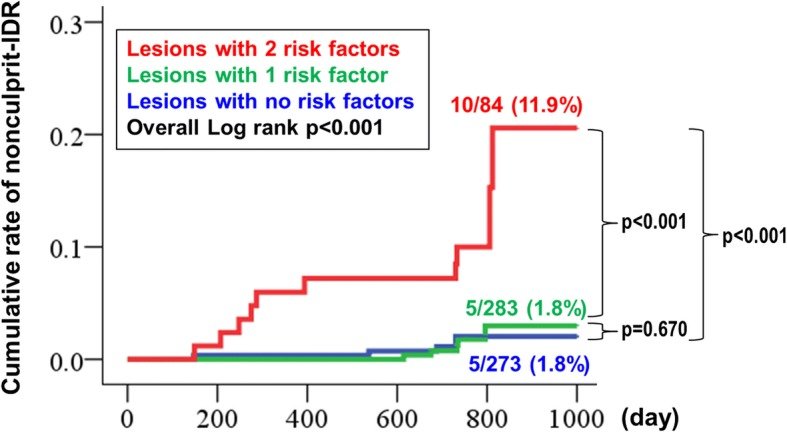
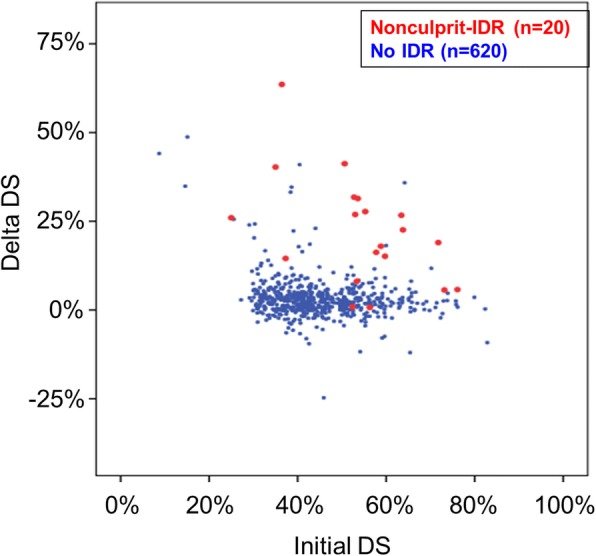
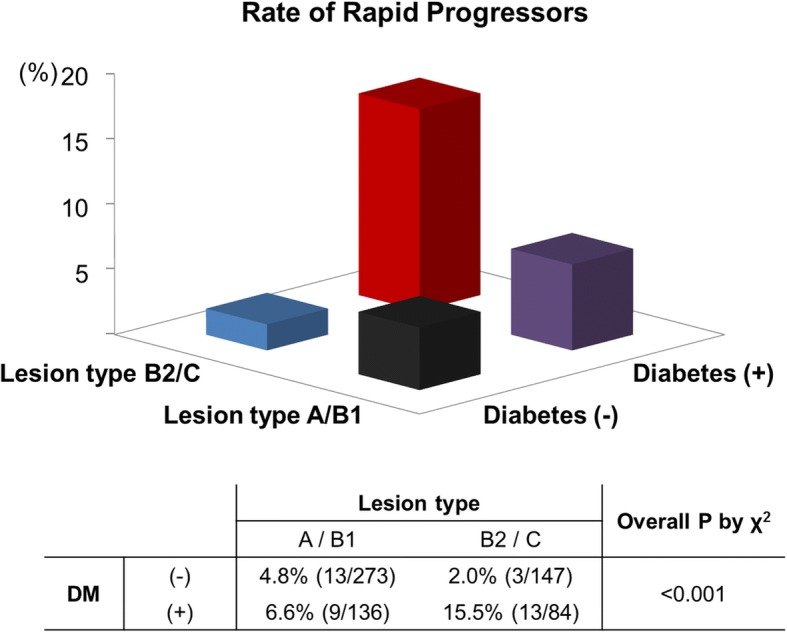
그림 출처: PubMed Central 공개 논문 (PMC6027760)
Conflict of interest statement
ETHICS APPROVAL AND CONSENT TO PARTICIPATE: The study was approved by the ethics committee and institutional review board or Seoul National University and was conducted according to the principles of the Declaration of Helsinki. All patients provided written, informed consent for participation in the registry. CONSENT FOR PUBLICATION: Not applicable. COMPETING INTERESTS: The authors declare that they have no competing interests. PUBLISHER’S NOTE: Springer Nature remains neutral with regard to jurisdictional claims in published maps and institutional affiliations.
그 밖의 정보
- 출판 형태
- Journal Article
- 저널
- BMC cardiovascular disorders · eISSN 1471-2261
- 전자 출판
- 2018-06-28
- MeSH
- Aged · Coronary Angiography* · Coronary Artery Disease / diagnostic imaging / surgery · Coronary Stenosis / diagnostic imaging / surgery · Coronary Vessels / diagnostic imaging / surgery · Disease Progression · Female · Humans · Male · Middle Aged · Percutaneous Coronary Intervention / instrumentation · Predictive Value of Tests · Registries · Retrospective Studies · Risk Factors · Severity of Illness Index · Stents · Time Factors · Treatment Outcome
- 참고문헌
- 22편