
PLoS One. 2021;16(8):e0256083.
Association of obesity, visceral adiposity, and sarcopenia with an increased risk of metabolic syndrome: A retrospective study.
제1저자 김수환, 강현우 · 교신저자 정지봉
소속 (4)
- Department of Internal Medicine, Seoul National University College of Medicine, Seoul Metropolitan Government Seoul National University Boramae Medical Center, Seoul, Republic of Korea.
- Health Care Center, Seoul Metropolitan Government Seoul National University Boramae Medical Center, Seoul, Republic of Korea.
- Medical Research Collaborating Center, Seoul Metropolitan Government Seoul National University Boramae Medical Center, Seoul, Republic of Korea.
- Department of Radiology, Seoul National University College of Medicine, Seoul National University Hospital, Seoul, Republic of Korea.
Abstract
AIMS Metabolic syndrome (MS) is a global health problem associated with an increased risk of diabetes mellitus (DM), cardiovascular disease (CVD), and cancer. Body composition parameters, including obesity, visceral adiposity, and sarcopenia contribute to the development of MS and CVD. Previous studies have investigated the association of individual body composition parameters with MS. Studies analyzing the association between multiple body composition parameters and MS have been rare. We aimed to investigate the association between MS and multiple body composition parameters, including obesity, visceral adiposity, and sarcopenia.
METHODS A total of 13,620 subjects who underwent voluntary routine checkups at the Health Care Center of our institution between October 2014 and December 2019 were enrolled. Only data from the first examination of subjects who underwent repeated checkups were included. Clinical and laboratory data were collected. Skeletal muscle mass and visceral fat area (VFA) were measured using bioelectrical impedance analysis. Appendicular skeletal muscle mass (ASM) was divided by body weight (in kg) and expressed as a percentage (calculated as, ASM% = ASM × 100/Weight). Data were compared between the groups based on obesity, VFA, and ASM%. Logistic regression analysis was performed to determine the risk of MS in each group.
RESULTS Body mass index and VFA were significantly higher in subjects with MS than in those without MS. ASM% was significantly lower in subjects with MS than in those without MS. Subjects with obesity, visceral adiposity, or sarcopenia had a higher prevalence of MS than those without. As the number of metabolic components increased from 0 to 5, we identified a decreasing trend of ASM% and an increasing trend of VFA and BMI (P for trend < 0.001 for all). In the paired analyses, all the three body composition parameters showed additive effects in predicting MS. In the logistic regression analysis, the three parameters were associated with an increased risk of MS after adjustment for age, sex, hypertension, DM, dyslipidemia, smoking, alcohol intake, and C-reactive protein.
CONCLUSIONS Obesity, visceral adiposity, and sarcopenia showed additive effects on MS prediction. Subjects with obesity, visceral adiposity, or sarcopenia were significantly associated with the increased risk of MS after adjustment for multiple confounders. Increasing skeletal muscle and reducing visceral fat may be strategies for the prevention or treatment of MS.
Figures
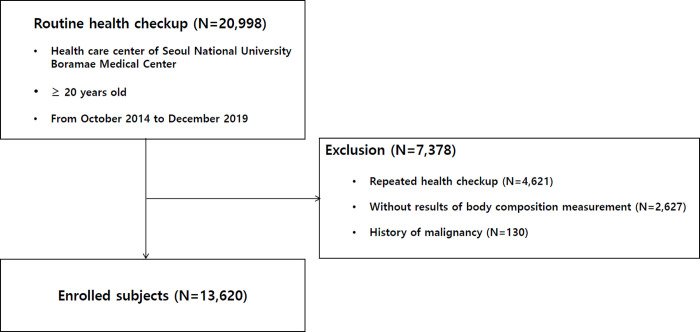
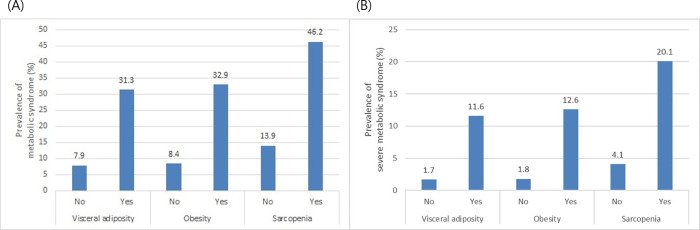
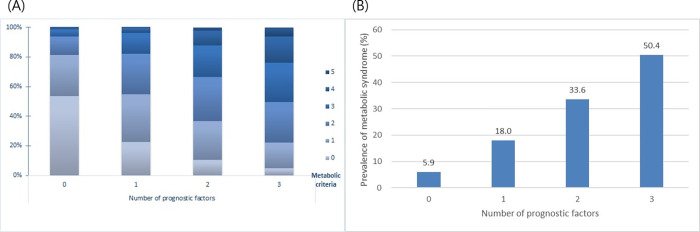
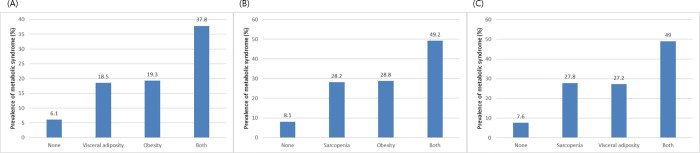
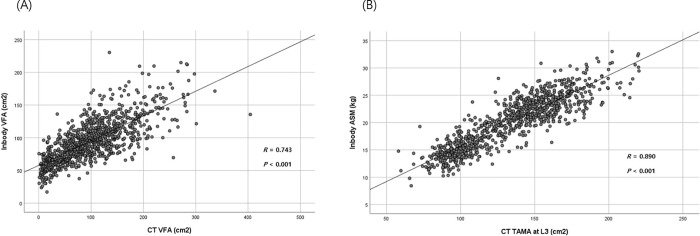
그림 출처: PubMed Central 공개 논문 (PMC8370618)
Conflict of interest statement
The authors have declared that no competing interests exist.
그 밖의 정보
- 출판 형태
- Journal Article
- 저널
- PloS one · eISSN 1932-6203
- 전자 출판
- 2021-08-17
- MeSH
- Adiposity / physiology · Adult · Body Composition · Body Mass Index · Cardiovascular Diseases / epidemiology · Female · Humans · Intra-Abdominal Fat / physiopathology · Male · Metabolic Syndrome / complications / etiology / physiopathology · Middle Aged · Muscle, Skeletal / pathology · Obesity / epidemiology · Obesity, Abdominal / epidemiology · Prevalence · Republic of Korea / epidemiology · Retrospective Studies · Risk Factors · Sarcopenia / epidemiology
- 참고문헌
- 75편