
PLoS One. 2021;16(10):e0257443.
Association between inter-leg blood pressure difference and cardiovascular outcome in patients undergoing percutaneous coronary intervention.
제1저자 문인기, 김학령 · 교신저자 김상현
소속 (2)
- Division of Cardiology, Department of Internal Medicine, Soonchunhyang University Bucheon Hospital, Bucheon, Republic of Korea.
- Division of Cardiology, Department of Internal Medicine, Boramae Medical Center, Seoul National University College of Medicine, Seoul, Republic of Korea.
Abstract
BACKGROUND Although the inter-arm blood pressure (BP) difference has been advocated to be associated with cardiovascular events, the implication of inter-leg BP difference has not been well established. This study was conducted to investigate whether inter-arm and -leg BP differences have prognostic value in patients undergoing percutaneous coronary intervention (PCI).
METHODS In this prospective study, we consecutively enrolled 667 patients who underwent PCI. Both arm and leg BPs were measured at the day after PCI. The primary outcome was a major adverse cardiovascular event (MACE) including cardiac death, acute coronary syndrome, coronary revascularization, stroke, and hospitalization for heart failure during the follow-up period.
RESULTS Mean age was 64.0±11.1 years old, and males were predominant (70.5%). During a mean follow-up period of 3.0 years, MACE occurred in 209 (31.3%) patients. The inter-leg systolic BP difference (ILSBPD) was significantly higher in patients with MACE than those without (9.9±12.3 vs. 7.2±7.5 mmHg, P = 0.004). The inter-arm systolic BP difference was not significantly different between patients with and without MACE (P = 0.403). In multivariable Cox regression analysis, increased ILSBPD was independently associated with the development of MACE (per 5 mmHg; hazard ratio, 1.07; 95% confidence interval, 1.01-1.14). The inter-arm systolic BP difference was not associated with MACE in the multivariable analysis.
CONCLUSION Increased ILSBPD was independently associated with worse cardiovascular outcomes after PCI. As ILSBPD is easy to measure, it may be helpful in the risk stratification of patients undergoing PCI.
Figures

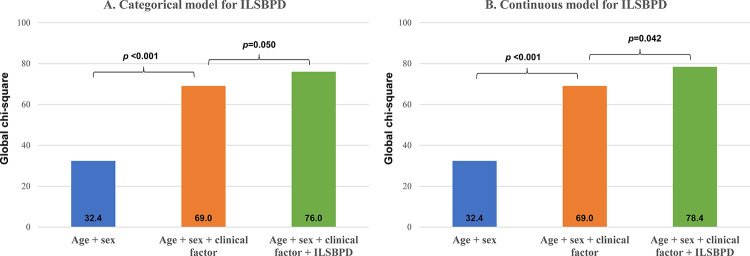
그림 출처: PubMed Central 공개 논문 (PMC8519463)
Conflict of interest statement
The authors have declared that no competing interests exist.
그 밖의 정보
- 출판 형태
- Journal Article
- 저널
- PloS one · eISSN 1932-6203
- 전자 출판
- 2021-10-15
- MeSH
- Aged · Blood Pressure* · Cardiovascular Diseases / diagnosis / etiology / physiopathology · Female · Follow-Up Studies · Humans · Leg* / physiology / physiopathology · Male · Middle Aged · Percutaneous Coronary Intervention* / adverse effects · Prognosis · Prospective Studies · Risk Factors · Treatment Outcome
- 참고문헌
- 21편