
Clin Transl Allergy. 2025;15(4):e70047.
Clinical characteristics and risk factors for escalation to anaphylaxis from non-severe drug hypersensitivity reaction.
제1저자 류호인, 김성렬 · 교신저자 남영희, 강혜련
소속 (16)
- Department of Internal Medicine, Inje University Haeundae Paik Hospital, Inje University College of Medicine, Busan, Korea.
- Department of Internal Medicine, Yongin Severance Hospital, Yonsei University College of Medicine, Yongin, Korea.
- Department of Internal Medicine, Chung-Ang University Hospital, Seoul, Korea.
- Department of Internal Medicine, Seoul National University Bundang Hospital, Seongnam, Korea.
- Drug Safety Center, Seoul National University Hospital, Seoul, Korea.
- Department of Internal Medicine, Gangnam Severance Hospital, Yonsei University College of Medicine, Seoul, Korea.
- Department of Internal Medicine, Institute of Allergy, Yonsei University College of Medicine, Severance Hospital, Seoul, Korea.
- Department of Internal Medicine, Chungnam National University Hospital, Daejeon, Korea.
- Department of Pediatrics, Chungnam National University Hospital, Chungnam National University School of Medicine, Daejeon, Korea.
- Department of Internal Medicine, Kosin University College of Medicine, Busan, Korea.
- Department of Internal Medicine, School of Medicine, Kyungpook National University, Daegu, Korea.
- Department of Internal Medicine, Seoul Metropolitan Government-Seoul National University Boramae Medical Center, Seoul, Korea.
- Department of Pediatrics, Kangbuk Samsung Hospital, Sungkyunkwan University School of Medicine, Seoul, Korea.
- Division of Allergy and Clinical Immunology, Department of Internal Medicine, Chonnam National University Hospital, Chonnam National University Medical School, Gwangju, Korea.
- Department of Internal Medicine, Dong-A University College of Medicine, Busan, Korea.
- Department of Internal Medicine, Seoul National University College of Medicine, Seoul, Korea.
Abstract
BACKGROUND Drug hypersensitivity reaction (DHR) poses significant challenges in clinical practice, with some patients experiencing more severe reactions upon re-exposure. Understanding the factors contributing to escalation into more severe reactions is crucial for improving patient safety. This study aimed to investigate the clinical characteristics and risk factors associated with the progression from non-severe DHR to anaphylaxis.
METHODS A multicenter retrospective study was conducted using data from a drug-induced anaphylaxis registry across 10 university hospitals in Korea. Clinical data, including information on culprit drugs, DHR history, and the severity of reactions, were assessed.
RESULTS Among 494 cases of drug-induced anaphylaxis, 417 cases (84.4%) occurred without prior DHR, while 77 cases (15.6%) had a history of non-severe DHR. Of these, 43 cases had a previous DHR to a drug of the same class, and 34 cases involved DHR to drugs of different classes. In the group with prior DHR to a drug of the same class, anaphylaxis occurring in daily life was significantly more common compared to those reacting to a different class of drug or those with no prior DHR (48.8% vs. 23.5% or 22.5%, p = 0.008 and < 0.001, respectively). Non-steroidal anti-inflammatory drugs (NSAIDs), H2 blockers, and penicillins were identified as risk factors for anaphylaxis evolving from non-severe DHR.
CONCLUSION Enhanced vigilance is required for patients with a history of non-severe DHR to NSAIDs, H2 blockers, and penicillins as re-exposure may lead to the progress to anaphylaxis.
© 2025 The Author(s). Clinical and Translational Allergy published by John Wiley & Sons Ltd on behalf of European Academy of Allergy and Clinical Immunology.
Keywords
H2 receptor antagonistsanaphylaxisdrug hypersensitivitynon‐steroidal anti‐inflammatory agentspenicillins
Figures
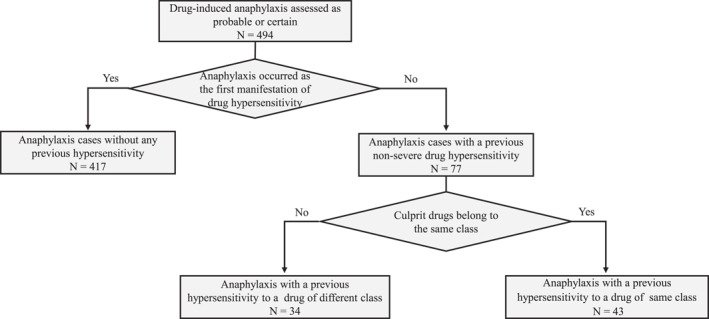
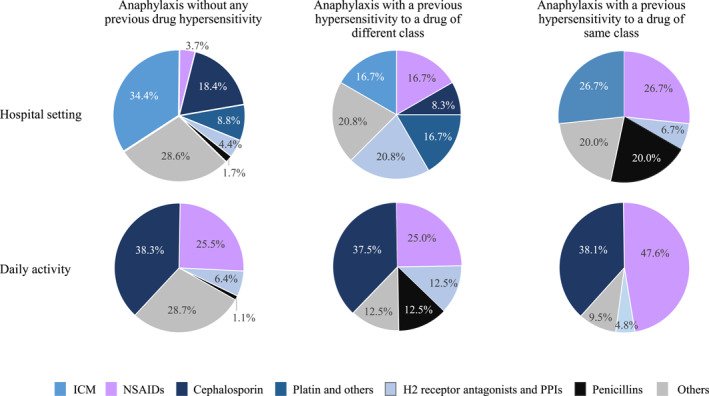
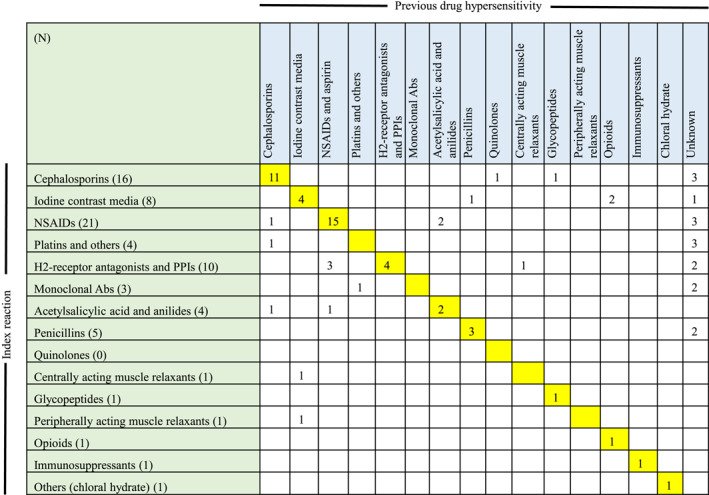
그림 출처: PubMed Central 공개 논문 (PMC12014396)
Conflict of interest statement
The authors declare no conflicts of interest.
그 밖의 정보
- 출판 형태
- Journal Article
- 저널
- Clinical and translational allergy · ISSN 2045-7022
- 연구비
- Korea Institute of Drug Safety and Risk Management · Ministry of Food and Drug Safety to the regional pharmacovigilance center
- 참고문헌
- 27편