
Int J Chron Obstruct Pulmon Dis. 2015;10:1343-51.
Clinical significance of laryngopharyngeal reflux in patients with chronic obstructive pulmonary disease.
제1저자 정영호, 이도영 · 교신저자 김덕겸
소속 (3)
- Department of Otorhinolaryngology-Head and Neck Surgery, Seoul Metropolitan Government-Seoul National University Boramae Medical Center, Seoul National University College of Medicine, Seoul, Republic of Korea.
- Department of Otorhinolaryngology-Head and Neck Surgery, Anam Hospital, Korea University Medical Center, Seoul, Republic of Korea.
- Division of Pulmonary and Critical Care Medicine, Department of Internal Medicine, Seoul Metropolitan Government-Seoul National University Boramae Medical Center, Seoul National University College of Medicine, Seoul, Republic of Korea.
Abstract
BACKGROUND Although chronic obstructive pulmonary disease (COPD) is closely associated with gastroesophageal reflux disease (GERD), the clinical significance of laryngopharyngeal reflux (LPR) is not fully understood in COPD.
METHODS Prospective cohorts were established among 118 patients with COPD from March 2013 to July 2014. Thirty-two age-matched and sex-matched normal controls, who had routine health check-ups during the study period, were included. Laryngopharyngeal reflux finding scores (RFS) and reflux symptom index (RSI) for LPR were subjected to association analysis with severity and acute exacerbation of COPD during the 1-year follow-up.
RESULTS The mean age of patients enrolled in the study was 69.2±8.8 years, with 93.2% being male. Positive RFS (>7) and RSI (>13) were observed in 51 (42.5%) and six patients (5.0%), respectively. RFS and RSI were significantly higher in patients with COPD than in normal, healthy patients (P<0.001). RFS was significantly correlated with residual volume/total lung capacity (%, P=0.048). Scores for diffuse laryngeal edema, erythema, and hyperemia were significantly higher in the high-risk group (Global Initiative for Chronic Obstructive Lung Disease classification C and D; P=0.025 and P=0.049, respectively), while RSI was significantly higher in the more symptomatic group (Global Initiative for Chronic Obstructive Lung Disease classification B and D; P=0.047). RSI and RFS were significant predictors for severe acute exacerbation of COPD (P=0.03 and P=0.047, respectively), while only RSI was associated with severity of dyspnea.
CONCLUSION Laryngeal examination and evaluation of laryngeal reflux symptom could be a surrogate clinical indicator related to severe acute exacerbation of COPD. Further studies of LPR in COPD patients should be considered.
Keywords
COPDacute exacerbationlaryngopharyngeal refluxreflux finding scorereflux symptom index
Figures
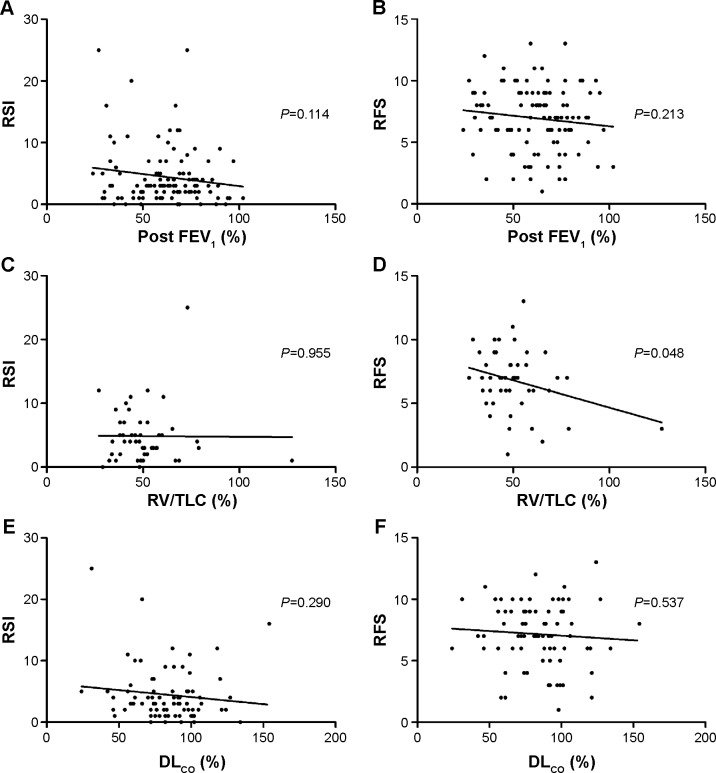
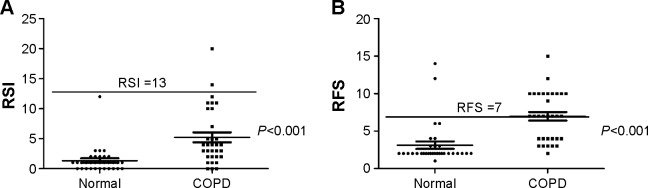
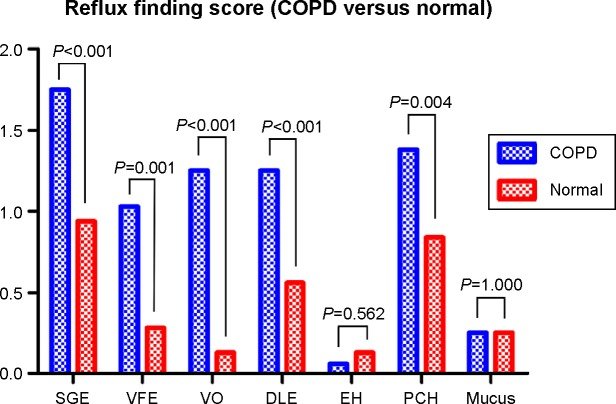
그림 출처: PubMed Central 공개 논문 (PMC4507795)
Comment · 정정
그 밖의 정보
- 출판 형태
- Journal Article, Research Support, Non-U.S. Gov't
- 저널
- International journal of chronic obstructive pulmonary disease · eISSN 1178-2005
- 전자 출판
- 2015-07-15
- MeSH
- Aged · Case-Control Studies · Cross-Sectional Studies · Disease Progression · Female · Humans · Laryngopharyngeal Reflux / diagnosis / epidemiology · Laryngoscopy · Lung / physiopathology · Male · Middle Aged · Predictive Value of Tests · Prevalence · Prospective Studies · Pulmonary Disease, Chronic Obstructive / diagnosis / epidemiology · Republic of Korea / epidemiology · Severity of Illness Index · Spirometry · Time Factors
- 참고문헌
- 24편