
PLoS One. 2019;14(9):e0222264.
Heart failure awareness in the Korean general population: Results from the nationwide survey.
제1저자 정미향, 김학령 · 교신저자 김응주
소속 (8)
- Division of Cardiology, Dongtan Sacred Heart Hospital, Hallym University College of Medicine, Gyunggi-do, Republic of Korea.
- Division of Cardiology, SMG-SNU Boramae Medical Center, Seoul National University College of Medicine, Seoul, Republic of Korea.
- Division of Cardiology, Hangang Sacred Heart Hospital, Hallym University College of Medicine, Seoul, Republic of Korea.
- Department of Cardiology, Soon Chun Hyang University Bucheon Hospital, Bucheon, Republic of Korea.
- Division of Cardiology, Korea University Guro Hospital, Korea University College of Medicine, Seoul, Republic of Korea.
- Department of Thoracic and Cardiovascular Surgery, Heart Vascular Stroke Institute, Samsung Medical Center, Sungkyunkwan University School of Medicine, Seoul, Republic of Korea.
- Division of Cardiology, Kosin University Gospel Hospital, Kosin University College of Medicine, Busan, Republic of Korea.
- Department of Internal Medicine, College of Medicine, Seoul National University Bundang Hospital, Seongnam, Republic of Korea.
Abstract
BACKGROUND For a better heart failure outcome, it is fundamental to improve the awareness of heart failure at the general population level. We conducted this study to identify the current status of awareness of heart failure in the Korean general population.
METHODS This cross-sectional nationwide survey recruited a total of 1,032 participants aged 30 years or older, based on a stratification systematic sampling method. A 23-item questionnaire was surveyed through telephone interviews.
RESULTS Although 80% of the participants had heard of heart failure, 47% exactly defined what heart failure is. A minority of participants correctly recognized the lifetime risk of developing heart failure (21%) as well as the mortality (16%) and readmission risk (18%) of heart failure and the cost burden of heart failure admission (28%). Regarding preferred treatment options, 71% of the participants chose a treatment option that could improve the quality of life. Approximately two-thirds of the participants agreed that current medical treatment could reduce mortality and improve the quality of life. More than half of the participants (59%) thought that heart failure patients should live quietly and reduce all physical activities. Across survey items, we found a lower awareness state in the elderly groups and people at lower income and educational levels.
CONCLUSIONS The current awareness status of heart failure in the Korean general population is still low. Proactive educational efforts should be made to improve public awareness with special attention to individuals with lower disease awareness.
Figures

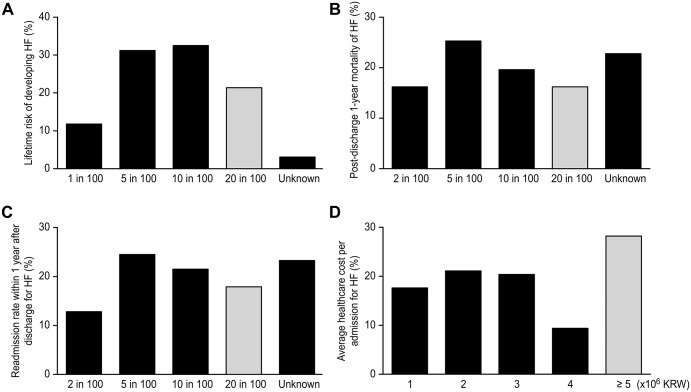
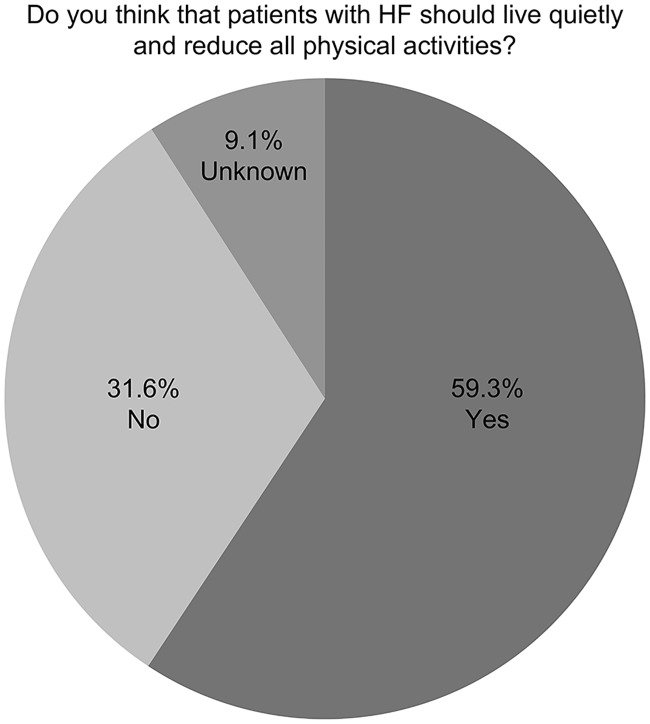
그림 출처: PubMed Central 공개 논문 (PMC6731018)
Conflict of interest statement
The authors have declared that no competing interests exist.
그 밖의 정보
- 출판 형태
- Journal Article
- 저널
- PloS one · eISSN 1932-6203
- 전자 출판
- 2019-09-06
- MeSH
- Adult · Age Factors · Aged · Aged, 80 and over · Cost of Illness · Cross-Sectional Studies · Educational Status · Female · Health Knowledge, Attitudes, Practice* · Health Surveys · Heart Failure* · Humans · Male · Middle Aged · Quality of Life* · Republic of Korea
- 참고문헌
- 31편