
PLoS One. 2019;14(8):e0220890.
Postoperative persistent diastolic dyssynchronous expansion in patients with Ebstein's anomaly.
제1저자 김경진 · 교신저자 손대원
소속 (3)
- Department of Internal Medicine, Division of Cardiology, Ewha Womans University Medical Center, Ewha Womans University School of Medicine, Seoul, Korea.
- Department of Thoracic and Cardiovascular Surgery, Seoul National University Hospital, Seoul National University College of Medicine, Seoul, Korea.
- Department of Internal Medicine, Cardiovascular Center, Seoul National University Hospital, Seoul National University College of Medicine, Seoul, Korea.
Abstract
In Ebstein's anomaly, maximal expansion in the atrialized right ventricle (RV) occurs during early diastole, whereas that of the functional RV occurs in late diastole, resulting in diastolic dyssynchronous expansion (DSE). We quantitatively assessed DSE and identified preoperative factors correlated with persistent DSE after surgery. Seventeen patients diagnosed with Ebstein's anomaly in whom transthoracic echocardiography (TTE) and cardiac magnetic resonance (CMR) images available were retrospectively analyzed for quantitative DSE assessment and 10 patients who underwent surgery and postoperative TTE available were additionally analyzed for postoperative DSE. Severity of DSE was assessed by the time difference of maximal expansion between the atrialized and functional RV divided by the cardiac cycle length × 100 ("DSE index"). Relations between DSE and, clinical, electrophysiologic parameters and the severity of tricuspid valve (TV) tethering (the RV length / tethering height during diastole: "Tethering index") were assessed. In total patients, median DSE index and tethering index were 30.3 and 2.1 respectively, and the DSE index was correlated with tethering index (rs = 0.664, P = 0.004). In 10 patients who underwent surgery, this association remained after surgery and at 2-year follow up. Tethering index ≥2.5 separated patients with and without persistent DSE. In conclusion, DSE exists in Ebstein's anomaly. DSE index is related to the tethering index and DSE persists postoperatively if tethering index ≥ 2.5. As the persistent DSE might possibly impede the optimal recovery of RV function after surgery, severity of TV tethering should take into account in considering surgery.
Figures

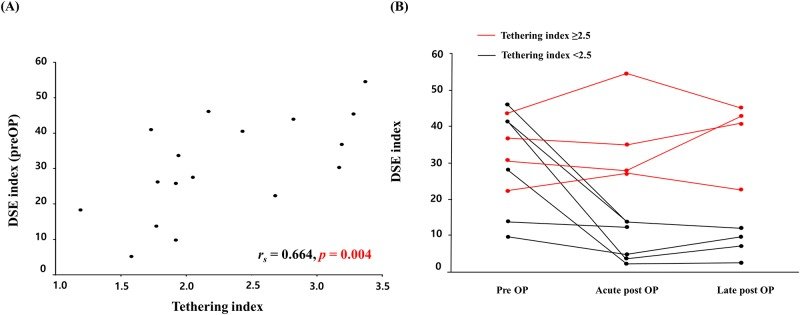

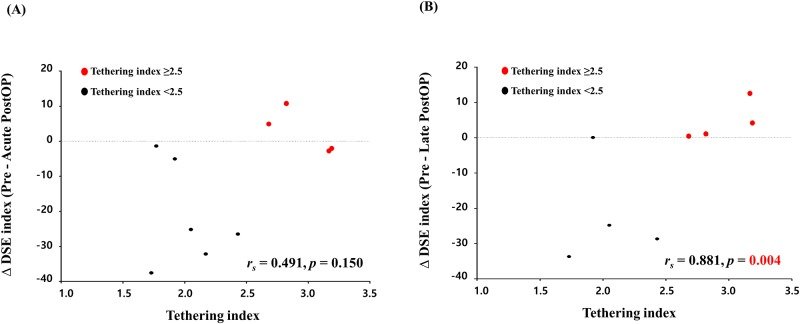
그림 출처: PubMed Central 공개 논문 (PMC6687137)
Conflict of interest statement
The authors have declared that no competing interests exist.
그 밖의 정보
- 출판 형태
- Journal Article
- 저널
- PloS one · eISSN 1932-6203
- 전자 출판
- 2019-08-08
- MeSH
- Adolescent · Adult · Diastole · Ebstein Anomaly / physiopathology · Echocardiography · Female · Heart Ventricles / physiopathology · Humans · Magnetic Resonance Imaging · Male · Postoperative Period* · Retrospective Studies · Tricuspid Valve / physiopathology · Ventricular Function, Right · Young Adult
- 참고문헌
- 25편