
Adv Nutr. 2023;14(4):612-628.
The Potential Cardiometabolic Effects of Long-Chain ω-3 Polyunsaturated Fatty Acids: Recent Updates and Controversies.
제1저자 배재현, 임현정 · 교신저자 임수
소속 (3)
- Department of Internal Medicine, Korea University Anam Hospital, Korea University College of Medicine, Seoul, Republic of Korea.
- Department of Medical Nutrition, Research Institute of Medical Nutrition, Graduate School of East-West Medical Science, Kyung Hee University, Yongin, Republic of Korea.
- Department of Internal Medicine, Seoul National University Bundang Hospital, Seoul National University College of Medicine, Seongnam, Republic of Korea. Electronic address: limsoo@snu.ac.kr.
Abstract
Various health-related effects of long-chain (LC) ω-3 PUFAs, EPA, and DHA have been suggested. LC ω-3 PUFAs reduce TG concentrations and have anti-inflammatory, immunomodulatory, antiplatelet, and vascular protective effects. Controversially, they might help in restoring glucose homeostasis via the gut microbiota. However, previous studies have not shown the clear benefits of LC ω-3 PUFAs for CVDs. REDUCE-IT and STRENGTH-representative randomized controlled trials (RCTs) that examined whether LC ω-3 PUFAs would prevent major adverse cardiovascular (CV) events (MACE)-showed conflicting results with differences in the types, doses, or comparators of LC ω-3 PUFAs and study populations. Therefore, we performed a meta-analysis using major RCTs to address this inconsistency and assess the clinical and biological effects of LC ω-3 PUFAs. We included RCTs that involved ≥500 participants with ≥1 y follow-up. Of 17 studies involving 143,410 people, LC ω-3 PUFA supplementation showed beneficial effects on CV death (RR: 0.94; 95% CI: 0.88, 0.99; P = 0.029) and fatal or nonfatal MI (RR: 0.83; 95% CI: 0.72, 0.95; P = 0.010). RCTs on EPA alone showed better results for 3-point MACE, CV death, and fatal or nonfatal MI. However, the benefits were not found for fatal or nonfatal stroke, all-cause mortality, and hospitalization for heart failure. Of note, studies of both the EPA/DHA combination and EPA alone showed a significant increase in risk of new-onset atrial fibrillation. Thus, well-designed studies are needed to investigate the underlying mechanisms involved in the distinct effects of EPA compared with DHA on cardiometabolic diseases. This review discusses the potential benefits and safety of LC ω-3 PUFAs from a cardiometabolic perspective focusing on recent updates and controversies.
Copyright © 2023 The Author(s). Published by Elsevier Inc. All rights reserved.
Keywords
EPAatherosclerosiscardiometabolic risk factorscardiovascular diseasedocosahexaenoic acidgut microbiotametabolic dysfunction-associated fatty liver diseaseω-3 FAs
Figures
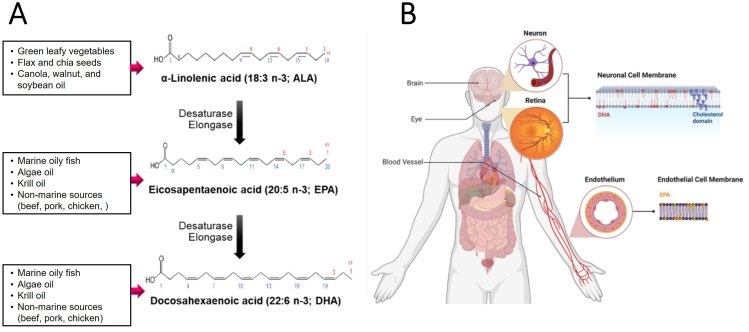
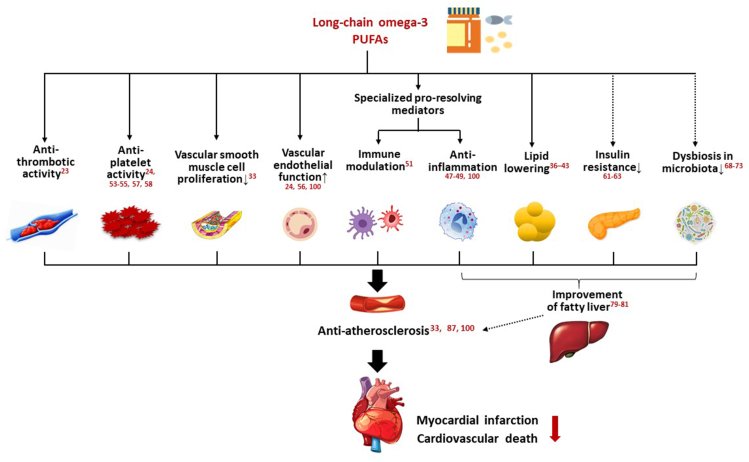
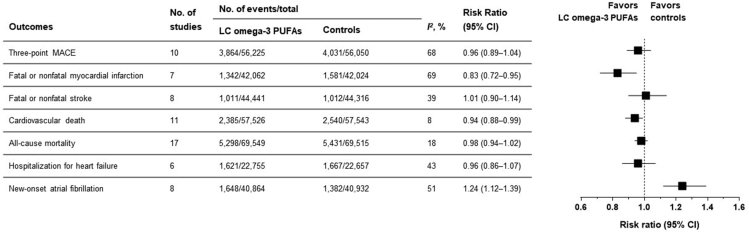
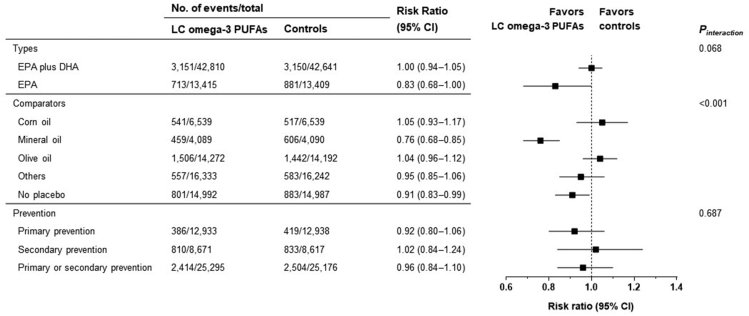
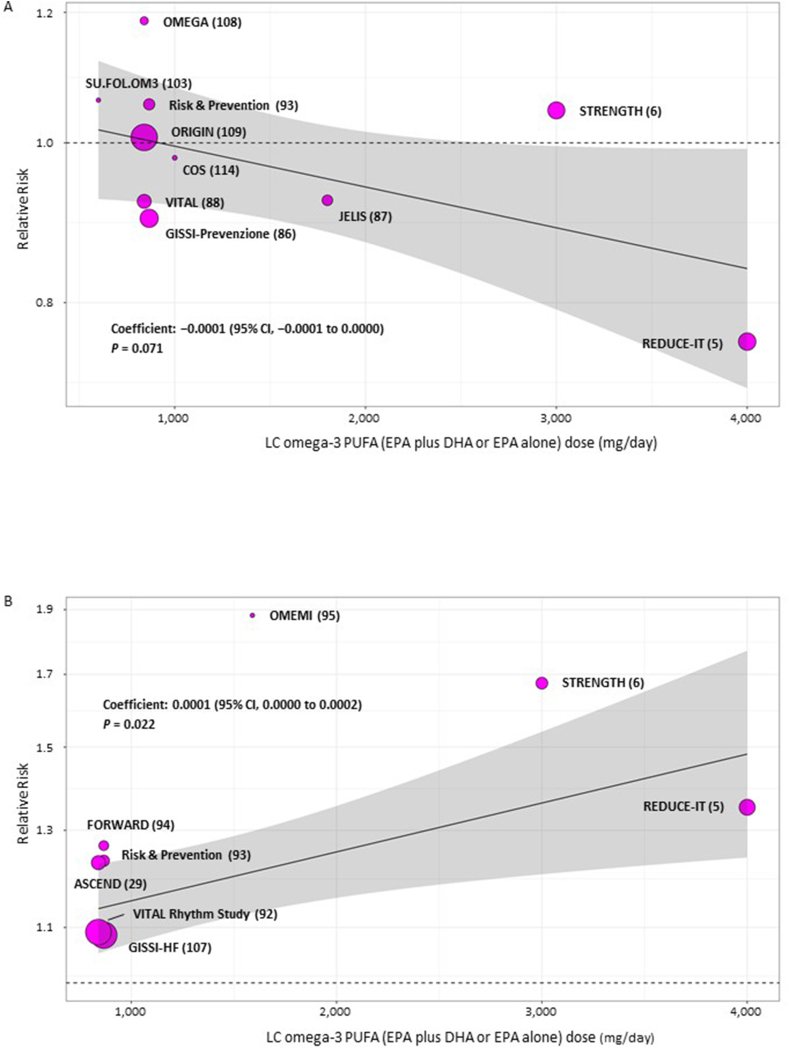
그림 출처: PubMed Central 공개 논문 (PMC10334139)
Comment · 정정
그 밖의 정보
- 출판 형태
- Meta-Analysis, Journal Article, Review
- 저널
- Advances in nutrition (Bethesda, Md.) · eISSN 2156-5376
- 전자 출판
- 2023-04-07
- MeSH
- Humans · Docosahexaenoic Acids / pharmacology · Fatty Acids, Omega-3* / pharmacology · Cardiovascular Diseases* / prevention & control · Stroke* · Eicosapentaenoic Acid / pharmacology
- Substances
- Docosahexaenoic Acids · Fatty Acids, Omega-3 · Eicosapentaenoic Acid
- 참고문헌
- 114편