
Orphanet J Rare Dis. 2019;14(1):132.
Predictors of paravalvular aortic regurgitation after surgery for Behcet's disease-related severe aortic regurgitation.
제1저자 최홍미 · 교신저자 김형관, 박성지
소속 (6)
- Cardiovascular Center, Seoul National University Bundang Hospital, Seoul National University College of Medicine, Seongnam, Gyeonggi-do, South Korea.
- Division of Cardiology, Cardiovascular Center, Department of Internal Medicine, Seoul National University College of Medicine, Seoul, South Korea. cardiman73@gmail.com.
- Division of Cardiology, Department of Medicine, Cardiovascular Imaging Center, Heart Vascular Stroke Institute, Samsung Medical Center, Sungkyunkwan University School of Medicine, Seoul, South Korea. tyche.park@gmail.com.
- Division of Cardiology, Cardiovascular Center, Department of Internal Medicine, Seoul National University College of Medicine, Seoul, South Korea.
- Division of Cardiology, Department of Medicine, Cardiovascular Imaging Center, Heart Vascular Stroke Institute, Samsung Medical Center, Sungkyunkwan University School of Medicine, Seoul, South Korea.
- Department of Cardiovascular Diseases, Mayo Clinic, Rochester, MN, USA.
Abstract
BACKGROUND Behcet's disease (BD)-related aortic regurgitation (AR) is known to be associated with paravalvular leakage (PVL) after successful aortic valve (AV) surgery. This study aimed to determine predictors of PVL after successful AV surgery in BD patients. We retrospectively collected data of 35 patients (42.1 ± 9.1 years, 27 men) who underwent surgery for severe BD-related AR at two tertiary centers. The diagnosis was established based on echocardiographic, surgical, and/or pathological findings in conjunction with the International Study Group criteria for BD. A total of 76 cases of AV surgery in 35 patients were analyzed.
RESULTS A median follow-up duration was 8.0 years (interquartile range, 5.4-14.3 years). PVL developed in 18 patients (51.4%) within 2 years after the first surgery. Six patients who met the diagnostic criteria for BD did not develop PVL, in whom 5 patients took immunosuppressive therapy (IST). However, 4 of 9 patients (44.4%) who did not meet the diagnostic criteria developed PVL, in whom four (44.4%) patients took IST. On multivariable analysis, postoperative IST and concomitant aortic root replacement (ARR) were two independent predictors for less PVL development (HR 0.38, 95% CI 0.17-0.89, p = 0.025 for postoperative IST; HR 0.17, 95% CI 0.08-0.36, p < 0.001 for concomitant ARR). Preoperative IST use did not determine PVL development (p = 0.75).
CONCLUSIONS Postoperative, but not preoperative, IST and concomitant ARR were independent predictors of less development of PVL. Special attention is required for early diagnosis BD-related AR, especially in patients not satisfying the current diagnostic criteria.
Keywords
Aortic regurgitationAortic valve surgeryBehcet’s diseaseParavalvular leakage
Figures
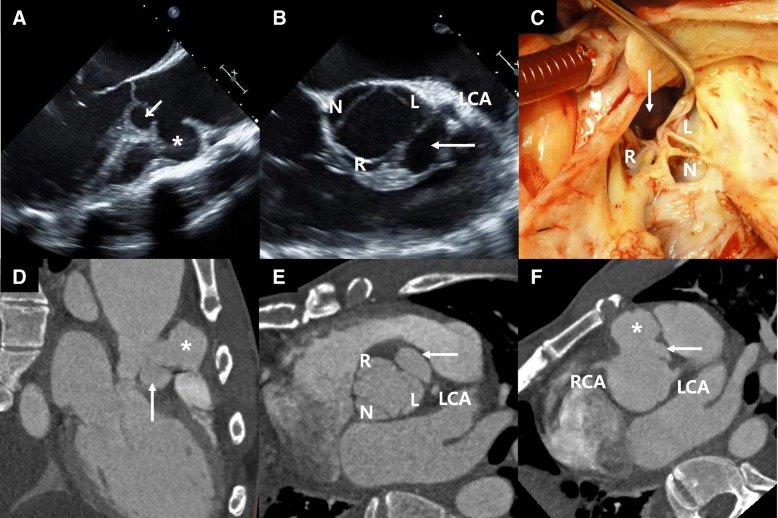
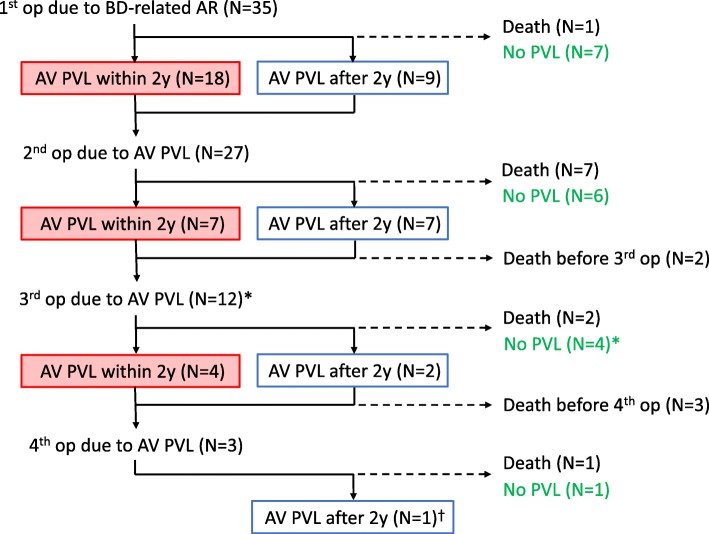
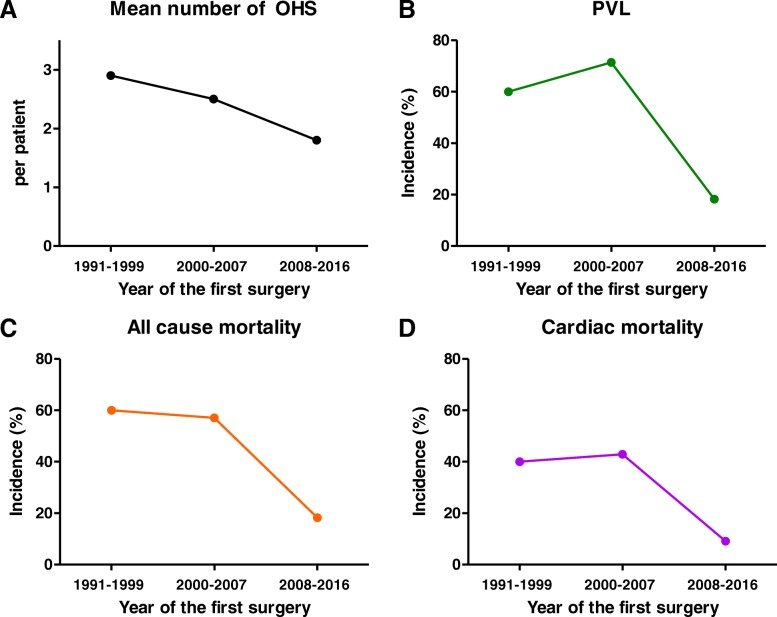
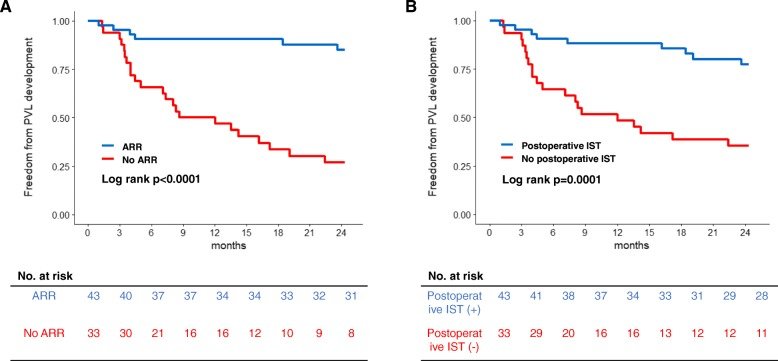
그림 출처: PubMed Central 공개 논문 (PMC6558675)
Conflict of interest statement
Prof. Hyung-Kwan Kim reports research grants from Actelion, Handok Pharmaceuticals, Dae-Woong Pharmaceuticals, Yuhan Pharmaceuticals and Norvatis.
그 밖의 정보
- 출판 형태
- Journal Article
- 저널
- Orphanet journal of rare diseases · eISSN 1750-1172
- 전자 출판
- 2019-06-10
- MeSH
- Aortic Valve Insufficiency / mortality / physiopathology · Behcet Syndrome / mortality / physiopathology · Echocardiography · Female · Humans · Kaplan-Meier Estimate · Male · Proportional Hazards Models · Retrospective Studies · Risk Factors · Treatment Outcome
- 참고문헌
- 23편